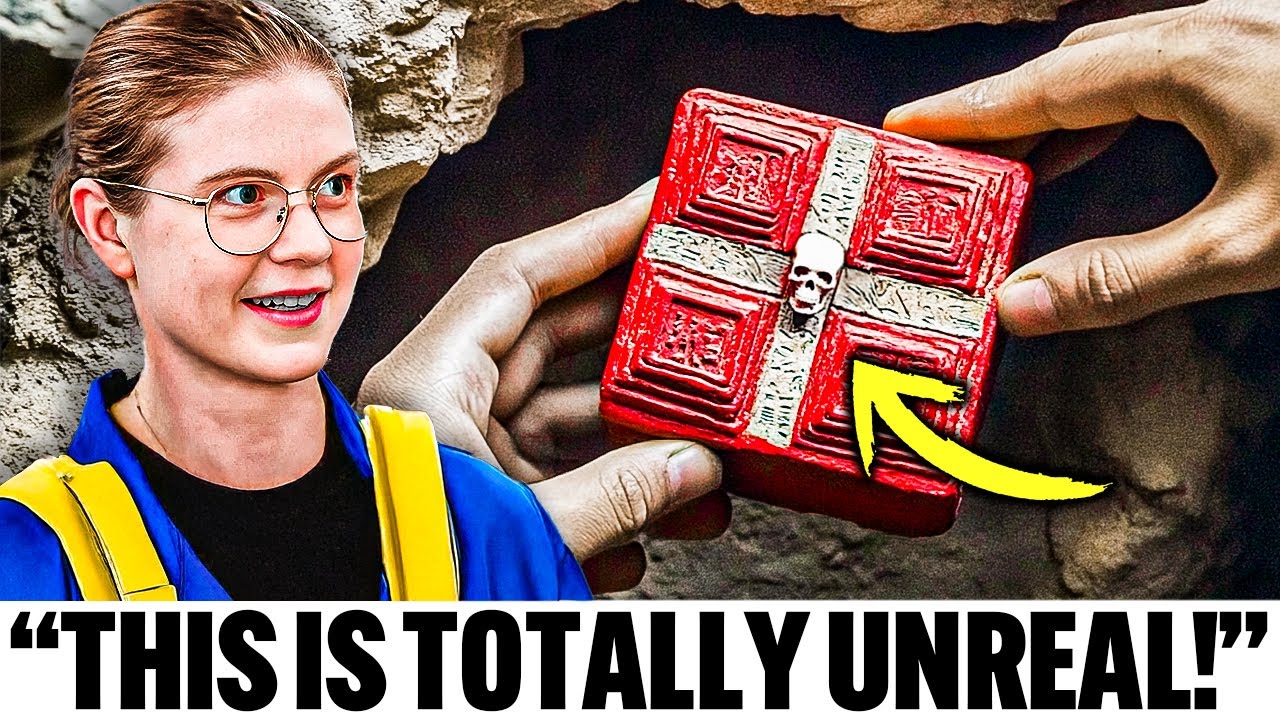
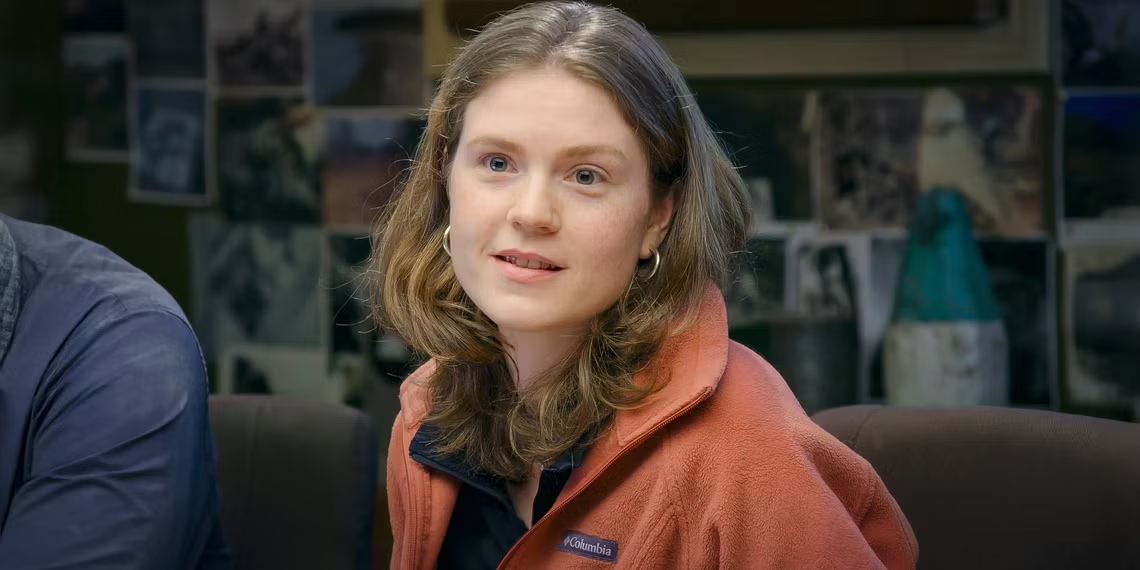
On an island haunted by centuries of mystery, one woman is changing everything we thought we knew about the search for buried treasure. Her name is Emma Culligan — and her work is transforming The Curse of Oak Island from a hunt for gold into a scientific investigation that could rewrite history.
Blending archaeology, engineering, and metallurgy, Culligan has quickly become one of the most vital figures in the modern exploration of Oak Island. Her razor-sharp analyses, powered by cutting-edge technology, have uncovered clues that even seasoned treasure hunters overlooked.
“She’s the bridge between history and science,” says Marty Lagina. “Emma takes mystery and turns it into measurable data.”
FROM JAPAN TO NOVA SCOTIA: THE MAKING OF A MODERN-DAY DETECTIVE
Culligan’s story reads like a film script. Born and raised in Japan, she didn’t begin learning English until she was fifteen. Her early life gave no hint that she’d one day be dissecting centuries-old metals in a Nova Scotian lab.

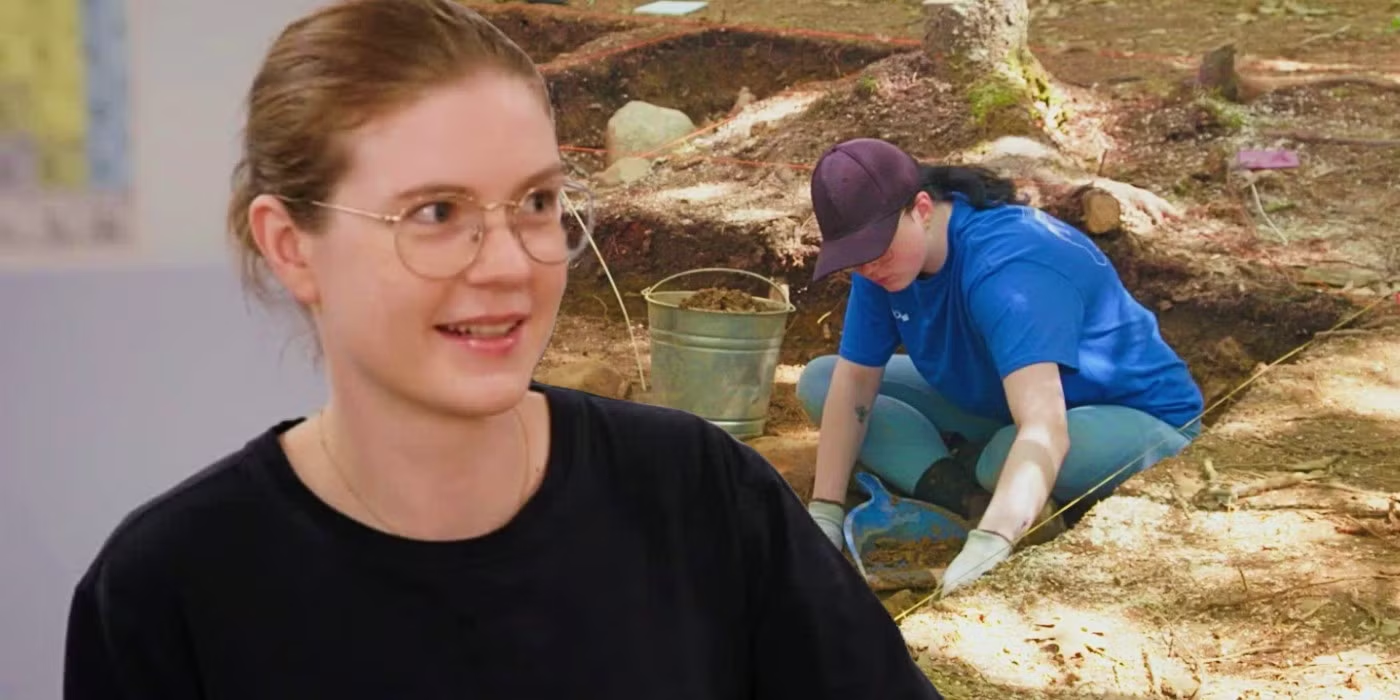
After moving to Canada, Emma enrolled at Dalhousie University in Halifax, majoring in engineering. But her insatiable curiosity led her to Memorial University in Newfoundland, where she did the unthinkable — blending civil engineering with archaeology.
“Everyone thought I was crazy,” she laughs. “But engineering teaches you how things are built — and archaeology tells you why.”
It was this rare combination that caught the eye of a professor who invited her into a metallurgy research team, where she developed her talent for analyzing metal composition — a skill that would soon make her indispensable on Oak Island.
FROM CLASSROOM TO CURSE: JOINING THE OAK ISLAND TEAM
When the producers of The Curse of Oak Island reached out to Emma, she thought it was a scam. “Who gets an email from a TV show asking if you want to study treasure?” she recalls. But the offer was real.
Originally considered for an assistant role, fellow archaeologist Laird Niven recognized her expertise and gave her a much bigger task — operating the island’s X-ray Fluorescence (XRF) system, a device that can identify the exact chemical makeup of artifacts without damaging them.
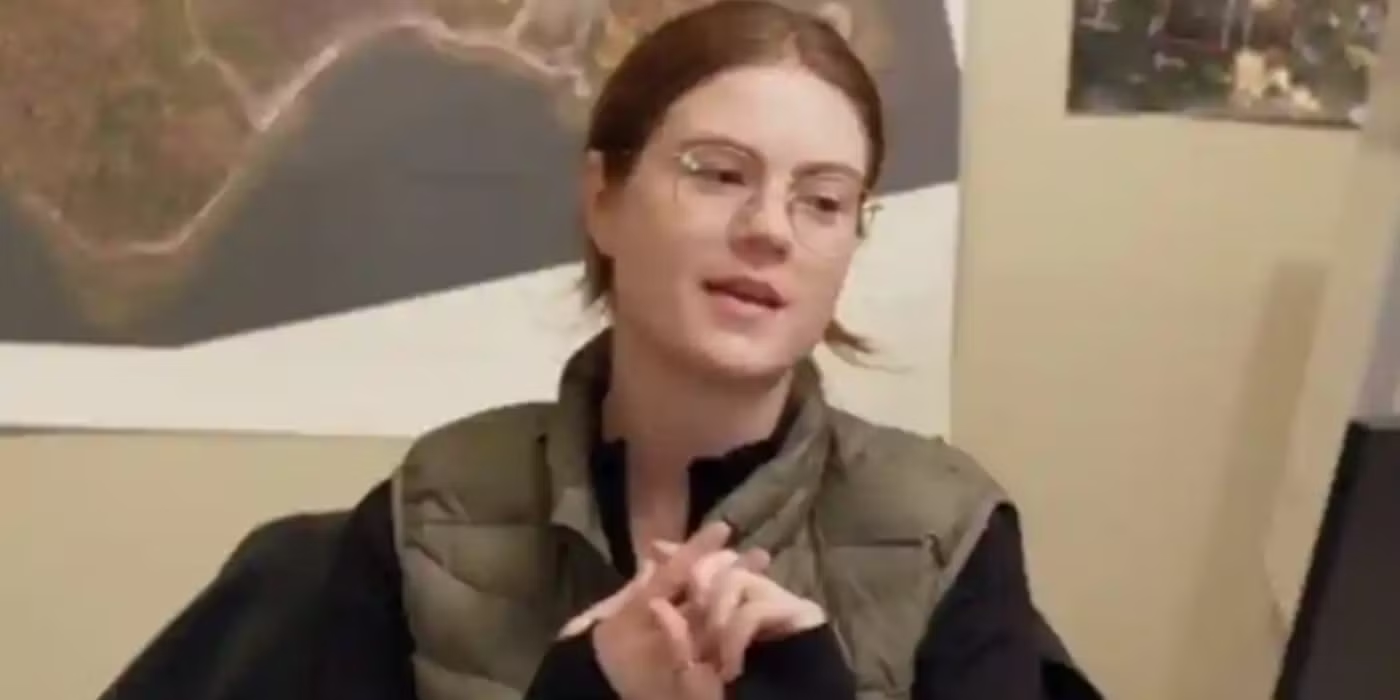
From that moment, Culligan became the scientific heart of the operation.
Her analyses have reshaped how the team — and the world — understands Oak Island’s past.
THE COIN THAT CHANGED HISTORY
One of Culligan’s first major breakthroughs came on Lot 5, when a corroded coin surfaced during excavation. To most, it was a rusted trinket. To Emma, it was a story waiting to be told.
Using XRF, she revealed its composition: 70% copper, 16% lead — an alloy far older and rarer than anything expected. Her analysis suggested a Roman origin, dating between 200 and 300 A.D.
If verified, it would mean an artifact from ancient Rome somehow found its way to a remote island in Nova Scotia — centuries before Columbus ever crossed the Atlantic.
“That coin flipped the script,” said historian Charles Barkhouse. “It connected Oak Island to a global story — not just a local legend.”
The discovery ignited debate among archaeologists worldwide and forced the Oak Island team to reconsider long-dismissed theories of ancient contact.
THE GOLD IN THE WOOD
Another shocking find came when Emma analyzed a wood fragment from the Garden Shaft, believed to be centuries old. Her XRF results showed it contained 0.11% gold.
While that may sound small, it was enough to suggest that gold once flowed through the shaft — perhaps as runoff from a larger hidden cache.
“It’s like finding fingerprints on an invisible door,” Emma explained. “We can’t see the treasure yet, but the residue proves it’s been there.”
THE CONCRETE CLUE THAT REWROTE THE FLOOD TUNNEL THEORY
Culligan’s sharp analytical skills struck again when she examined a cement sample from Smith’s Cove, long suspected to be part of Oak Island’s legendary flood tunnel system.
Using X-ray Diffraction (XRD) — a kind of “mineral fingerprinting” — she determined the sample contained Portlandite, a compound specific to Quebec-made cement from the 1920s–1970s.
This revelation meant the cement wasn’t from the original treasure builders — but from modern searchers, possibly the Restall family, who in the 1960s attempted to seal the flooding tunnels.
That discovery not only clarified decades of confusion but also added a deeply human layer to the island’s story — one of obsession, ingenuity, and tragedy.
UNCOVERING THE FLOOD TUNNELS OF SMITH’S COVE
Beneath the sands of Smith’s Cove, Emma’s findings helped verify the existence of box drains — stone and coconut-husk-lined channels engineered to funnel seawater into the Money Pit.
The coconut fibers, imported from tropical regions, acted as filters — an astonishing feat of pre-industrial engineering.
Combined with her cement analysis, these findings suggest that generations of engineers — ancient and modern — contributed to Oak Island’s labyrinth of defenses.
“It’s engineering genius,” said Marty Lagina. “The whole island is a trap built to protect something priceless.”
THE CAST-IRON CLUE: TRACING THE TREASURE HUNTERS THEMSELVES
In another episode, metal detectorist Gary Drayton unearthed a cast-iron stove door deep beneath Smith’s Cove. Culligan’s XRF analysis dated it to the mid-1800s, likely belonging to early treasure hunters who camped on the island.
Her findings connected the artifact to The Truro Company and Oak Island Company, groups that braved brutal winters while chasing the same mystery over a century ago.
The door wasn’t treasure — but it was history. A reminder that Oak Island’s legacy isn’t just about what’s buried underground, but about the countless lives devoted to finding it.
TECHNOLOGY MEETS LEGEND

Thanks to experts like Culligan, Oak Island’s investigation has entered a new era — one driven not by guesswork, but by science and precision.
From ground-penetrating radar and seismic mapping to AI modeling and chemical analysis, technology is exposing patterns the human eye could never see.
“For the first time, we’re not digging blindly,” Rick Lagina said. “We’re following evidence — and Emma’s at the center of it.”
FAN FAVORITE AND GAME-CHANGER
Beyond her lab work, Emma has become a fan favorite. Viewers praise her calm expertise and approachable personality, calling her “the real gem of the show.”
Her presence has reshaped The Curse of Oak Island’s tone — grounding the myth in method, and turning what was once a treasure hunt into a historical investigation of global significance.
“Emma’s the reason we believe science can solve this mystery,” wrote one fan on social media. “She’s the future of Oak Island.”
THE WOMAN BEHIND THE MYSTERY
As the new season of The Curse of Oak Island continues, one thing is clear: Emma Culligan isn’t just studying history — she’s making it.
From her humble beginnings in Japan to becoming one of the sharpest minds in Canadian archaeology, her journey is proof that science and storytelling can coexist — and together, they might finally unlock the secrets buried beneath Oak Island.
Because as Emma often says with a smile,
“Every artifact has a voice. You just have to know how to listen.”