
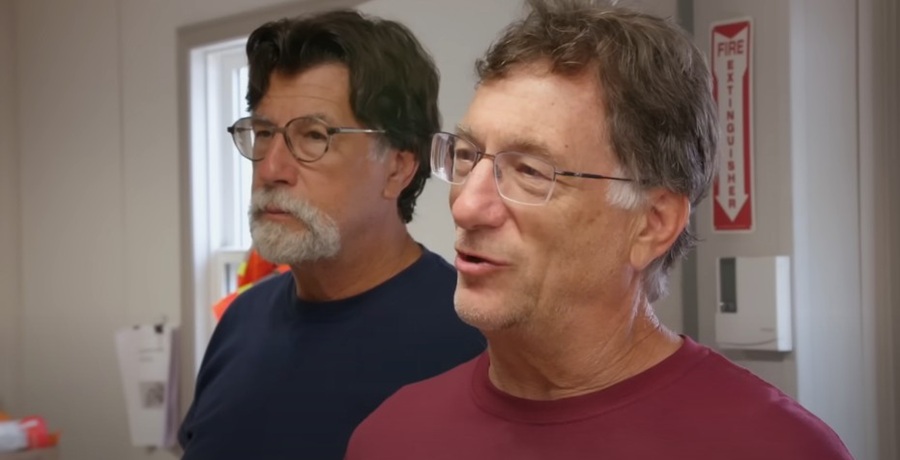
OAK ISLAND, NOVA SCOTIA — The world’s longest-running treasure hunt is officially underway again as Rick and Marty Lagina, Craig Tester, and their expert team return to Oak Island with renewed determination — and an early breakthrough that could reshape the centuries-old mystery.
The team kicked off the season with a packed gathering at the Oak Island Interpretive Centre, where optimism and anticipation filled the room. “Our hopes are as high as they’ve ever been,” said Marty Lagina. “This year, we want answers.”
A New Theory for an Old Mystery
After more than a decade of excavations, drilling, and scientific testing, the team believes the treasure — or whatever lies at the heart of the legend — has shifted even deeper. Their working theory: the contents of the Money Pit have collapsed into a natural bedrock formation known as a solution channel, potentially plunging more than 200 feet underground.
This new chapter follows dramatic setbacks last year, when two large steel shafts (TB-1 and TOT-1) collapsed during excavation, revealing both instability and the possibility that the long-lost vault has sunk further into the island.
A Discovery Hidden in the Spoils
While drill operations continue in the Money Pit area, a separate team — including Marty, Craig Tester, heavy-equipment specialist Billy Gerhardt, and metal-detection expert Gary Drayton — began reexamining the massive piles of earth removed from last season’s operations.
It didn’t take long for results.
Drayton uncovered an iron tool, heavily corroded but clearly hand-forged, from the deep Money Pit spoils. The team immediately recognized its potential significance, given that last season they recovered a 16th- or 17th-century pickaxe and an iron chisel from the same material.
“This one’s old,” Drayton said. “It has the look and feel of something from centuries ago.”
Marty Lagina agreed. “I’m not surprised by what’s coming out of this pile. Everything here came from deep in the Money Pit. Any artifact could be important.”
Scientific Testing Confirms the Find
Inside the Oak Island laboratory, archaeometallurgist Emma Culligan performed XRF testing on the previously discovered chisel to establish its age. The results were striking.

“The metal lacks any modern alloying elements,” Culligan explained. “It is definitively not modern — comfortably from the 1700s, and possibly older.”
Her findings reinforce the team’s belief that non-searcher activity occurred in the Money Pit long before the first documented excavation in 1795.
“This could be part of an original deposit,” Marty said. “That makes it very exciting.”
Rick Lagina called the discovery an encouraging start: “We have an old tool found at depth in the Money Pit. It’s not the one thing — but we’re getting there.”
Hope Builds as the Season Begins
With drilling moving deeper into the suspected solution channel and more artifacts emerging from the spoils, the team enters the season energized and confident.
“There’s going to be more finds,” Drayton promised. “And hopefully something made of gold or silver.”
As Rick Lagina put it: “We’ve got to go find it.”
The hunt continues — and the centuries-old mystery of Oak Island may be closer than ever to being solved.
