Oak Island Breakthrough: Ancient Portuguese Coin Validates Centuries-Old Treasure Legend


OAK ISLAND, Nova Scotia — After 12 seasons of relentless digging, flooding frustrations, and tantalizing near-misses, the team behind “The Curse of Oak Island” has unearthed what may be the most compelling evidence yet of the island’s fabled Money Pit treasure. In the explosive Season 13 premiere, aired last night on the History Channel, a bent silver Portuguese coin—believed to be the very artifact pocketed by foreman James Pitblado in 1849—emerged as the star of the show, offering “irrefutable proof” of the pit’s existence and igniting fresh hope for a historic breakthrough.
The coin, a Torrens Deceital from the reign of King Ferdinand I (1367-1383), was presented in the team’s iconic War Room by Steve Solomon, a descendant of the Archibald family, who funded early searches on the island. Rick Lagina, the passionate leader of the Fellowship of the Dig, declared it “proof that something is at the bottom of the Money Pit,” while his brother Marty Lagina called it potentially “the strongest thing we have ever found” if its origins can be fully confirmed.
A Link to the Past: The Pitblado Incident Revisited
The artifact’s story ties directly to one of Oak Island’s most enduring mysteries. In 1849, during the Truro Company’s excavation, an auger drill probing 98 feet deep reportedly struck two layers of hardwood separated by loose metal pieces—suggesting stacked treasure chests. When the drill was retrieved, Pitblado was seen removing a “shiny object” from its tip, which he refused to show others. He promptly approached businessman Charles Archibald, and the pair attempted to buy the eastern end of the island, fueling speculation of a major find.
Solomon believes the coin was that object, passed to Archibald as proof to secure a treasure-hunting license. It remained in the family until now. Metallurgist Emma Culligan authenticated it as genuine, composed of 37.5% silver and slightly larger than a quarter. Its bent shape? Likely from the 1849 drill’s force, a direct echo of the historical event.
The coin’s 14th-century date aligns with the dissolution of the Knights Templar in 1307, who found refuge in Portugal as the Knights of Christ. This bolsters theories that Templars or their successors deposited treasures on the island, transforming speculation into tangible evidence. Its pristine condition suggests it was sealed in a chest, protected from circulation.

Shifting Strategies: From Hammer to Precision Drilling
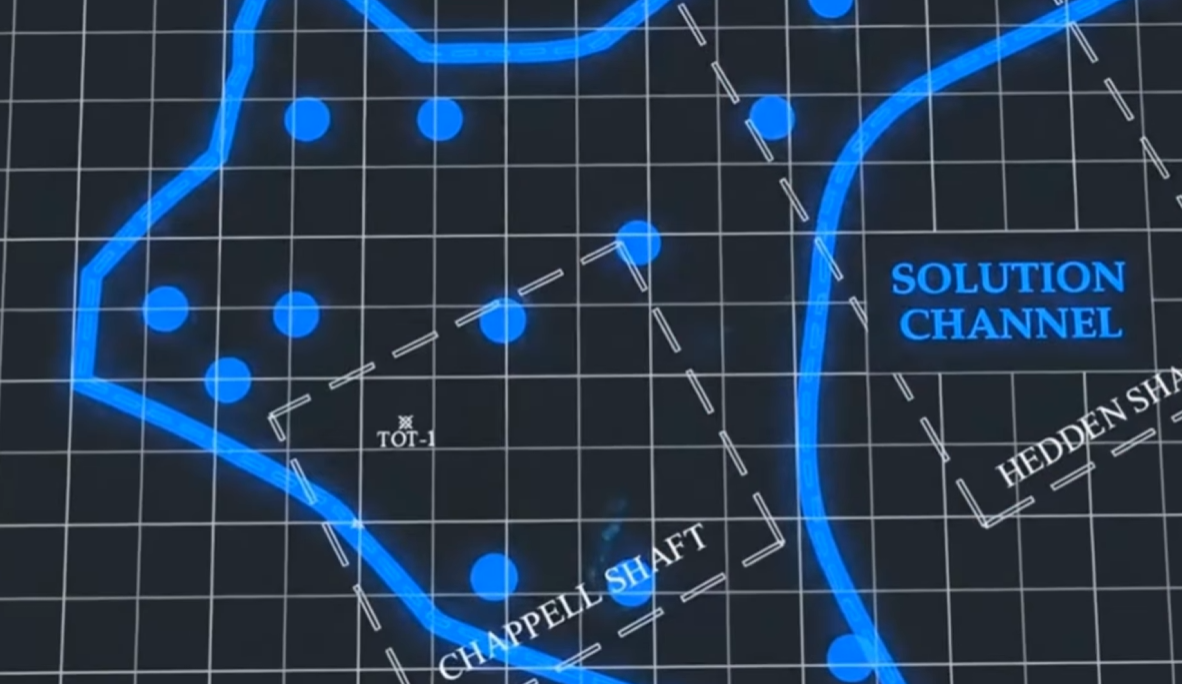
Emboldened by the find, the Lagina brothers and their team are pivoting to an aggressive exploration of the “solution channel”—a deep, water-filled subterranean network believed to hold displaced treasures. Geoscientist Dr. Ian Spooner confirmed ongoing detections of precious metals deeper than previously thought, noting the team has mapped less than 5% of the channel.
Ditching the old “hammer grab” method, which may have pushed artifacts deeper last season, the crew unveiled massive 7-foot-wide augers with carbide teeth and a scooping drum. Designed for gentle retrieval, these tools aim to reach 210 feet without damaging potential caches. “We’re learning as we go,” Marty Lagina admitted, emphasizing the refined approach after 13 years.
Drilling spoils yielded more clues: a 19th- or 20th-century drill casing from past searches and a pre-1795 metal piece, hinting at ancient activity predating the Money Pit’s 1795 discovery.

Beyond the Pit: Ancient Markers on Lot 5
The episode also spotlighted Lot 5, where excavation following a tip from researcher Fiona uncovered a “pits and mounds” structure—an ancient surveying method used by Romans and Vikings. A split main stone surrounded by others suggests deliberate island geometry, possibly a waypoint for original depositors. The team plans to mirror the intact half to decode its purpose.
A Game-Changer for Skeptics and Believers Alike
This premiere packs more validation than many prior seasons, silencing doubters who questioned if anything was ever there. The coin isn’t just metal—it’s a geopolitical marker from Portugal’s exploratory era, potentially declaring the island a Knights of Christ repository. Combined with the island’s flood tunnels and artifacts, it paints Oak Island as a “sacred preservation system,” not a trap.
As the team dives deeper, the stakes are higher than ever. The coin proves predecessors were inches from glory, only for nature or error to intervene. Now, with proof in hand, the Laginas chase not just gold, but a “cultural time capsule” that could rewrite medieval history.
Viewers worldwide are buzzing, with social media ablaze in speculation. Will Season 13 finally break the curse? As Rick Lagina put it, the question is no longer “if,” but “when.” Stay tuned—Oak Island’s secrets may soon surface.