Unearthed Secrets: Oak Island Crew Finds Pre-1800s Artifacts That Could Rewrite History


In a thrilling turn of events on Oak Island’s enigmatic Lot 5, treasure hunters led by brothers Rick and Marty Lagina have uncovered artifacts that could unlock centuries-old secrets tied to the infamous Money Pit. Metal detection expert Katya Drayton, alongside Marty Lagina and nephew Peter Fornetti, discovered a mysterious metal shard and an ancient copper coin during a shoreline search, sparking renewed hope among the team.
The expedition began with a sweep near a rectangular feature and a rounded stone foundation, areas long suspected of holding clues to the island’s buried riches. Using a metal detector, Drayton pinpointed a strong signal in soil disturbed by a skid steer. “There is definitely something over here,” Drayton announced as the device whooped. After digging, the team revealed a metal fragment with an attachment, possibly a fastener. “That’s not just a shard of metal,” Marty Lagina noted. “It’s lab worthy.”
Preliminary analysis at the Oak Island Laboratory by archaeologist Laird Niven and materials expert Emma Culligan confirmed the shard as part of a cast-iron pot. “The high phosphorous content suggests it’s pre-1800s,” Culligan explained, citing its brittleness in cold climates—a hallmark of ironware from before the Industrial Revolution. “It fits in with the time period of 1700s. It could go into the 1600s.” Rick Lagina called the find “quite stunning,” emphasizing Lot 5’s potential: “There’s a mystery there wrapped in an enigma.”
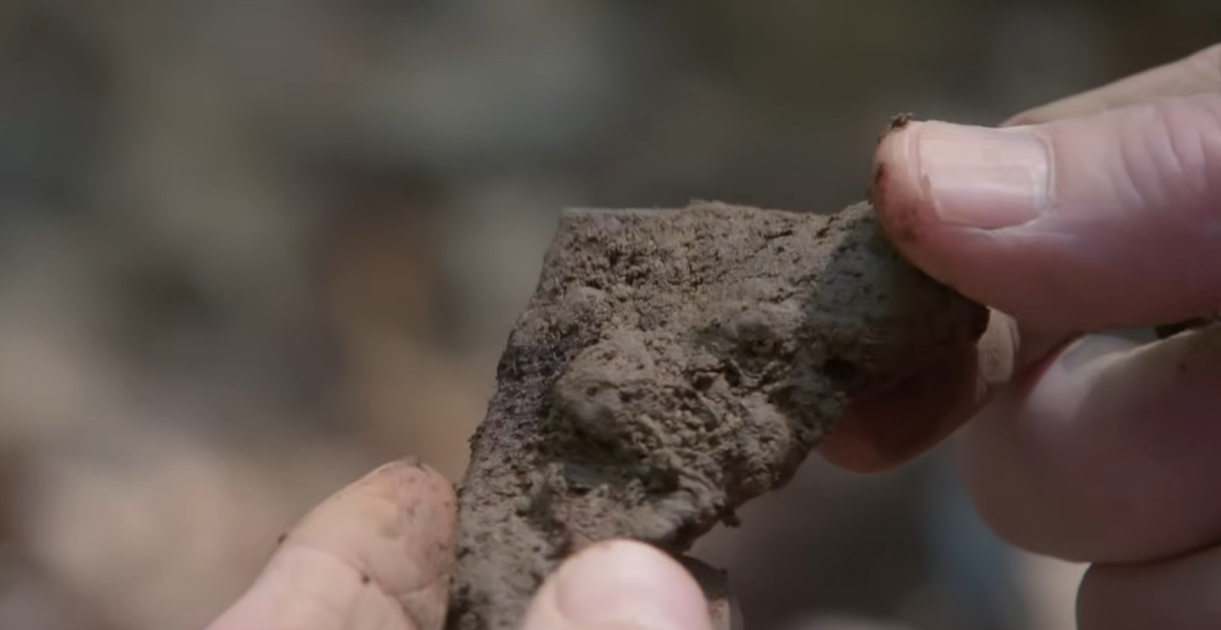
Undeterred, the team expanded their search south of the rounded feature. Another beep led to a nonferrous hit. “Come on, be something good,” Marty urged as they excavated. What emerged was a green-tinted copper coin, irregular in shape with visible markings, including what appeared to be a cross. “I think that’s a really old coin,” Drayton exclaimed. “It almost looks like there’s a cross on it.”
The discovery electrified the group. Metal detection veteran Gary Drayton, summoned to inspect, declared, “That’s old. This is pre-1600s.” He noted its hammered construction and purer metal composition, resistant to corrosion unlike modern finds. “It’s irregular shaped… nice and thick,” Drayton added. The coin’s proximity to previous Roman-era discoveries on Lot 5 fueled speculation. “This is the Roman coin area,” Marty Lagina said. “That is hugely exciting.”
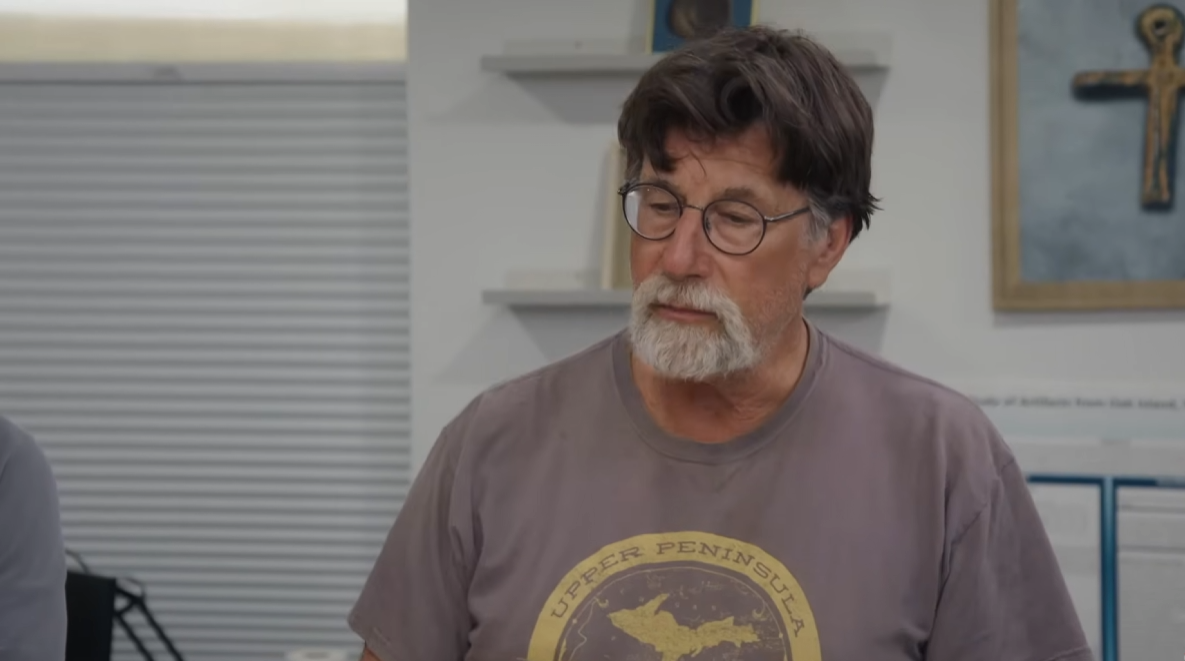
Rick Lagina reflected on the broader implications: “I hold the coin, and I can see things on the face… The coin will tell you what it is. And that provides immense hope amongst all of us.” The team plans advanced lab tests, including CT scanning, to reveal hidden details and potentially link it to a Portuguese silver coin found earlier.
Could these artifacts point to pre-Columbian visitors or early European settlers? As Billy Gerhardt quipped, “When Marty calls, got to be good.” For Drayton, the praise from her mentors was personal: “That means the world to me.”
Oak Island’s curse may persist, but finds like these keep the legend alive. The Lagina brothers and their crew vow to press on, inching closer to the truth buried beneath the ferns and shores.