Mysteries of Nolan’s Cross | Could This Be the Key to Oak Island’s Greatest Secret?


Oak Island continues to captivate treasure hunters and historians alike, with new discoveries emerging near the legendary Nolan’s Cross. Recent investigations suggest that the enigmatic rock formation may hold the key to a long-lost treasure—or an even greater historical revelation.
The Formation of Nolan’s Cross and the Mysterious Headstone
In 1981, land surveyor and treasure hunter Fred Nolan uncovered five massive cone-shaped boulders on his property, arranged in a perfectly symmetrical cross. The discovery raised questions about whether this was a natural formation or a deliberate marker. At the intersection of the cross, Nolan found a sixth, unique boulder—flatter, smoother, and eerily resembling a human head. Could this carved stone be a clue left behind by an ancient order?
Theories abound regarding the purpose of Nolan’s Cross. Some believe it represents the legendary Templar Cross, left behind by the Knights Templar. Others speculate that it aligns with the ancient Tree of Life, a symbol of spiritual knowledge and divine order. Regardless of its origins, the formation appears to mark something significant, prompting renewed interest in what may be hidden beneath Oak Island.
The Enigmatic Markings on the Bottom Boulder
While Nolan’s Cross has long been a focal point of speculation, recent examinations have shed new light on the mystery. Experts discovered that the bottom boulder of the cross was unnaturally smooth on its base—suggesting that it had been dragged into position rather than deposited by natural forces. This revelation supports the theory that someone deliberately placed these stones centuries ago for a specific purpose.
If this was not a natural geological occurrence, who moved the stones? And more importantly, what were they trying to conceal or mark?
The Discovery of an Ancient Dump Site on Lot 12
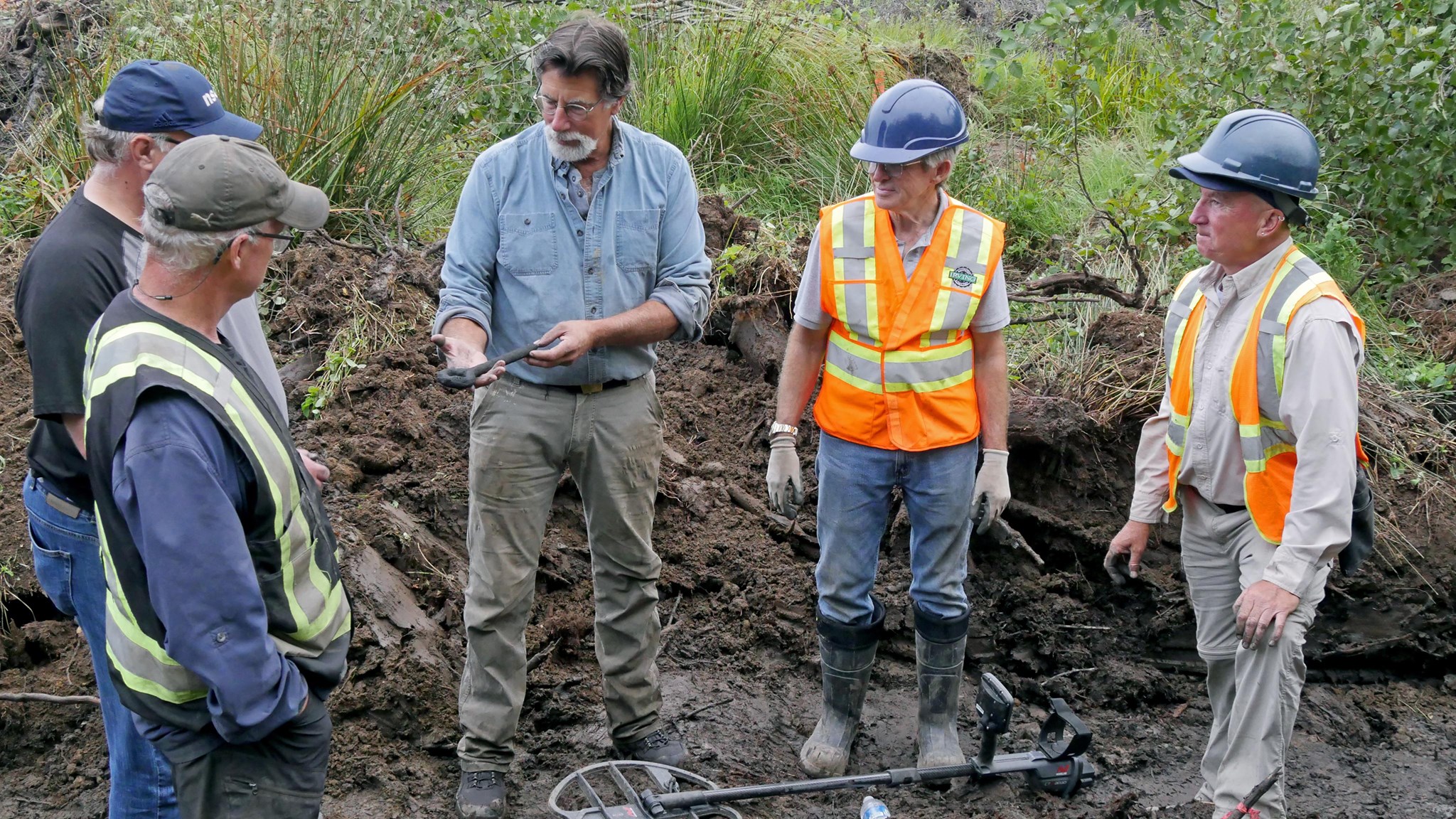
Beyond Nolan’s Cross, other findings on Oak Island add to the intrigue. An ancient dump site, located on Lot 12, has yielded artifacts that don’t match the island’s typical historical timeline. Excavators have uncovered pottery with European-style markings, square iron nails indicative of shipbuilding, and even decorative chest hinges.
The presence of these items suggests that someone was active on Oak Island centuries ago—transporting materials, discarding unneeded objects, and possibly even burying treasure. Could these discarded items be the remnants of an operation to conceal something of great value?
The Discovery of Chest Hinges—Evidence of Buried Treasure?
Among the most compelling finds near Nolan’s Cross were ornate hinges—decorative in nature and appearing to belong to an antique chest. These hinges, paired with historical accounts of missing treasure chests, fuel speculation that Oak Island may have once been the hiding place for valuable artifacts or documents.
Theories range from pirate loot, possibly belonging to the infamous Captain James Anderson, to relics associated with the Knights Templar. Supporting this notion is the fact that a skeleton key was found near the same area years earlier. Could it have once unlocked the chest to which these hinges belonged?

The Ringbolt Rock and the Hidden Pathway
Another intriguing feature near Nolan’s Cross is the so-called “Ringbolt Rock,” located near an old apple tree on Lot 13. Researchers believe this stone, once fitted with an iron ring, was used to secure ropes for hoisting heavy loads. The discovery suggests that an elaborate transport system may have existed on the island, allowing large objects—potentially treasure chests—to be moved inland from arriving ships.
If such a system was in place, it raises even more questions: What was being transported? Where was it taken? And is there still something buried beneath the island’s surface?
What Lies Beneath Oak Island?
Each new discovery on Oak Island adds another piece to an ever-growing puzzle. Whether it’s Nolan’s Cross, the ancient dump site, the mysterious chest hinges, or the hidden transport network, all signs point to a history far richer and more complex than previously imagined.
Are these simply remnants of past settlers, or do they hint at something far greater—perhaps the final clue leading to Oak Island’s legendary treasure?
As excavation efforts continue, one thing is certain: The mysteries of Oak Island are far from solved.