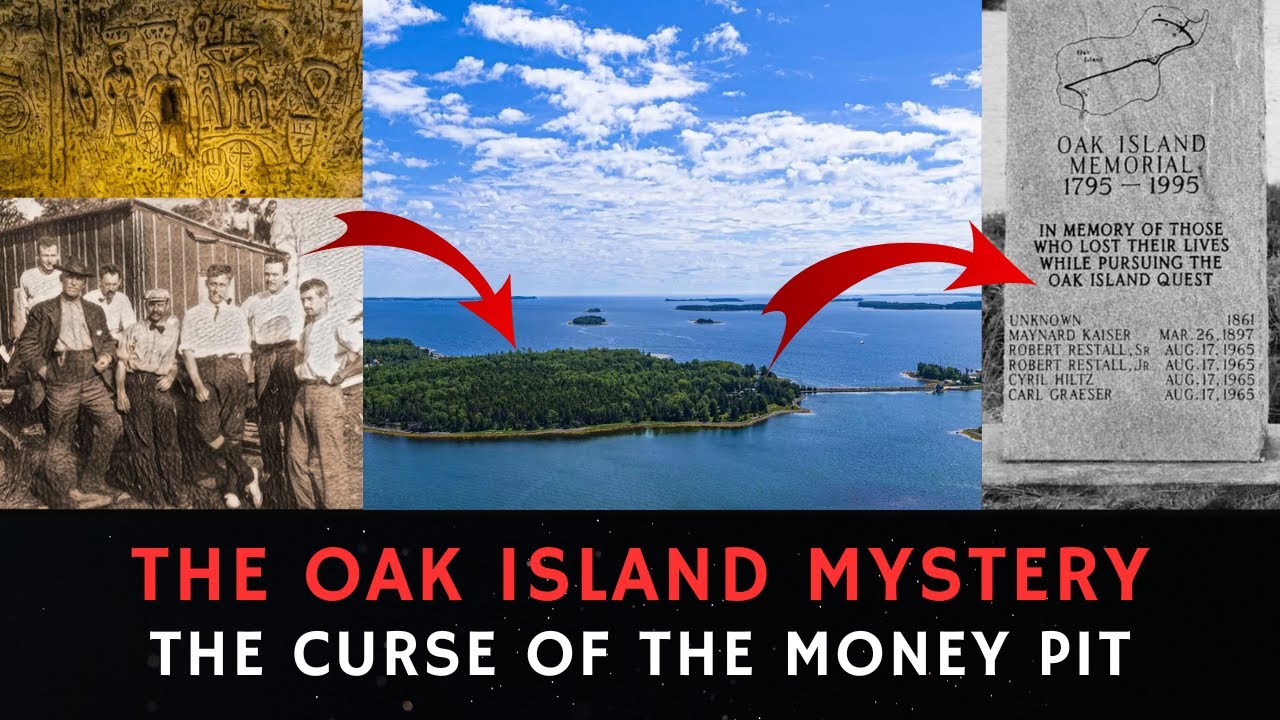
OAK ISLAND, N.S. — Tucked off the rugged coast of Nova Scotia lies a serene, unassuming island that has captivated adventurers, historians, and fortune-seekers for over two centuries. Oak Island, a 140-acre speck of land in Mahone Bay, is the site of the world’s longest-running treasure hunt, where whispers of buried riches have drawn everyone from teenage explorers to U.S. presidents into its web of mystery. Beneath its tranquil facade, a labyrinth of tunnels, booby traps, and cryptic artifacts continues to defy explanation, leaving experts and enthusiasts alike pondering: What truly lies below?
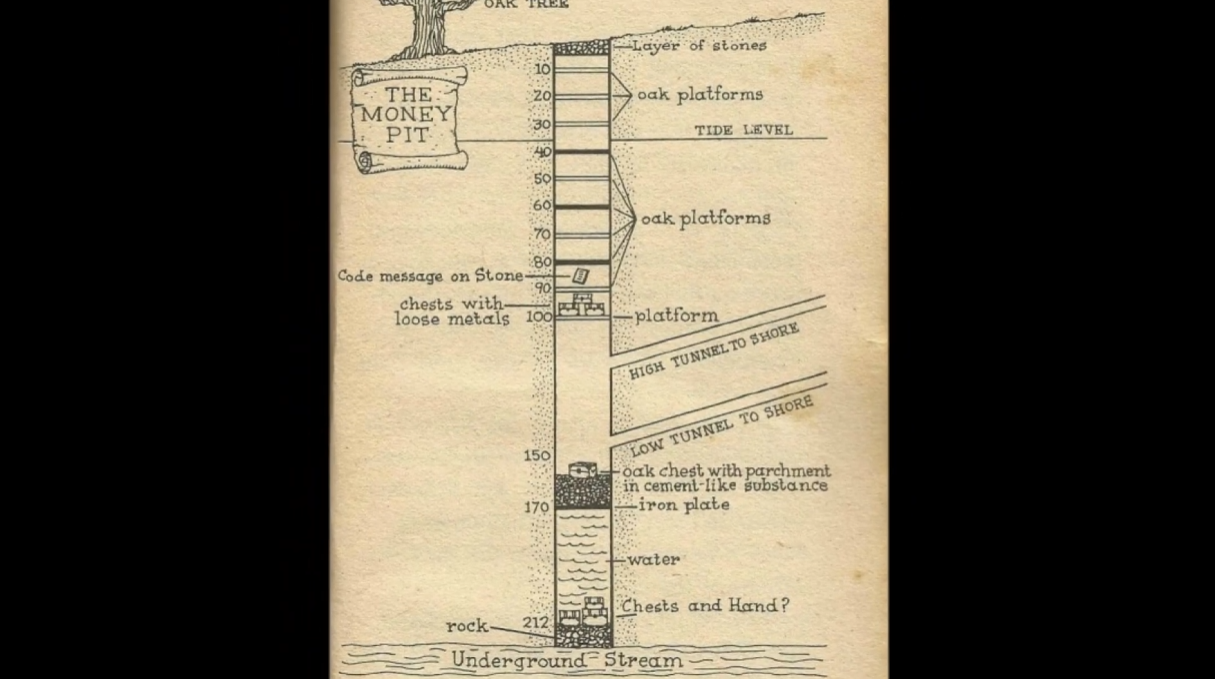
The saga began in 1795 when a young local named Daniel McGinnis stumbled upon a peculiar circular depression in the earth, overshadowed by an oak tree with a curiously sawn-off branch—suggesting the remnants of a pulley system. Intrigued, McGinnis and two friends grabbed shovels and started digging. At just one meter down, they uncovered a layer of flagstones, foreign to the island’s natural geology. Deeper still, at intervals of three meters, they encountered platforms of oak logs, meticulously placed as if to support a deliberate shaft.
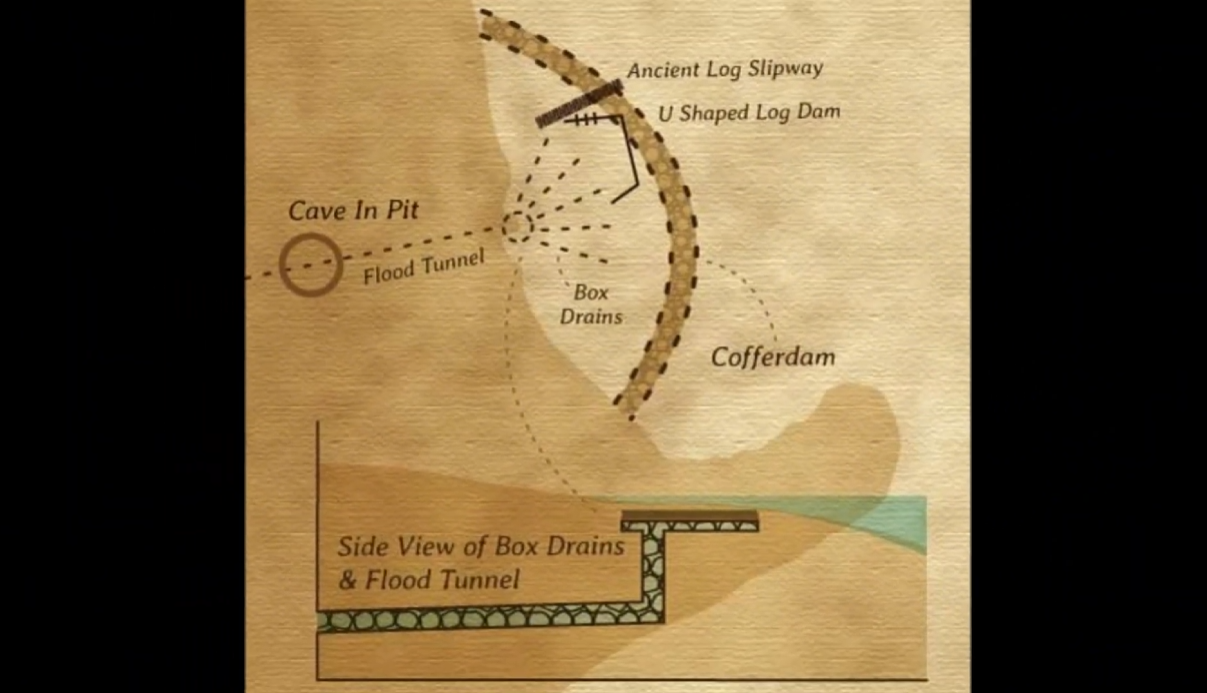
Word spread, and by the early 1800s, professional treasure hunters had taken over. Excavations reached depths of 30 meters, revealing more log layers interspersed with coconut fibers—a material exotic to Canada, hinting at distant origins. Drill samples brought up tantalizing fragments: metal, wood, and what appeared to be gold. But triumph turned to peril when seawater suddenly surged into the pit, flooding it through ingeniously engineered underground channels. No amount of pumping could stem the tide; the island, it seemed, was rigged with ancient flood traps to safeguard its secrets.
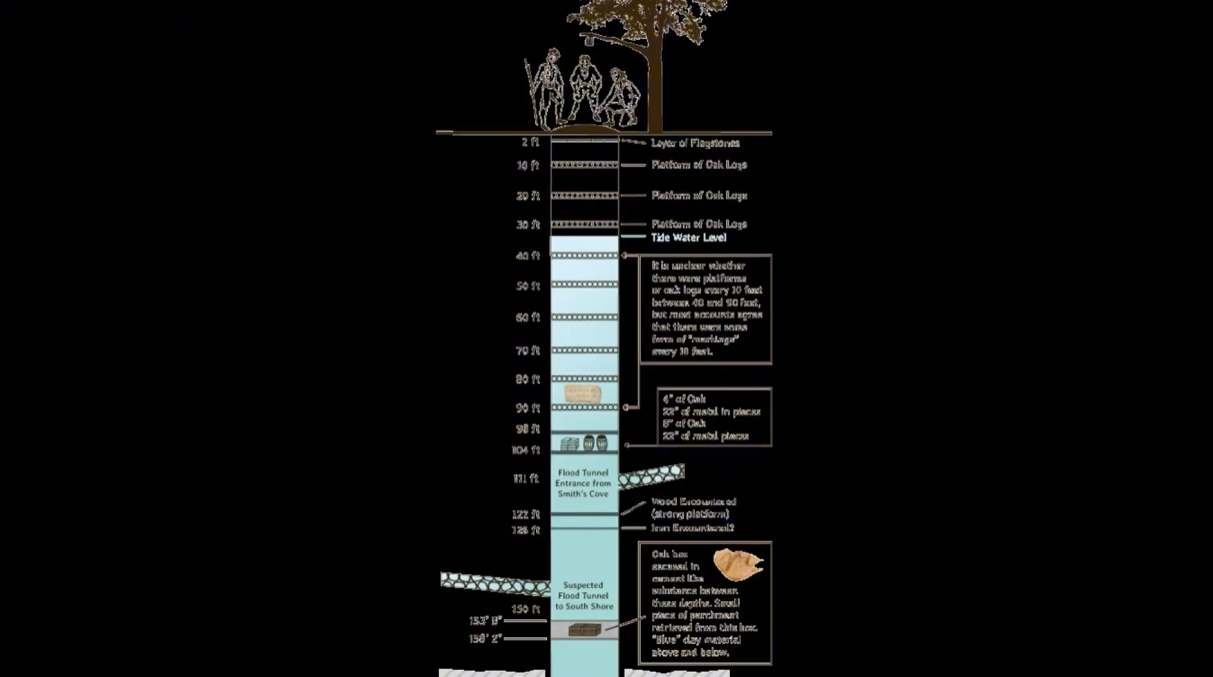
In the mid-19th century, diggers unearthed a flat stone at 27 meters, etched with enigmatic symbols. Translations suggested it read: “Forty feet below, two million pounds are buried.” Though the original stone disappeared, replicas persist, fueling debates over its authenticity—is it a genuine clue or a deliberate red herring?
Oak Island’s allure has come at a steep human cost. Over the years, six lives have been claimed in pursuit of its treasures: victims of cave-ins, accidents, and toxic gases. A chilling legend emerged—that seven must perish before the bounty reveals itself—lending the island a macabre aura that blends superstition with stark reality.
Theories about the island’s hidden hoard abound, ranging from the plausible to the fantastical. Some posit pirate plunder, perhaps stashed by Captain Kidd or Blackbeard, who roamed Nova Scotian waters in the 17th and 18th centuries. The elaborate traps align with tales of buccaneer ingenuity. Others invoke the Knights Templar, suggesting the order’s fabled riches—including the Holy Grail or Ark of the Covenant—were secreted away after their 14th-century dissolution, protected by medieval engineering prowess.
More outlandish ideas include lost manuscripts proving Francis Bacon authored Shakespeare’s works, treasures from a Spanish galleon wreck, or even Marie Antoinette’s jewels smuggled from revolutionary France. Skeptics dismiss it all as a natural sinkhole, though the man-made elements like coconut fibers and structured logs challenge such views. A fringe theory even attributes the site to an advanced pre-Columbian civilization, predating European arrival.
In recent decades, cutting-edge technology has breathed new life into the quest. Ground-penetrating radar, borehole cameras, LiDAR scans, geochemical tests, and underwater drones have mapped the island’s subterranean maze. Notable finds include 17th-century coins, a lead cross echoing Templar designs, enigmatic metal shards, wood carbon-dated to the 1500s, and a tunnel linking to nearby Smith’s Cove. These discoveries have sparked renewed optimism among teams like the Lagina brothers, featured on the History Channel’s “The Curse of Oak Island,” who continue excavations today.
Yet, despite millions invested and generations enthralled, the Money Pit—as the central shaft is known—remains unyielding. Is it guarding a vault of gold, a religious relic, a royal archive, or merely an elaborate hoax? Some speculate the real treasure isn’t material wealth but forbidden knowledge, concealed to shield it from prying eyes.
As winter winds whip across Mahone Bay, Oak Island stands as a testament to human obsession. Storms, failures, and tragedies have not deterred the hunt; if anything, they’ve amplified its mystique. Perhaps the island’s greatest prize is the enigma itself—a puzzle that endures, inviting the next wave of dreamers to dig deeper.
For those drawn to unsolved riddles, Oak Island serves as a reminder: Some secrets are buried not to be found, but to endure. Local historians urge caution for amateur explorers, emphasizing the site’s dangers and protected status. As one veteran digger put it, “Oak Island doesn’t give up its ghosts easily.”
