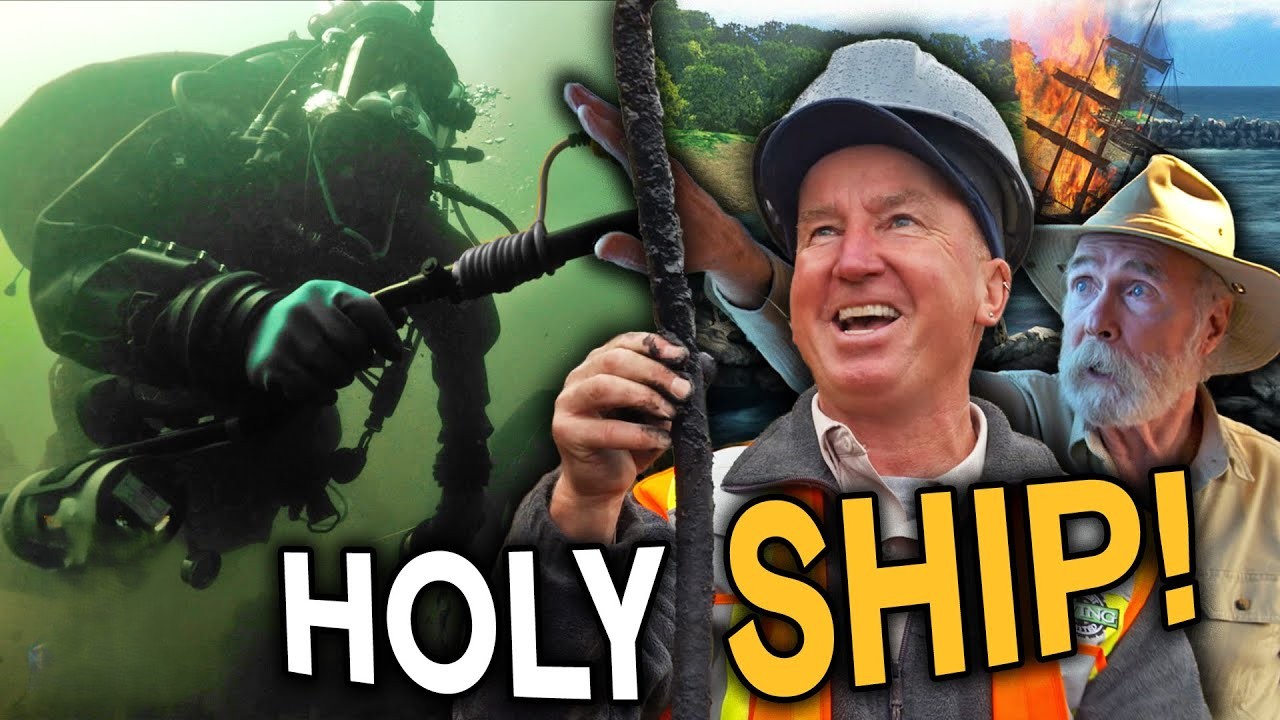
As the chill of winter approaches, the Fellowship of the Dig on Oak Island shows no signs of slowing down in their relentless pursuit of the island’s legendary treasure. In the latest developments from The Curse of Oak Island, Rick and Marty Lagina, along with their dedicated team, have uncovered tantalizing artifacts and anomalies that point to ancient maritime activity. From burned iron relics in the swamp to mysterious underwater hits near Frog Island, the episode delivers a mix of excitement, speculation, and calls for further exploration. Here’s a breakdown of the week’s groundbreaking finds.
Swamp Yields Ancient Iron: A Ring Bolt with a Fiery Past
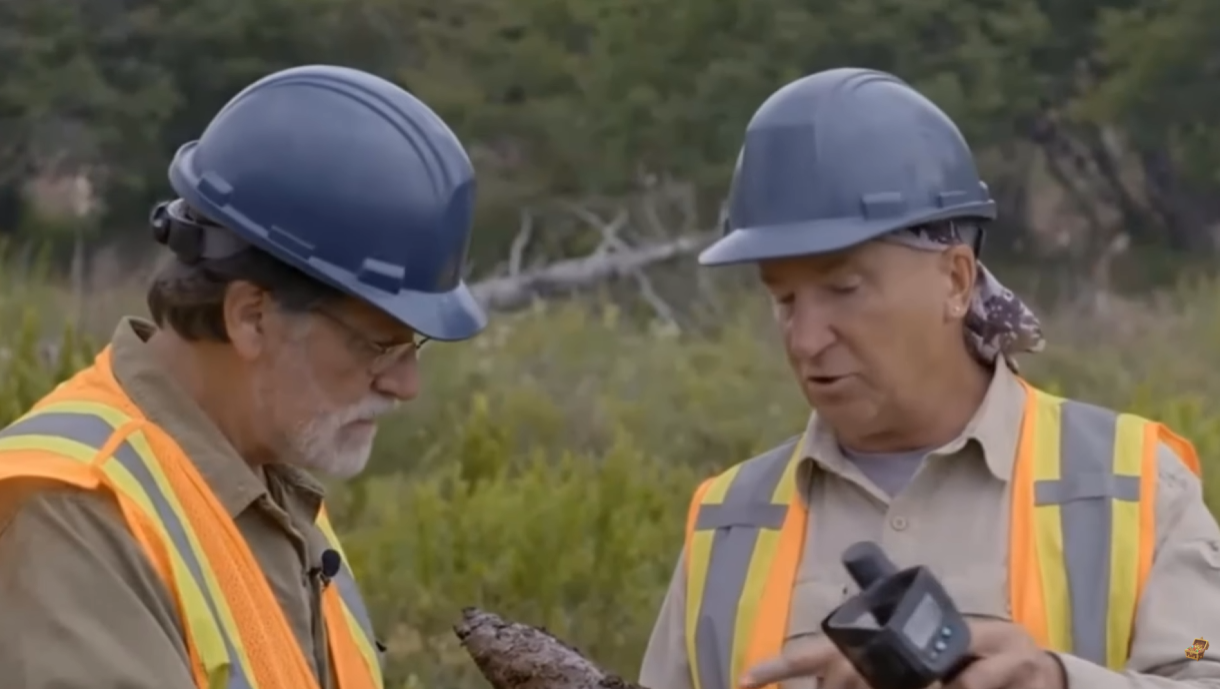
Metal detection expert Gary Drayton and team member David Fornetti kicked off the action along the eastern border of Oak Island’s infamous triangle-shaped swamp, near the stone pathway believed to be an ancient wharf. Scouring the area with detectors, they hit paydirt: a large, bent iron object identified as a possible ring bolt, potentially dating back to the 17th century.
“This is a really old piece of iron,” Drayton remarked, noting its size and the stress it appeared to have endured. The artifact, described as a solid inch-and-a-quarter steel bar, showed signs of breakage and bending in multiple directions. Speculation ran high—could it link to previous ring bolts found this season, evidence of cargo being offloaded from ships centuries ago?

The duo brought the find to archaeologist Dr. Aaron Taylor for analysis. Taylor’s initial assessment was striking: the iron was coated in charcoal, indicating intense burning. “This thing has seen intense burning… it’s still adhering to the iron,” he observed, suggesting it was part of a wooden structure, possibly large timbers from a sailing ship. The team theorized a connection to a recently discovered piece of ship’s railing in the swamp and a massive ship-shaped anomaly detected via seismic scanning two years prior.
Dive Mission Targets Frog Island Anomalies: Shipwreck in Sight?
Shifting focus to the waters surrounding Oak Island, Rick Lagina assembled a high-stakes dive team including nephew Alex Lagina, diver Tony Sampson, and renowned underwater archaeologist Dr. Lee Spence. Armed with data from a recent magnetometer survey by CSR Geo Surveys, the group targeted anomalies near Frog Island and Lot 5—hits that could indicate shipwrecks.
Dr. Spence, with over 50 years of experience and discoveries worth $50 million, reviewed the data in the War Room. “If I had done this magging… I would think, okay, looks like we have one or two shipwrecks right here,” he declared, pinpointing a cluster near Frog Island as particularly promising. The Lot 5 anomaly, in shallower water, was deemed less certain due to geological interference.

The dive, conducted in 19 feet of water, was non-invasive due to Nova Scotia’s treasure-hunting restrictions—no digging allowed without a permit. Using a handheld Aquascan DX200 magnetometer, Sampson and Spence detected multiple buried metallic objects beneath thick silt and kelp. “Come across a large silky area… Another mag hit on a sandy area,” Sampson radioed from below.
Despite the hits, visibility was poor, with no prominent objects emerging. “Everything solid had kelp on it,” Spence later explained, suggesting the vegetation could hide anchors or wreckage. The team concluded a shipwreck is likely present but buried, recommending a return in late winter or early spring for better water clarity. To secure an excavation permit, visible evidence like cannons or timbers is needed—something storms might uncover naturally.
Rick Lagina remained optimistic: “All of the evidence and even the expert is saying there’s a shipwreck here.” The dive underscores the island’s maritime mysteries, potentially tied to the swamp’s secrets.
Deeper Digs in the Swamp: Ship’s Railing and Obstructions Emerge
Back in the swamp’s southern border, excavator operator Billy Gerhardt made a splash—literally—while digging. At a depth of 10 feet below sea level, he unearthed a smooth, polished piece of wood that screamed craftsmanship. “It seems really polished… like a handrail over the top of some balusters,” Gerhardt noted, likening it to a ship’s railing.
The find, with rounded corners and a possible square hole for an old iron fastener, fueled theories of an ancient harbor or wharf in the swamp. Adding intrigue, something large and unyielding blocked further excavation—wood or another structure, not rocks. “The bucket is sliding along something… we haven’t reached bottom yet,” Gerhardt reported.
Rick Lagina inspected the wood on-site: “This looks like ship’s railing… out of place down there for sure.” The discovery aligns with the 200-foot ship-shaped anomaly from prior seismic scans, hinting that drilling efforts two years ago may have missed key evidence. “The swamp has answers and I want them,” Lagina declared, echoing childhood curiosities about the site’s origins.

18th-Century Ship Spike Adds to the Puzzle
The week’s artifact haul continued with Marty Lagina, Dave Blankenship, and Gary Drayton unearthing a massive iron spike near the swamp. “That’s commonly referred to as a ship spike… early 1700s,” Drayton proclaimed. The hand-wrought piece, with a rose head, was examined by archaeologist Laird Niven, who dated it to the 18th century.
“This is like a clue… either a dock or a wharf here or even a shipwreck,” Drayton suggested. Niven agreed a wharf makes sense, possibly built by 18th-century privateer Captain James Anderson, whose sea chest was recently analyzed by the team.
The artifacts were then shown to blacksmithing expert Carmen Legge, who identified the ring bolt as a brace from a 9-inch diameter ship’s timber, dating 1710-1790. Noting burn marks from a “fierce fire,” Legge’s analysis sparked theories: Did a treasure-laden ship run aground, offload its cargo via a hasty stone platform, and get torched to hide evidence?
A Toast to Mysteries: What’s Next for Oak Island?
Gathering at the Mug and Anchor Pub in Mahone Bay, the team toasted their finds over drinks, debating the implications. “What if it’s carrying a bunch of treasure… set fire to it,” Marty Lagina pondered. The consensus: the swamp was a hub of activity, possibly for offloading treasure, with more pieces of the puzzle awaiting discovery.
As Rick Lagina reflected, “Virtually every time we dig in the swamp, we find something.” With physical evidence mounting—a burned brace, ship’s railing, 1700s spike, and offshore anomalies—the Fellowship edges closer to unraveling Oak Island’s 225-year-old enigma. But as always, the island guards its secrets fiercely. Will further dives and digs reveal a deliberate ship sinking? Or is this just the tip of a deeper historical iceberg?
The Curse of Oak Island airs Tuesdays at 9 p.m. ET on History Channel. Stay tuned for more updates as the season unfolds.
