
Parker Schnabel is facing one of the most challenging mining seasons of his career. From the start, his operation has been plagued by logistical setbacks, forcing his crew to work non-stop for four grueling months. Despite the massive potential of his Dominion Creek claim, the gold yield has remained disappointingly low. Now, with his sights set on a weekly target of 1,000 ounces, Parker is taking drastic measures to increase efficiency—but at what cost?
Pushing the Limits: Parker’s High-Stakes Gamble
To boost productivity, Parker introduced two colossal A60 rock trucks to his fleet, capable of moving up to 600 yards of pay dirt per hour—nearly double the capacity of standard mining trucks. This upgrade was intended to be a game-changer, but running these machines at full capacity has introduced serious risks.
“I’ve talked to my dad a lot about loading trucks—do you get greedy and overload them, or do you go with what they’re rated for? He always says to stick to the limits. Maybe that’s why I do the opposite,” Parker admitted.
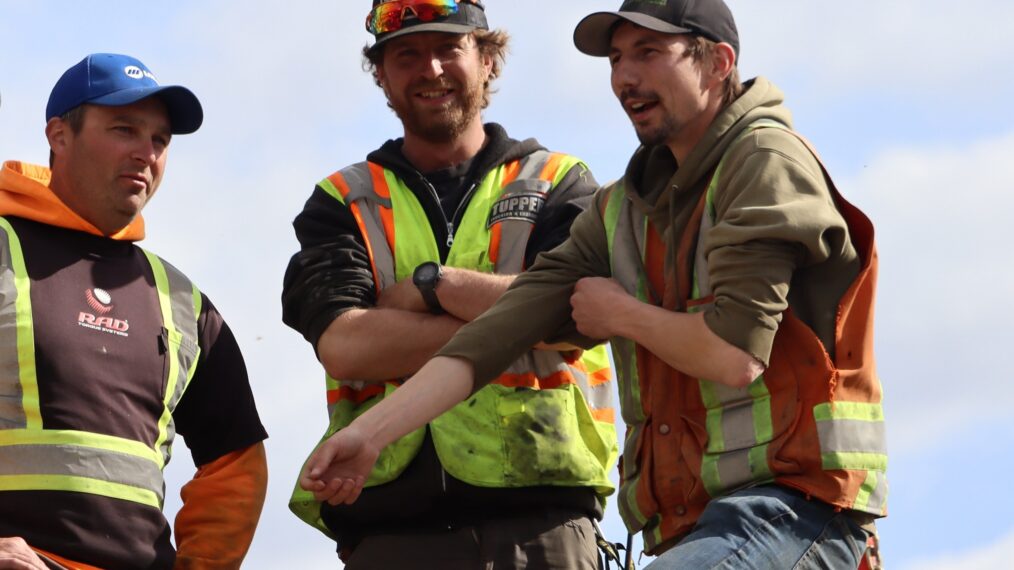
Ignoring his father’s advice, Parker has been overloading the trucks in pursuit of maximum efficiency. However, this high-risk approach soon backfired when one of the A60 rock trucks suffered a catastrophic mechanical failure.
Breakdown Brings Production to a Halt
As 22-year-old greenhorn miner James CTS was hauling pay dirt, an alarm blared from the truck’s control panel. Confused and uncertain, he radioed site supervisor Mitch for assistance. Upon inspection, the crew discovered the severity of the damage—the companion flange connecting the drive shaft to the rear wheels had snapped, causing brake and hydraulic failures. With 60 tons of pay dirt still loaded, the truck was immobilized.
Lead mechanic Taylor and his team sprang into action, knowing that every moment of downtime meant lost production. Before the truck could be moved, the pay dirt had to be unloaded, a delicate process that, if mishandled, could cause a dangerous collapse. The mechanical team worked tirelessly to replace the damaged brake lines, electrical wiring, and the drive shaft. After six hours of intense labor, the truck was finally back in service.

Shutting Down a Wash Plant: A Devastating Blow
Despite their efforts, the damage had already been done. With only one operational A60 truck, Parker was forced to make a tough decision: temporarily shutting down one of his wash plants. This meant losing the ability to process 300 tons of pay dirt per hour—a massive setback in an already struggling season.
“We’re going to shut this thing down. We can’t keep up with just one truck,” Parker announced grimly. The decision directly impacted their gold yield, pushing their season goal further out of reach.
Gold Yields Plummet as Pressure Mounts
After a demanding week filled with mechanical failures and frustrating setbacks, the team hoped for a strong gold weigh-in. However, the results were disappointing. Instead of the triple-digit total they were aiming for, the numbers revealed a troubling decline from the previous week.
At the halfway mark of the season, Parker’s total gold recovered stands at just over 4,175 ounces—far from his revised target of 8,000 ounces. With dwindling production and mounting pressure, he knows that drastic action must be taken to turn things around.

The Gamble: Efficiency vs. Longevity
Parker’s relentless pursuit of efficiency has come at a cost. Overloading the A60 trucks may have increased short-term productivity, but it has also placed extreme stress on the equipment. His father’s warning about respecting manufacturer load limits wasn’t just a precaution—it was based on years of experience. The breakdown of a single truck proved how fragile the balance of production can be.
Now, Parker faces a critical choice. Will he continue to push his machines beyond their limits to chase higher output, or will he adopt a more sustainable approach to protect his operation from further mechanical failures?
The Fight for Gold Continues
As the season progresses, Parker and his team must dig deep—both literally and figuratively—to recover lost ground. Every ounce of gold mined in the coming weeks will be crucial in determining whether they achieve their goal or fall short.
Before heading back to oversee operations, Parker packed the gold and left his crew with a clear message: they must improve results immediately. With time running out and little room for error, the battle for gold is far from over.