Harriet Cowan: From Nursing to Stardom on Clarkson’s Farm – A Whirlwind Journey Back to Her Roots

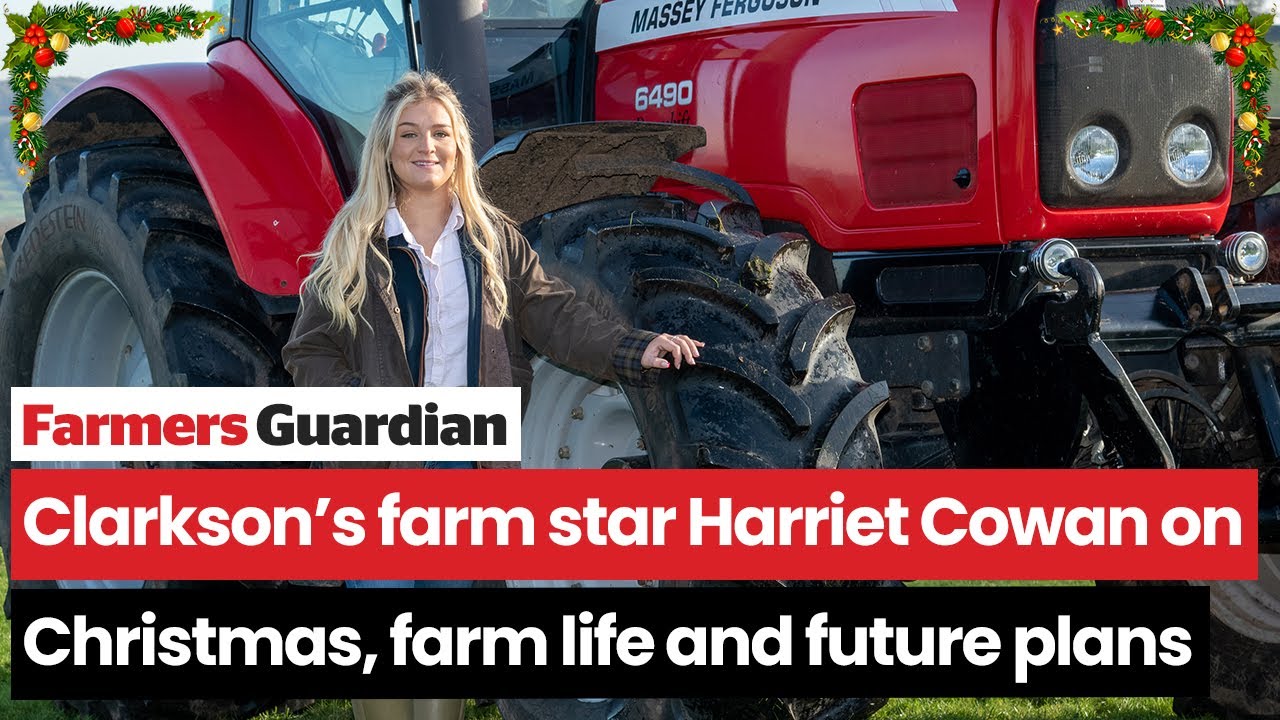
In a crisp, cold field dotted with hay bales, Harriet Cowan, the breakout star of Amazon’s Clarkson’s Farm, sits down for a candid chat about her life on the land, the highs and lows of modern farming, and her festive plans. Sponsored by Lushimo, makers of handcrafted Wellington boots for nearly a century, this Christmas in the Countryside special uncovers the resilient woman behind the show’s beloved scenes.
Cowan, who shot to fame assisting Jeremy Clarkson with lambing and farm tasks, reflects on a “whirlwind” couple of years. “It’s been the best time, and I wouldn’t change it for the world,” she says, bundled up against the chill. Growing up split between “towny” roots on her mother’s side and farming heritage from her father’s, Cowan was immersed in agriculture early. “I’ve been lambing sheep since I was four—Dad made us start with little hands,” she laughs, crediting her grandparents who bought the family farm in the 1950s.
Despite her passion, practicalities led her away temporarily. The small holding couldn’t support the whole family, so Cowan pursued nursing at the University of Derby, qualifying at 21 and working in community care. “When Granddad got ill, I looked after him—that sparked it,” she explains. But the stress of nursing paled against farming’s appeal: “It’s enjoyable, scenic, and very me.” Clarkson’s Farm provided the boost to return full-time, a move she’s grateful for.

Today, the farm runs 20 store cattle annually, bought as calves from local dairy farms and sold at 16-20 months, alongside 40-50 ewes for lambing. “We fatten and finish the lambs, but sheep aren’t making the money we hoped,” Cowan admits. With her father, she operates Cowan Contracting, offering baling, tedding, and silage services, plus supplying haylage to local horse owners. The system evolved from her grandfather’s pedigree Angus herd, tied to a family butcher shop (now run by her aunt and uncle in Belper), to a more commercial setup in recent years.
Challenges abound in this “unique time” for agriculture. A drought-hit year halved fodder stocks, forcing early feeding: “It’s going to be a difficult winter.” TB in supplier herds has complicated calf purchases, while soaring input costs—corn, straw, machinery—outpace returns. “There’s no security; you invest 18 months and might make a loss,” Cowan warns. Beef prices are high, but so are inputs, leaving farmers in limbo. “Everything’s going up, but what we’re selling isn’t.”
Using her platform, Cowan advocates for awareness: “Farming is the backbone of the country. People want green fields and walks, but if it continues like this, that won’t be there.” She urges buying local, highlighting her farm’s meat boxes where lambs travel just 10 miles to the abattoir. “They’ve not traveled hardly less than 10 miles—born here, back here.”
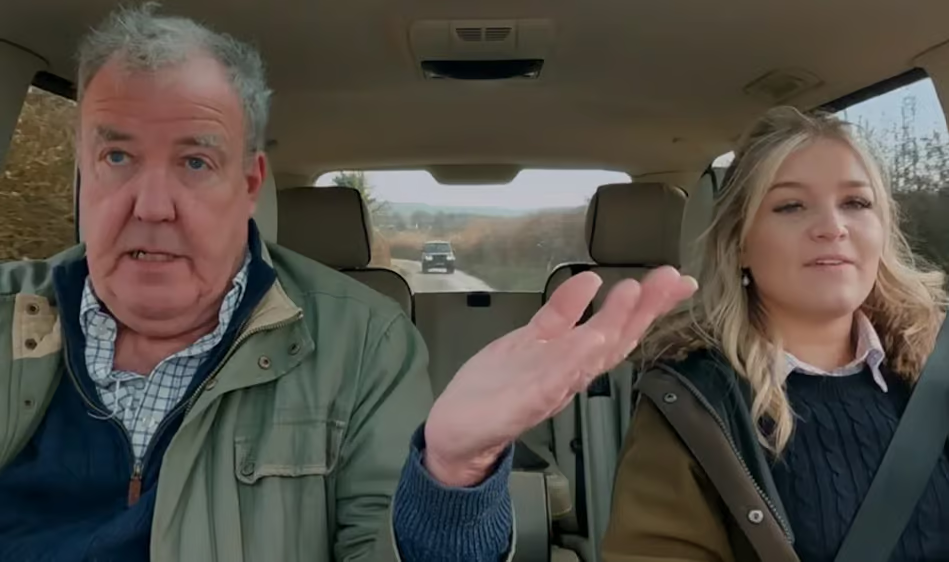
As a symbol of women in farming—nominated for Farmers Guardian’s British Farming Awards Woman of the Year—Cowan pushes for normalization: “It shouldn’t be a conversation; she’s just a farmer.” With fabulous nails and big eyelashes intact (“They don’t get in the way driving tractors”), she inspires young girls: “People say their daughters watched me and now want to study agriculture. We can do it just as well.”
Education is key, she argues: “Kids don’t connect chicken nuggets to chickens—it’s sad.” Cowan calls for farming in school curricula, especially for those struggling in classrooms: “If a kid knows they want to farm, get them in the fields learning what benefits them.” Social media brings questions from non-farmers, often misconceptions about animal welfare: “Come see it—they’re loving life. It’s the life cycle to feed people.”
Christmas remains grounded: Animals fed by 11 a.m., then family time. This year, at her mum’s, featuring home-reared goose, turkey crown, and a “Yorkshire pudding off” using fresh chicken eggs. “Blind taste test—whoever wins makes them on the day,” she grins. No elbows on the table, just like childhood Sundays.
Looking to 2026: Exciting projects (some hush-hush), a potential new farm, and a shiny tractor. “Lots of video content to keep everyone updated.”
Cowan’s story embodies farming’s grit and joy: “It’s not been easy, but it’s been the best.”