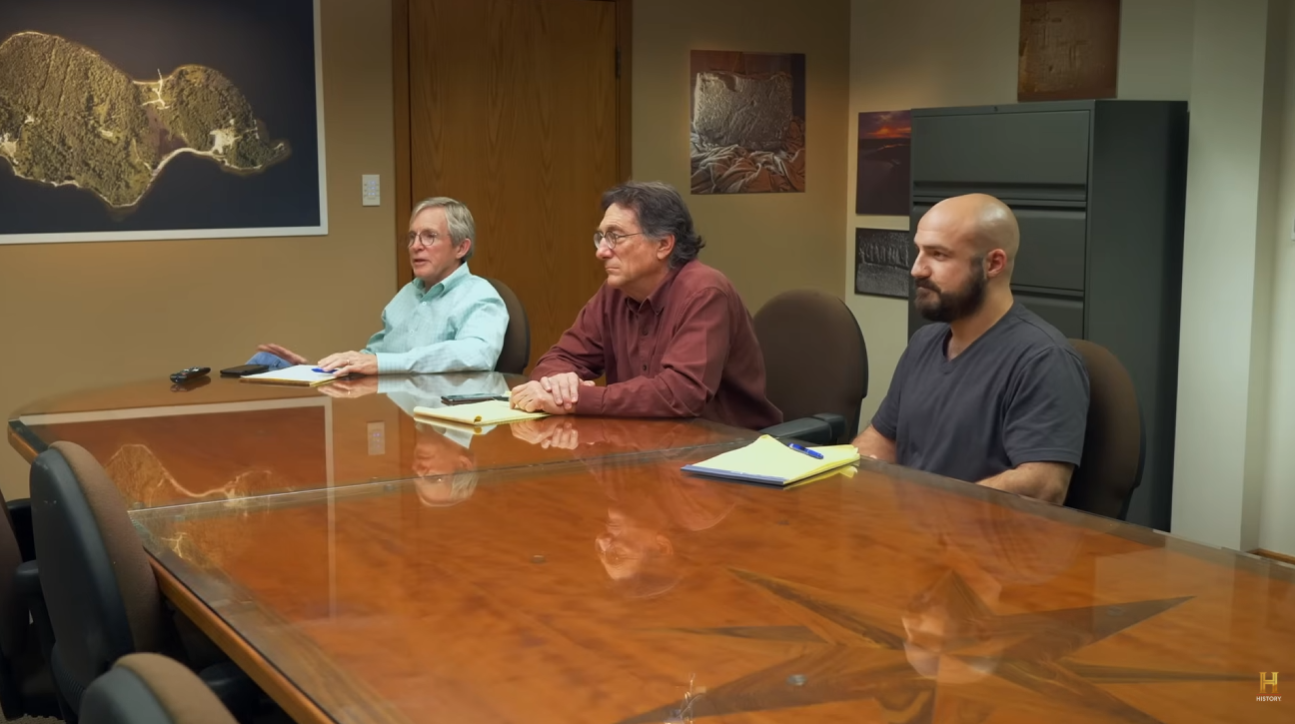
Investigators on The Curse of Oak Island say a cluster of recent finds has sharpened their focus on the Money Pit area, after drilling revealed underground voids, worked wood, and trace amounts of gold linked to a tightly defined target zone.
The latest activity centres on borehole DN 11.5 near the Garden Shaft, where drilling broke into an empty space roughly 90 feet below the surface. Operators halted work to assess the discovery, raising the possibility of a tunnel or chamber connected to earlier voids identified nearby. Mapping suggests the new opening aligns with adjacent boreholes, reinforcing theories of a deliberate underground layout.
Laboratory analysis added momentum. Water and wood samples recovered from the shaft were examined by materials specialist Emma Culligan using XRF testing. While most elements were typical of the island, the presence of gold—albeit in small concentrations—stood out. Team members described the result as rare and encouraging, particularly because it matched earlier water-sample readings from the same zone.
Elsewhere on the island, attention turned to surface features that may conceal earlier activity. In Lot 26, investigators examined a stone wall whose inward-angled construction resembles historic rubble-wall techniques seen in parts of Britain and Ireland. Nearby, a well built in an older style prompted comparisons with known medieval-era structures. The team believes these features could have been designed to obscure or stabilise earlier digging.
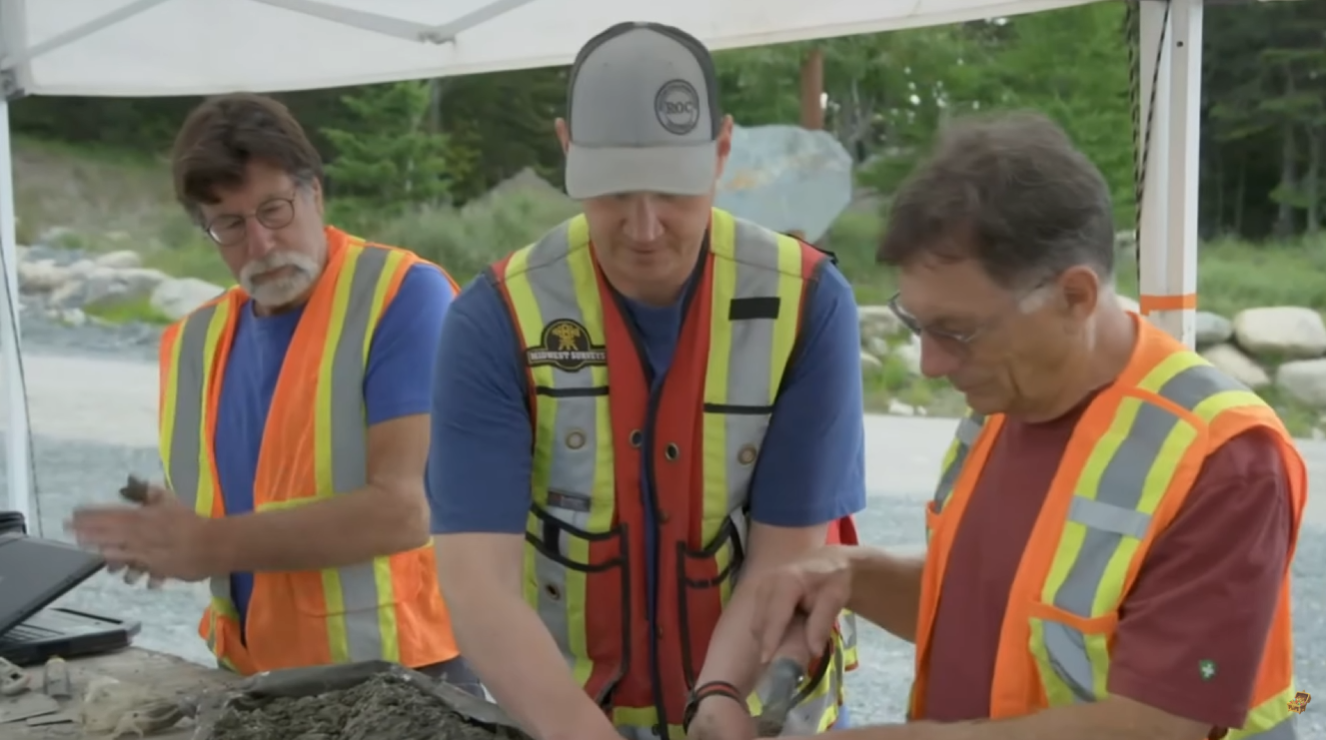
Down in the Garden Shaft itself, Marty Lagina observed a hand-built ladder embedded deep underground—an artefact suggesting organised exploration long before modern searches. At similar depths, collapses and obstructions mirrored voids detected weeks earlier, hinting at connected spaces below.
Throughout the operation, Rick Lagina emphasised caution and verification. Core samples were sealed and catalogued for further testing, with additional drilling planned at varied angles to better define the suspected structure. Team members stressed that context matters as much as any single object; rushing could compromise the relationships between finds.
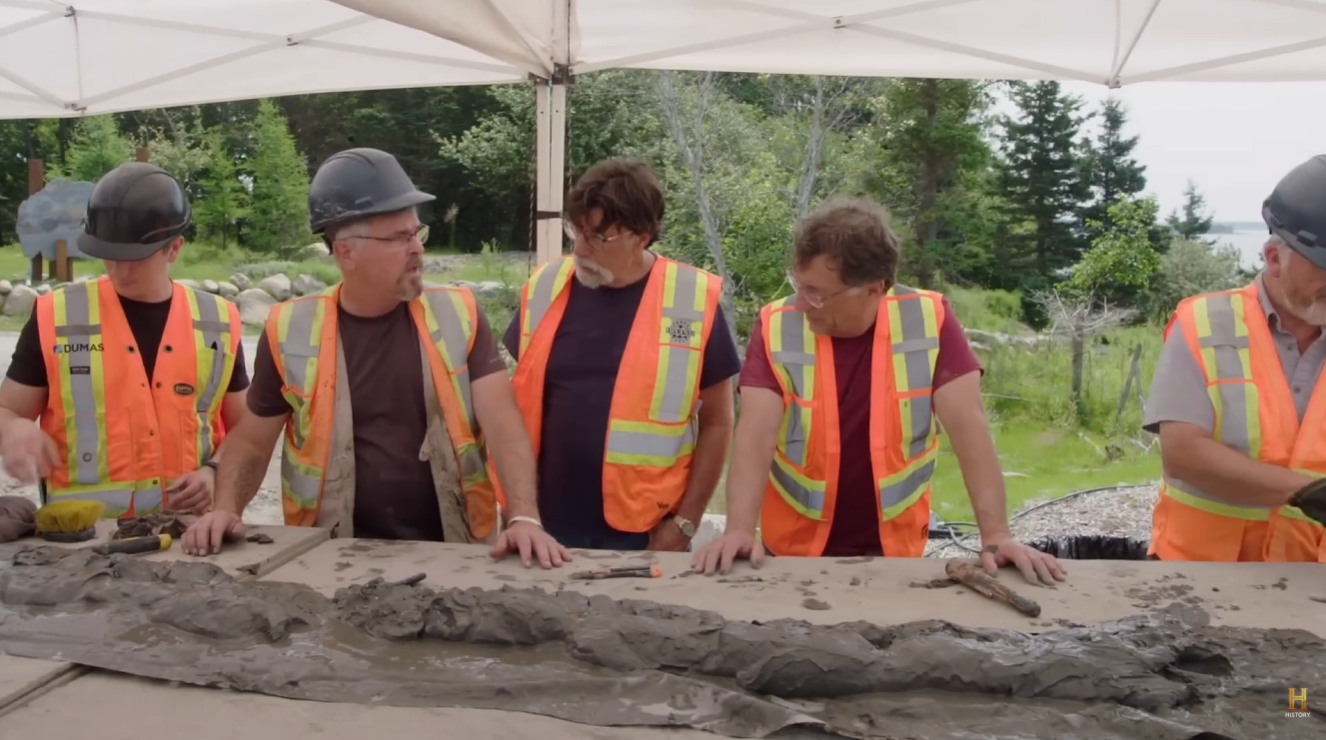
Taken together—aligned voids, worked wood, engineered stonework, and gold traces—the evidence points to purposeful construction rather than natural formation. While no definitive chamber has yet been reached, investigators say the search area has narrowed to a compact zone west of the Garden Shaft, where multiple indicators converge.
For now, the work continues methodically. Each sample and measurement is treated as part of a larger pattern, as the team seeks to understand not only what lies beneath Oak Island, but how—and why—it was placed there.