Season 13, Episode 14 marks a pivotal moment in the Oak Island investigation


Episode 14 of season 13 of The Curse of Oak Island stands out as one of the most densely layered instalments in the programme’s long run, bringing together deep drilling plans, archaeological analysis and visual discoveries that suggest multiple strands of the mystery may be converging.
Rather than centring on a single find, the episode weaves together developments at the Money Pit, Lot 8 and the swamp, presenting Oak Island less as a collection of isolated curiosities and more as a connected system shaped by deliberate human activity.
The episode opens in the war room, where Rick Lagina, Marty Lagina and Craig Tester meet remotely with drilling specialists Vanessa Lucido and Adam Ableton to plan what may be their most ambitious Money Pit operation yet. The team confirms a commitment to a large-scale caisson programme designed to reach depths of around 230 feet in every borehole.
The decision reflects growing confidence in the data gathered over recent seasons, including soil samples from the solution channel showing elevated silver levels. For the team, these anomalies point toward a nearby metallic source and justify a shift from cautious probing to decisive action. The use of a telescoping caisson system and an eight-foot auger capable of cutting through gypsum hydrates and hard ledges symbolises that transition from exploration to attempted extraction.
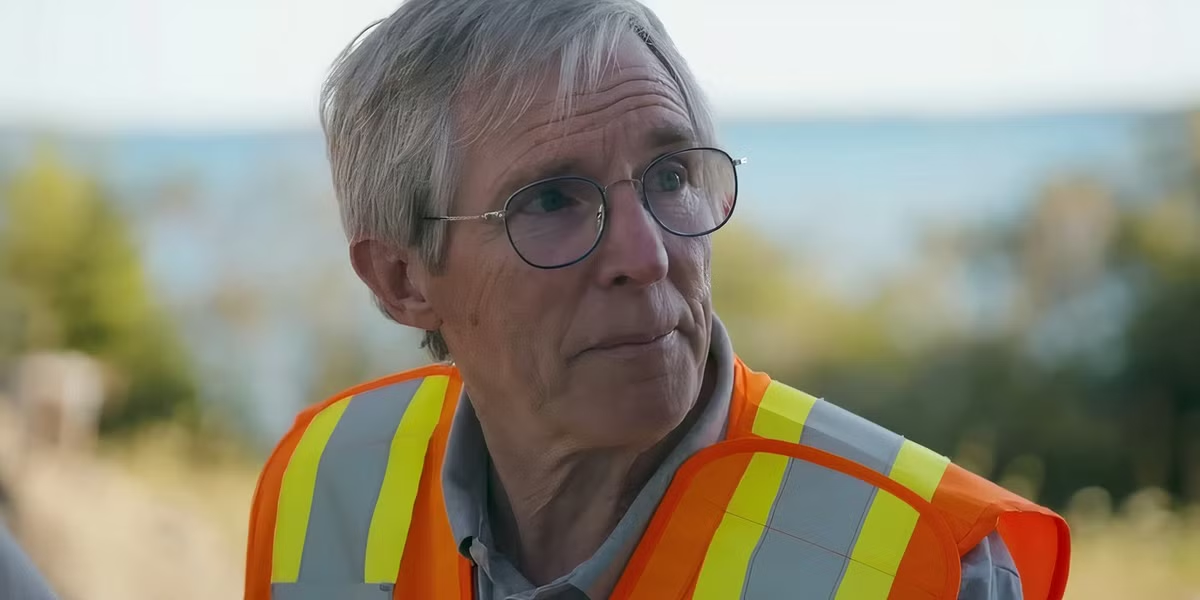
From industrial-scale drilling, the episode pivots to a quieter but arguably more consequential investigation on Lot 8. There, geoscientist Ian Spooner examines a massive boulder held in place by smaller, evenly spaced stones and sitting above disturbed, backfilled soil. The arrangement has long raised questions about whether the feature is natural or man-made.
Spooner’s soil coring beneath the boulder produces one of the episode’s most striking results. Lead concentrations beneath the stone reach as high as 140 parts per million, compared with background levels of around 12 parts per million elsewhere on the island. Spooner explains that such levels are commonly associated with burning, smelting or prolonged human activity rather than natural processes.
Rick Lagina links the finding to historic mining practices, noting that fires were often used to ventilate underground tunnels. If correct, the boulder could mark a capped ventilation shaft rather than a random geological feature. Spooner describes the site as one of the most intriguing locations he has encountered on the island, elevating Lot 8 from a peripheral curiosity to a potentially central element of the Oak Island story.
Metal detecting around the boulder adds further context. Gary Drayton and Marty Lagina recover several iron objects, including a small chopping knife typical of utilitarian tools from the 18th century and a heavily corroded forged iron pintle, possibly part of a hinge or gate mechanism. The age and function of the objects suggest sustained work rather than casual activity, reinforcing the impression that the area once formed part of an organised operation.
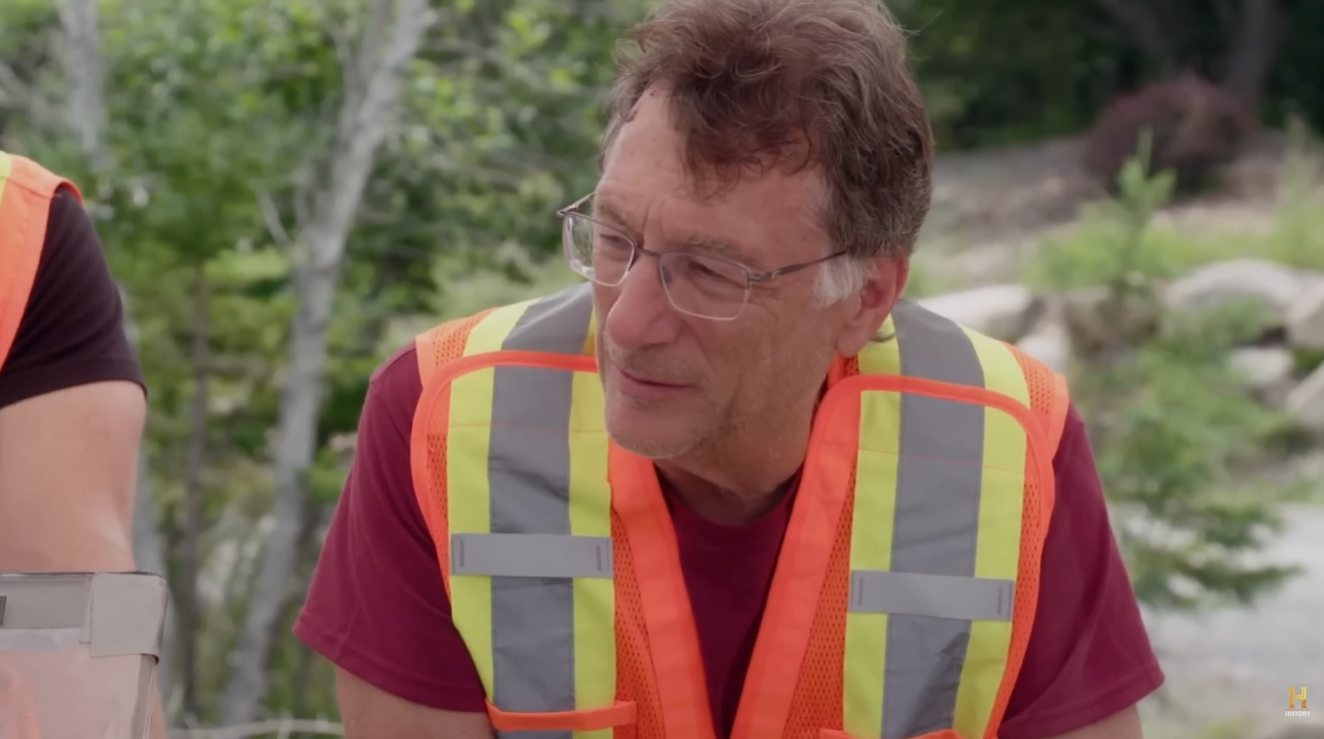
Attention then turns north to the swamp, where Rick Lagina joins Tom Nolan and the team in continuing to trace a cobblestone feature marked by eight-sided stakes. Rather than forming a continuous roadway, the cobbles appear in discrete platforms, prompting speculation about their purpose. The team considers whether they may have served as staging areas or stable working surfaces in a marshy environment.
Finds from the swamp deepen the mystery. A heavy, hand-forged iron object, possibly a broken tool, bears similarities to items previously recovered from the solution channel, hinting at activity dating back to the 1500s. Later discoveries include a dense moulded lead object and fragments of wooden barrel components. Barrels were historically used to transport and store valuable goods, and their presence well below the surface suggests deliberate placement rather than accidental loss.
The episode’s most debated moment arrives when a camera is inserted beneath the Lot 8 boulder after further excavation around its edges. Footage reveals a network of interconnected voids beneath the stone, followed by the appearance of yellow, vein-like material embedded in rock, with a metallic sheen. The team reacts cautiously. While the material resembles gold, they acknowledge that subsurface formations can be deceptive.
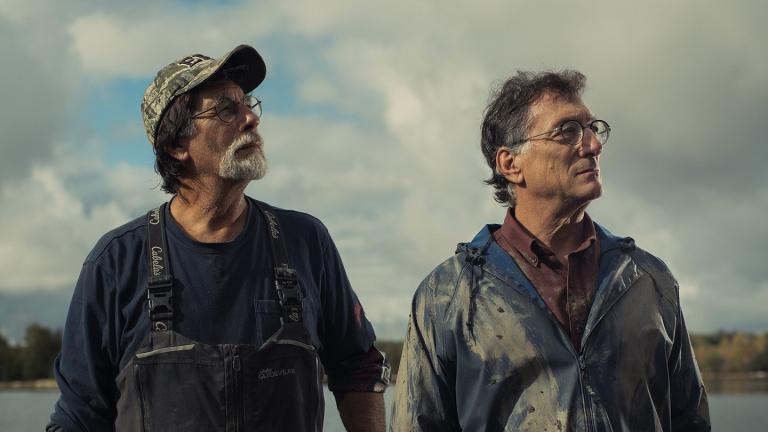
Nevertheless, the context proves compelling. The material appears in an undisturbed void beneath a boulder that may have been deliberately positioned, raising the possibility that whatever lies below was intentionally concealed. By the end of the episode, the team agrees that the boulder must eventually be lifted, though only after careful archaeological documentation.
Beyond individual discoveries, Episode 14 reinforces a broader theme that has been gaining traction throughout the season: intentional design. Carefully placed stones, aligned stakes, compacted fill, elevated lead levels and repeated utilitarian artifacts all point toward coordinated activity rather than random events. Increasingly, the team frames Oak Island as an industrial landscape, involving tunnels, ventilation, transport routes and storage areas, rather than a single hastily dug pit.
The episode stops short of definitive answers, but its significance lies in plausibility rather than proof. For perhaps the first time in the season, clues from the Money Pit, Lot 8 and the swamp appear to align into a coherent narrative of sustained, organised human effort. Whether the shimmering material beneath the boulder proves valuable or not, Episode 14 marks a turning point—one in which the Oak Island mystery begins to look less like scattered speculation and more like an interconnected system waiting to be fully revealed.