Engineers, Myths and the Sea: Why Smith’s Cove May Hold the Key to Oak Island

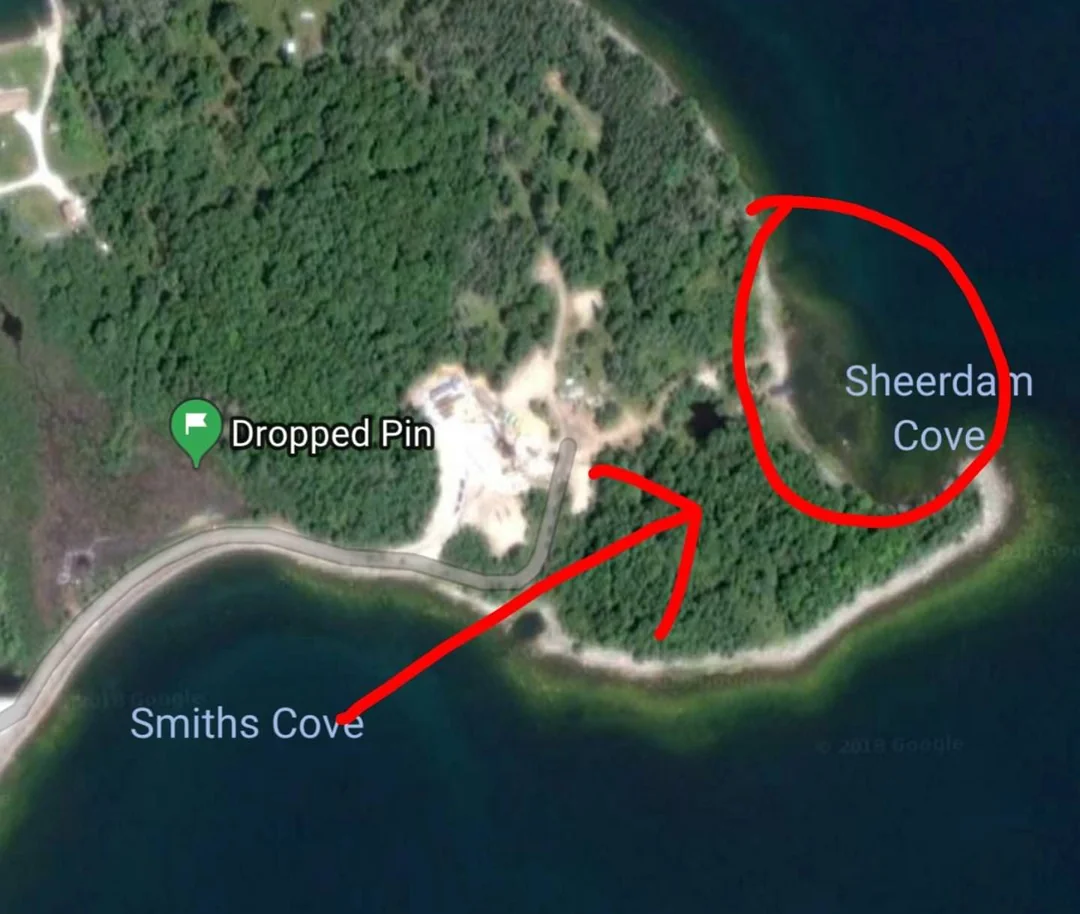
For more than two centuries, Oak Island has drawn explorers, engineers and historians into a puzzle that refuses to settle. What began in the late 18th century as a curious depression in the ground has evolved into one of the most persistent archaeological enigmas in North America. Today, fresh attention is shifting away from the famous Money Pit and towards a quieter, more complex location on the island’s shoreline: Smith’s Cove.
Recent excavation work, documented in The Curse of Oak Island, has revived long-standing theories that Smith’s Cove may not simply be part of the island’s defensive system—but the original access route itself.
A puzzle built to resist intrusion
Since the earliest recorded digging in 1795, Oak Island has demonstrated a consistent and troubling characteristic: flooding. Every major attempt to excavate the Money Pit has eventually been halted by seawater rushing into tunnels below ground. For decades, this phenomenon was dismissed as a natural quirk of geology. That assumption is now increasingly difficult to sustain.
At Smith’s Cove, teams have identified carefully arranged stone drains, wooden platforms laid at regular intervals, and the presence of coconut fibre—an imported material not native to Atlantic Canada. Together, these elements suggest deliberate construction, not coincidence. The design points to an engineered system capable of directing seawater inland with remarkable precision.
According to specialists involved in the investigation, such planning would have required both advanced knowledge of hydraulics and a significant investment of time and labour. This was not an improvised solution. It was intentional.

Reconsidering the Money Pit
For generations, the Money Pit has dominated public imagination. It is where most excavation money has been spent, and where the most dramatic setbacks occurred. Yet modern scanning technology—ground-penetrating radar, sonar imaging, and controlled drilling—has revealed a far more extensive underground network than previously understood.
Straight-lined anomalies, voids beneath stone formations, and interconnected passages are now visible on screens rather than inferred from guesswork. These findings have led some researchers to question whether the Money Pit was ever meant to be the primary target.
One emerging hypothesis is that it functioned as a decoy: a feature designed to attract attention and absorb effort, while the true route lay elsewhere. From a strategic standpoint, Smith’s Cove offers advantages the Money Pit does not. Situated on the shoreline, it would have allowed discreet access by sea, avoiding the need for conspicuous land-based excavation.

Engineering beyond its time
Perhaps the most striking aspect of the Smith’s Cove structures is their sophistication. The stone drains are aligned with consistency, allowing water to move along predetermined paths. The wooden elements show signs of reinforcement rather than simple support. Coconut fibre, often used historically as a filtration material, suggests an understanding of erosion control and water pressure.
Such features challenge assumptions about technological limitations in the period when the system is believed to have been built. Whether constructed in the medieval era or later, the design reflects knowledge more commonly associated with large-scale civil works than a remote island installation.
Competing historical theories
The complexity of the site has kept multiple historical theories alive. Some researchers point to the Knights Templar, a medieval order known for its wealth, secrecy and maritime capabilities. Others argue that pirate activity offers a more plausible explanation, citing the North Atlantic’s heavy traffic during the height of privateering and trade.
There is also a growing view that Oak Island may represent layered activity rather than a single effort. Construction phases dated to different periods suggest the site may have been reused, modified, or repurposed over time. In this reading, religious groups, traders or seafarers may all have contributed to the island’s subterranean story.

Technology changes the questions, not the answers
Modern tools have reduced uncertainty, but they have not delivered conclusions. Gas sensors, pressure mapping and controlled sampling have made exploration safer and more precise, yet every discovery appears to complicate the narrative rather than resolve it.
Wood recovered from depth has, in some cases, dated to different centuries. Metal fragments show signs of human modification without clearly identifying their function. Stone alignments raise as many questions about intent as they answer about construction.
What technology has made clear is this: Oak Island is not defined by a single pit or a single secret. It is a system.
Is Smith’s Cove the real threshold?
If the Money Pit was designed to mislead, Smith’s Cove becomes more than a defensive feature—it becomes a gateway. An underwater or shoreline-based entry would explain both the scale of the flood system and the persistent failure of inland digging efforts.
For now, the theory remains unproven. But as excavation increasingly concentrates on the space between land and sea, attention is moving away from tradition and towards logic.
After more than 200 years, Oak Island continues to resist simple explanations. What lies beneath may not be one discovery, but a sequence—revealed only when the right path is finally understood.