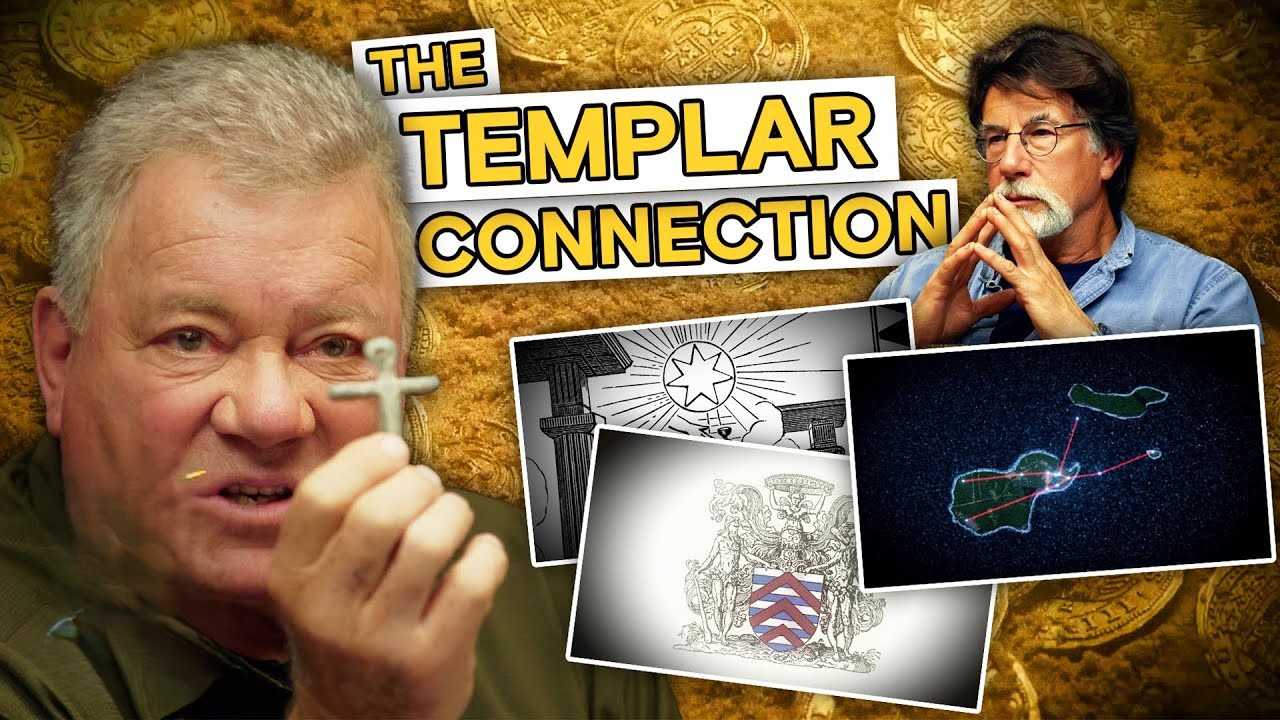
For more than two centuries, Oak Island has been synonymous with treasure lore, speculation and failed excavations. Yet the latest discoveries on the small island off the coast of Nova Scotia suggest the mystery may no longer rest solely on legend. Instead, scientific analysis and archaeological context are now pointing toward something potentially far more consequential: evidence of medieval European activity in North America, centuries before conventional timelines suggest.
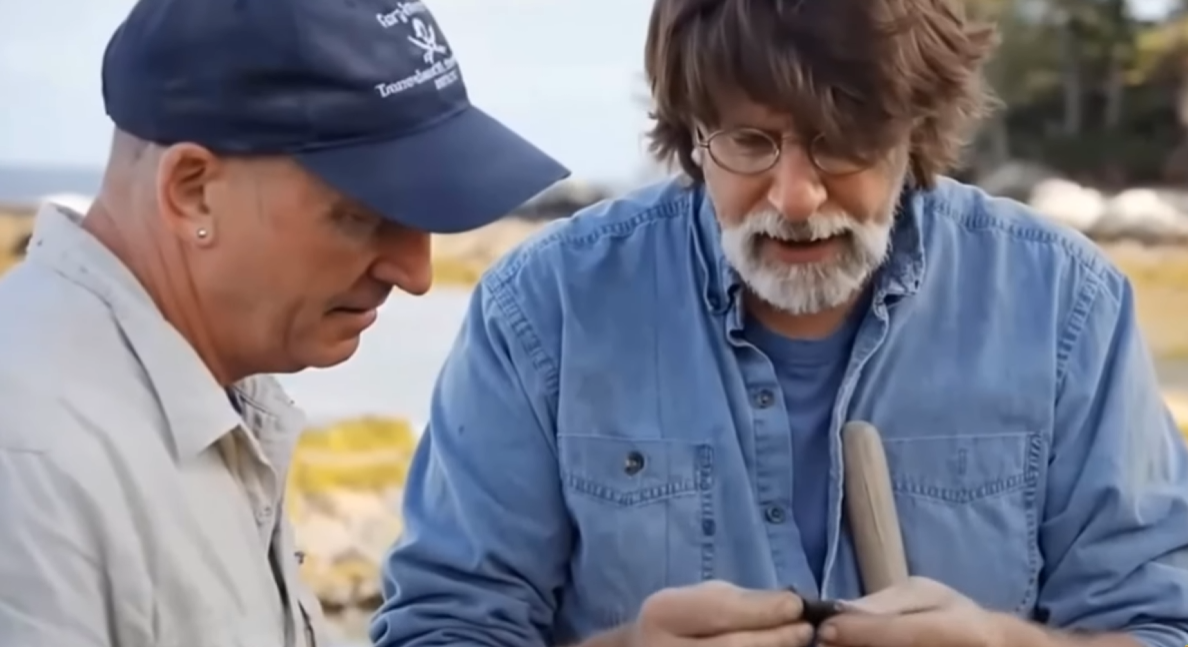
At the centre of this emerging narrative is a small but striking object — a lead cross recovered from Smith’s Cove. Found by Rick Lagina and Gary Drayton, the artefact immediately stood out due to both its form and material. While the cross itself does not confirm when it arrived on Oak Island, subsequent testing has established when — and where — it was made.
Scientific analysis revealed the lead used in the cross originated in southern France and was mined approximately 600 years ago. Crucially, isotope testing confirmed the metal was not North American in origin. This places the cross firmly within medieval Europe, at a time when long-distance transatlantic travel was not believed to be occurring on any sustained or organised scale.
The implications are difficult to ignore. As one member of the team observed, such an object is virtually unknown in North America from that period. Its presence alone demands explanation.

Attention quickly turned to one of the most persistent theories surrounding Oak Island: a connection to the Knights Templar. The order rose rapidly to power during the Crusades, only to be abruptly dismantled in the early 14th century after being targeted by Philip IV of France. Many Templars were imprisoned or executed, but historical records also suggest that others escaped, vanishing from official history.
Investigators noted striking similarities between the Oak Island cross and carvings found inside a former Templar prison in southern France, where knights awaiting execution etched religious symbols into stone walls for spiritual comfort. Among those carvings are crosses bearing a near-identical design. The resemblance is strong enough that team members believe the Oak Island cross could physically align with the carvings in the prison walls.
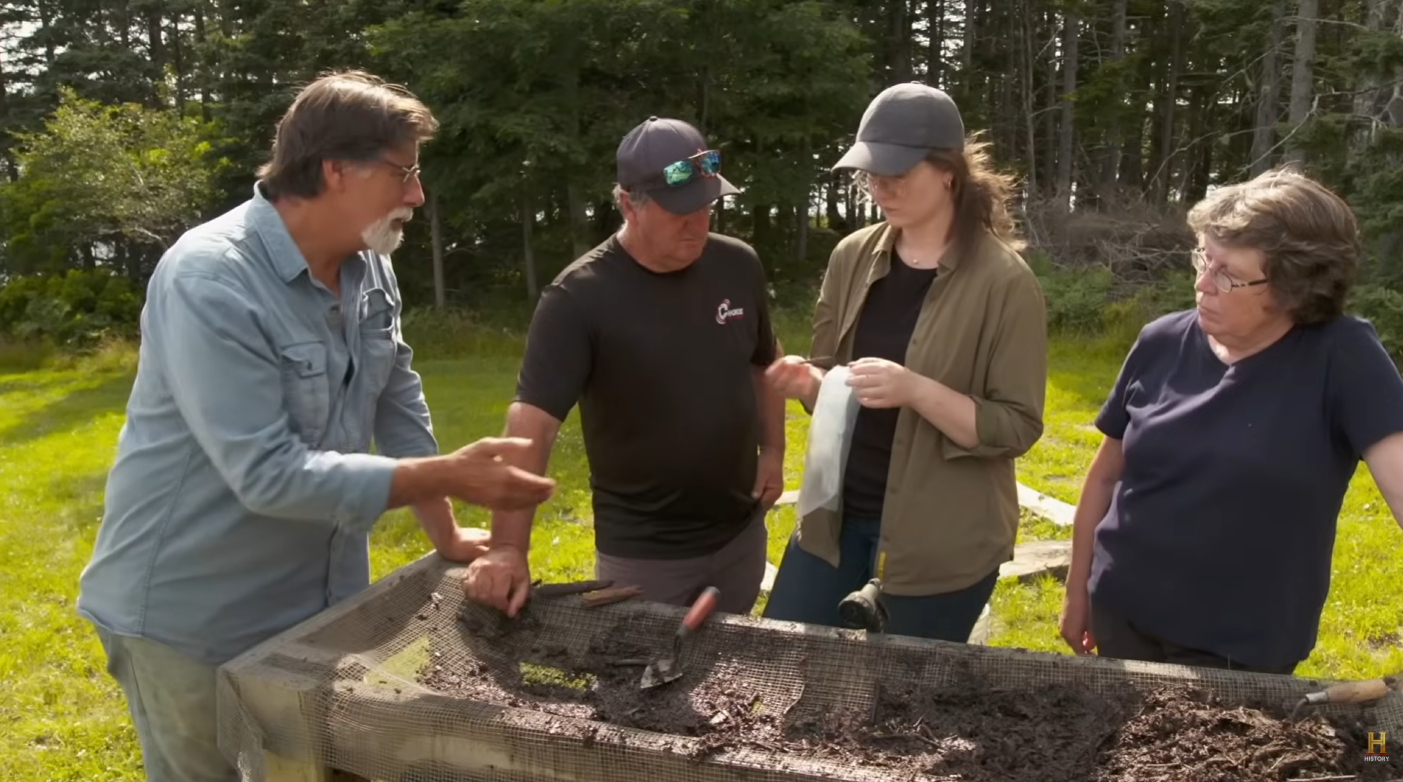
Further discoveries on the island added weight to the theory. On Lot 32, near the swamp, a massive iron spike was uncovered — far larger than a typical railroad spike and deeply embedded in the soil. Blacksmithing analysis later identified it as a rock anchor or ship’s wharf spike, commonly used in maritime operations during the early 18th century.
The location of the spike proved significant. It was found close to where a lead cargo bag seal had been discovered previously, suggesting the presence of organised unloading activity. Experts concluded the spike may have been used to haul heavy materials from ship to shore — a task consistent with cargo transfer rather than casual settlement.
Historical documentation provides an intriguing parallel. A French naval log from 1746 describes an expedition led by the Duke d’Anville, sent to reclaim Acadia from British control. The log references not only military concerns but also the need to safeguard a substantial quantity of treasure. One passage describes the decision to bury valuables on a wooded island, accessed by a concealed tunnel from the shore.
The tools found on Oak Island align with that timeframe and function, raising the possibility that the island served as a temporary or permanent hiding place for valuable cargo during the failed expedition.
Yet the most compelling development came not from speculation, but from laboratory results.

Testing conducted at the University of New Brunswick using laser ablation techniques confirmed that the lead cross originated in Europe. The team then sought further verification from the German Mining Museum, one of the world’s leading authorities on ancient metal sourcing.
Geochemist Tobias Skowronek compared the isotope signature of the cross against a vast database of medieval mining sites. His conclusion was unequivocal: the lead most likely came from a narrow region in southern France, between the Cévennes and Montagne Noire ranges — an area historically linked to Templar activity and close to Rennes-le-Château, a village long associated with religious and esoteric legends.
The dating placed the cross firmly before the 15th century.
If the object arrived on Oak Island near the time it was made, the implications would be extraordinary. It would suggest that Europeans — possibly linked to the Templars — reached North America well before accepted historical accounts acknowledge.
The team’s investigation did not stop there. Aerospace engineer Travis Taylor introduced a theory rooted in archaeoastronomy, proposing that Oak Island itself may have been mapped using celestial alignment. By overlaying the constellation Taurus onto the island and neighbouring landforms, Taylor identified multiple locations where stars appeared to align with stone features on the ground.
Field visits to these points revealed large boulders and stone formations precisely where the model predicted. While not definitive proof of intentional mapping, the consistency was enough to raise further questions about deliberate design and long-term planning.
Taken together, the discoveries present a pattern that is increasingly difficult to dismiss as coincidence. A medieval European artefact, maritime hardware linked to organised shipping, historical records describing hidden treasure, and potential navigational markers all point toward structured activity rather than isolated chance.
For the Oak Island team, the significance lies not in any single object, but in what these objects collectively represent. If validated through further evidence, they may force historians to reconsider the timeline of European presence in North America — and the motives behind it.
As The Curse of Oak Island continues, the island’s secrets remain far from fully revealed. But for the first time in its long history, Oak Island is no longer asking whether something happened there. It is asking who came — and how early they arrived.
