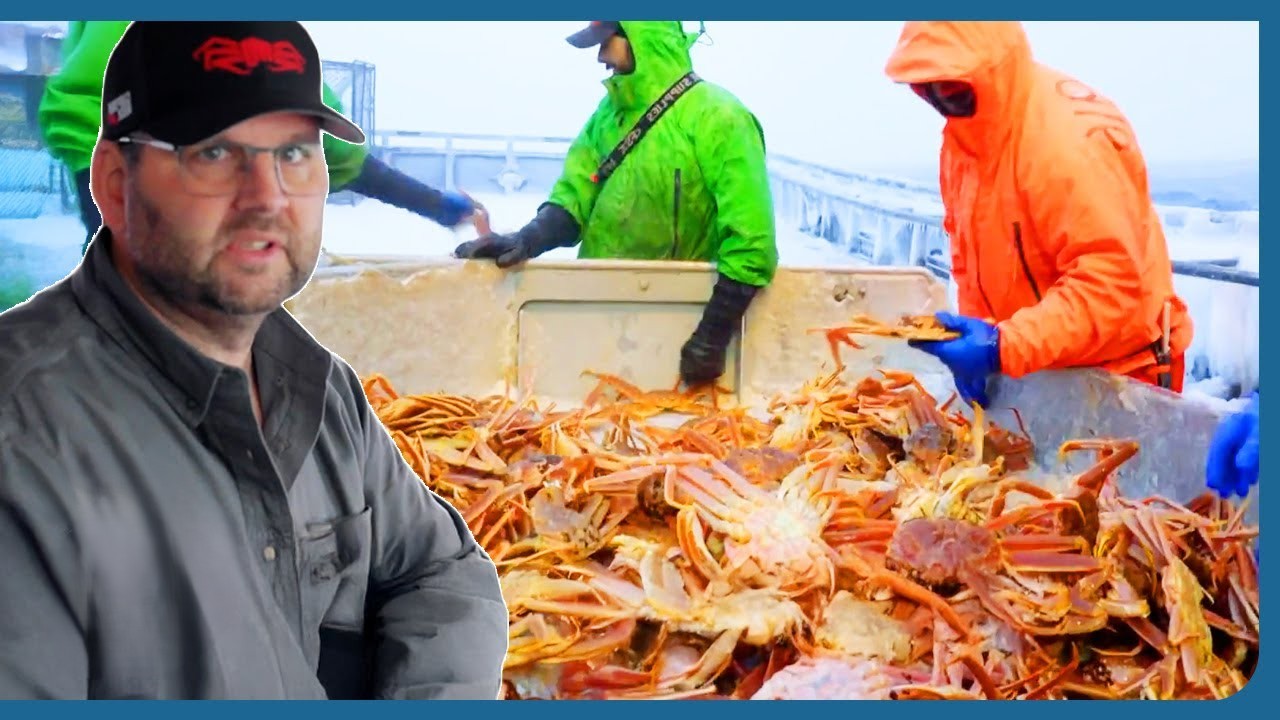
Nearly 650 miles northwest of Dutch Harbor, on the remote Opilio crab grounds of the Bering Sea, Captain Rick Shelford has taken his vessel, the Illusion Lady, to the edge of both geography and endurance.
With Russian waters less than two miles off his starboard side, Shelford made a calculated move to escape the congestion of thousands of competing crab pots further south. The decision, driven by signs of promising crab density along a depth curve near the maritime boundary, could determine whether his remaining 110,000 pounds of Opilio quota translates into profit — or loss.
But the gamble has come at a cost.
A foot of ice coats the vessel’s bow. Arctic spray freezes on contact. Deck temperatures have plunged to minus 25 degrees Fahrenheit, while the ocean below remains a comparatively balmy 38 degrees. The extreme temperature differential has created a dangerous race against time each time a pot breaks the surface.
“We just need these pots off the boat as quick as we can,” Shelford told his crew as they prepared to set gear in the isolated grounds. “The more spray that hits the bow, the more ice builds up. That means more work and less sleep.”
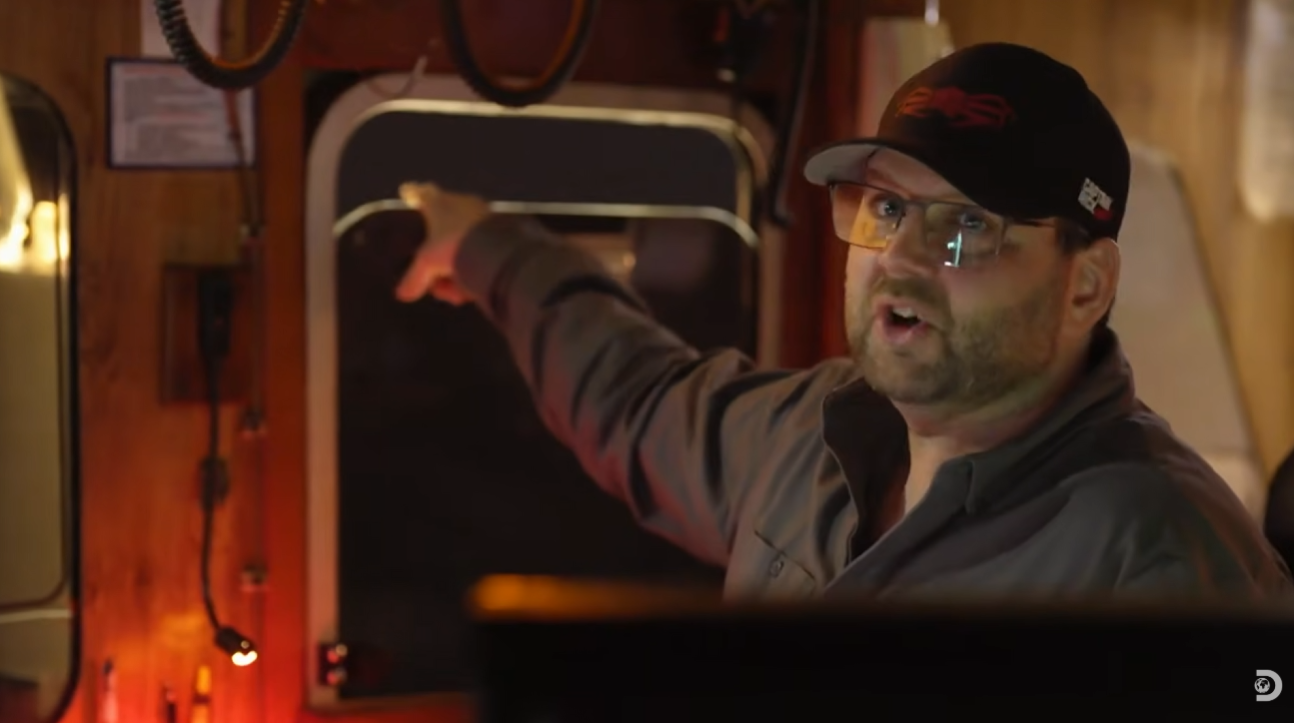
Unlike crowded fishing lanes where vessels compete pot-to-pot, the northern grounds offer breathing room. There are no other boats in sight. Yet isolation brings heightened risk. If the catch fails to justify the fuel burned during the long run north, the financial setback could reach thousands of dollars in a single week.
When the first pot surfaced, hopes briefly soared.
“There’s a ton of crab on the table,” one crew member shouted as snow-white Opilio spilled across the sorting station.
The abundance was undeniable. But so was the cold.
Within minutes, the crew discovered that success carried a deadly complication. As seawater clung to the crabs’ shells and gills, exposure to subzero air caused them to freeze rapidly. A stopwatch revealed the brutal margin: just two minutes and twenty seconds from pot lift to lethal freezing conditions.
“These crab have water in them. They live in water,” Shelford explained. “When that water freezes on their gills, it kills them.”
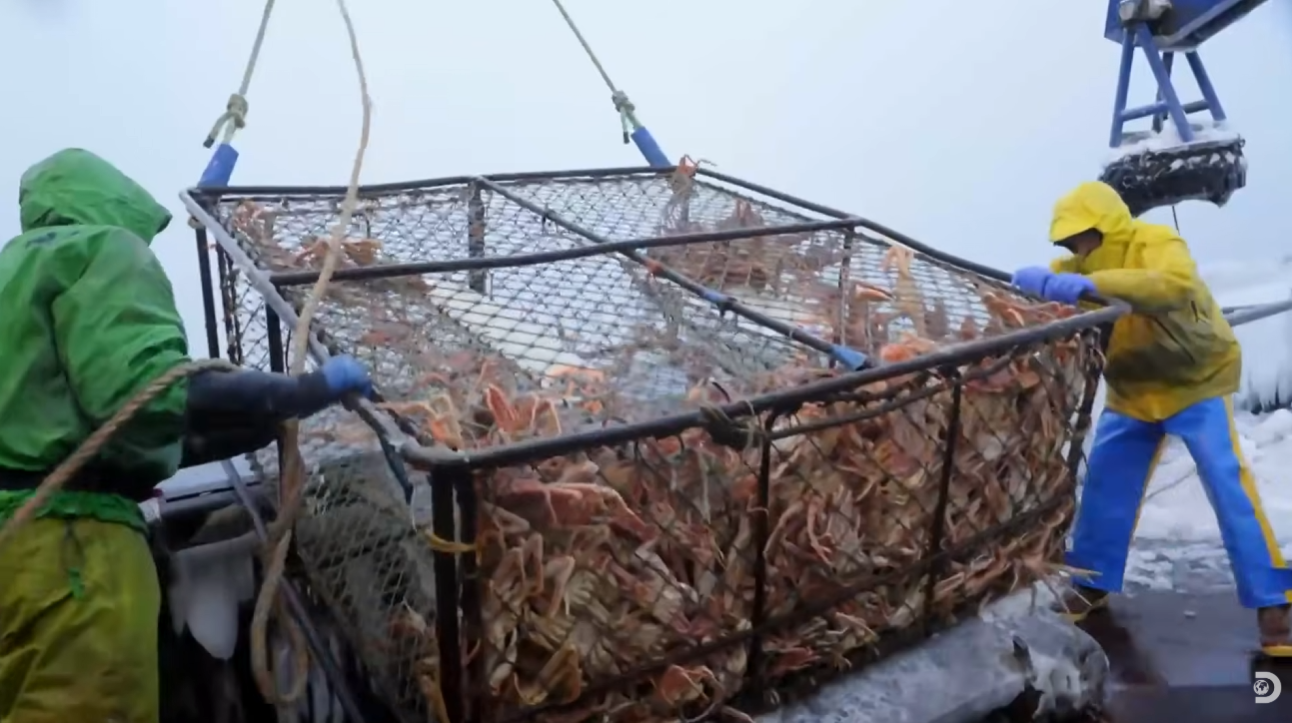
Each Opilio crab is worth roughly eight dollars at dockside. Frozen crab cannot be processed or sold. What should have been a triumphant haul instead became a frantic salvage operation. The crew shifted from harvesting to preservation, hustling to move live crab into holding tanks before they stiffened on deck.
Steam rose from the pots as they hit the open air, instantly crystallizing into ice. Crew members shouted timing updates, pushing crab down sorting lines at a pace dictated by physics rather than profit.
“Once you see crab freeze up, holler,” Shelford instructed, his focus narrowing to survival — of both catch and crew.
The Bering Sea has always demanded resilience. But the combination of remote positioning and severe cold has turned this northern push into one of the season’s most punishing tests. Ice accumulation not only threatens the catch; it jeopardizes vessel stability. Additional weight on the bow forces crews into continuous de-icing cycles, hacking away frozen spray to maintain safe ballast.
Shelford acknowledged the mounting pressure. “We can’t just sit and wait four or five days for better weather,” he said. “There’s too much riding on this.”
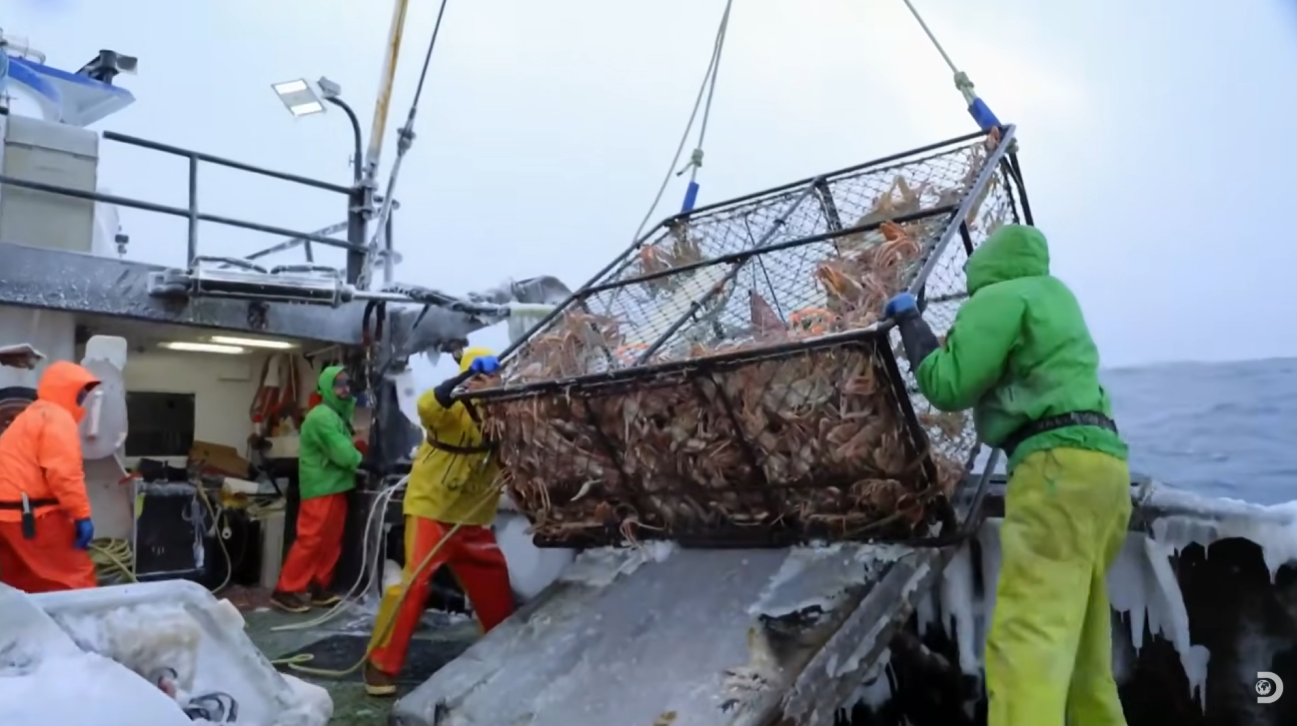
The decision to run north was rooted in competitive strategy. Lower traffic means less pot interference and potentially healthier biomass. In crowded zones, overlapping gear can reduce catch efficiency and compress margins already strained by fuel and quota costs. By positioning near the maritime boundary, Shelford aimed to isolate his operation from the fleet’s densest traffic.
Yet the environmental reality has reshaped the mission. Instead of maximizing numbers per pot, the immediate objective is preventing mortality before crab reach tanks.
As daylight fades, temperatures are expected to fall further. The crew must now decide whether to continue hauling in the extreme cold or suspend operations to protect both product and personnel.
With Russian waters marking the horizon and no other vessels nearby, the Illusion Lady operates alone in one of the harshest commercial fisheries on earth. The next set of pots may determine whether this northern bet becomes a breakthrough — or an expensive lesson written in ice.
For Captain Rick Shelford and his crew, the margin between success and setback measures not in miles, but in minutes.
