
A dramatic collapse at Smith’s Cove has forced the team behind The Curse of Oak Island to halt excavation at what may be the long-sought flood tunnel designed to protect the legendary Money Pit.
The incident unfolded as Marty Lagina, Rick Lagina and their colleagues inspected a deepening shaft in the uplands near the cove. What began as curiosity over a surge of water quickly turned into a safety emergency when the surrounding earth began to give way.
Witnesses described water “squirting up like a geyser” from the base of the excavation. Within moments, cracks formed along the edge of the pit. A section of earth slumped inward, prompting an immediate withdrawal. “It’s not worth it,” one team member warned, as the operation was suspended to avoid further collapse.
A Structure Beneath the Soil
Before retreating, the group deployed a camera mounted to an excavator arm in order to document the cavity from a safer vantage point. Footage reviewed later in the War Room appeared to show wooden timbers lining a void approximately 30 feet below ground level.
The structure displayed what some described as a “double-walled” appearance, with substantial boards on one side and narrower planks opposite. Geospatial mapping conducted by surveyor Steve Guptill suggested alignment with previously identified anomalies and the so-called U-shaped structure discovered in earlier seasons.
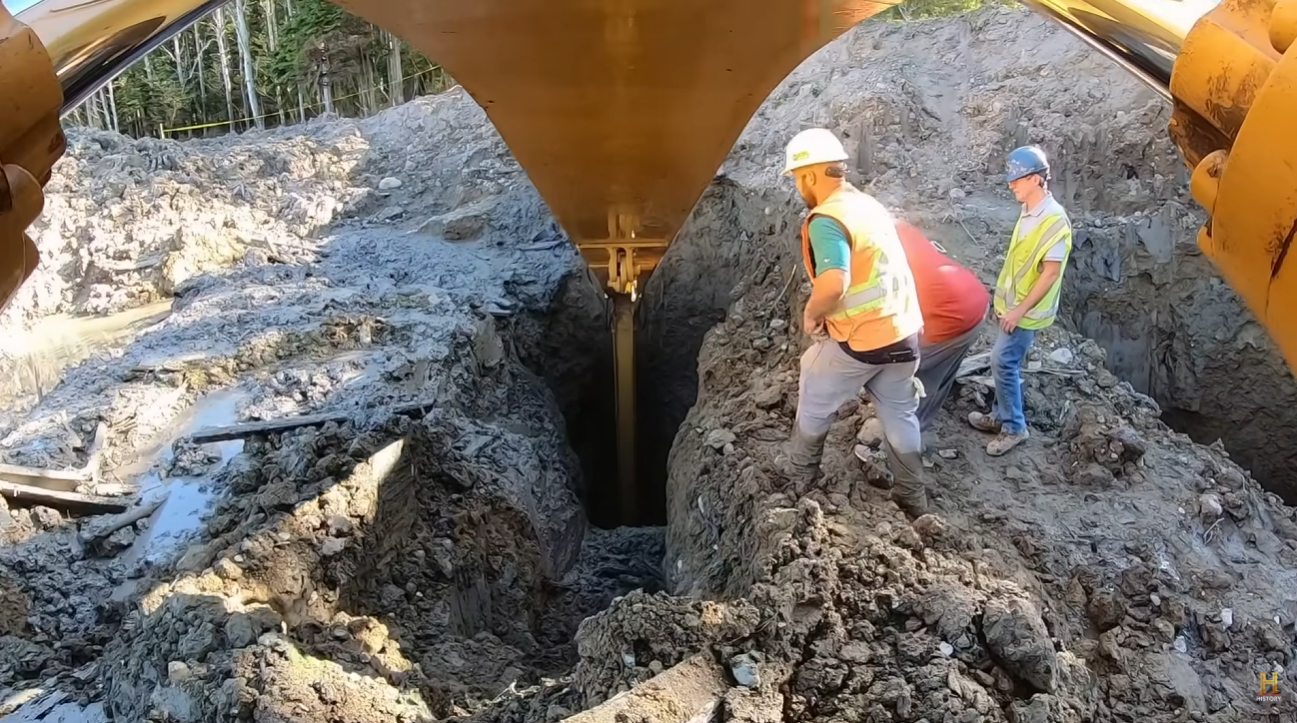
“It looks more tunnel-like than shaft-like,” one member observed during the review. If confirmed, the timberwork could correspond with accounts dating back to 18th-century search efforts, when early diggers reported engineered flood systems designed to inundate the Money Pit if disturbed.
However, the timing of the discovery presents logistical challenges. Representatives from Irving Equipment Limited are scheduled to remove the steel cofferdam at Smith’s Cove — a process expected to take several weeks. Under current permits, further excavation in the area must cease for the season.
The Coconut Fiber Confirmation
In a development that may prove more significant than the collapsing tunnel itself, the team also recovered fibrous material embedded within the soil near the timber structure. The substance was carefully bagged and submitted for laboratory analysis.
During a conference call with geoscientist Dr. Ian Spooner, the team received confirmation: the material is indeed coconut fiber.
The finding carries considerable weight. Coconut trees are not native to Nova Scotia, and historical records from 1804 and 1850 describe layers of coconut fiber used as filtration material above stone box drains at Smith’s Cove. Those drains were said to feed into the main flood tunnel system protecting the Money Pit.
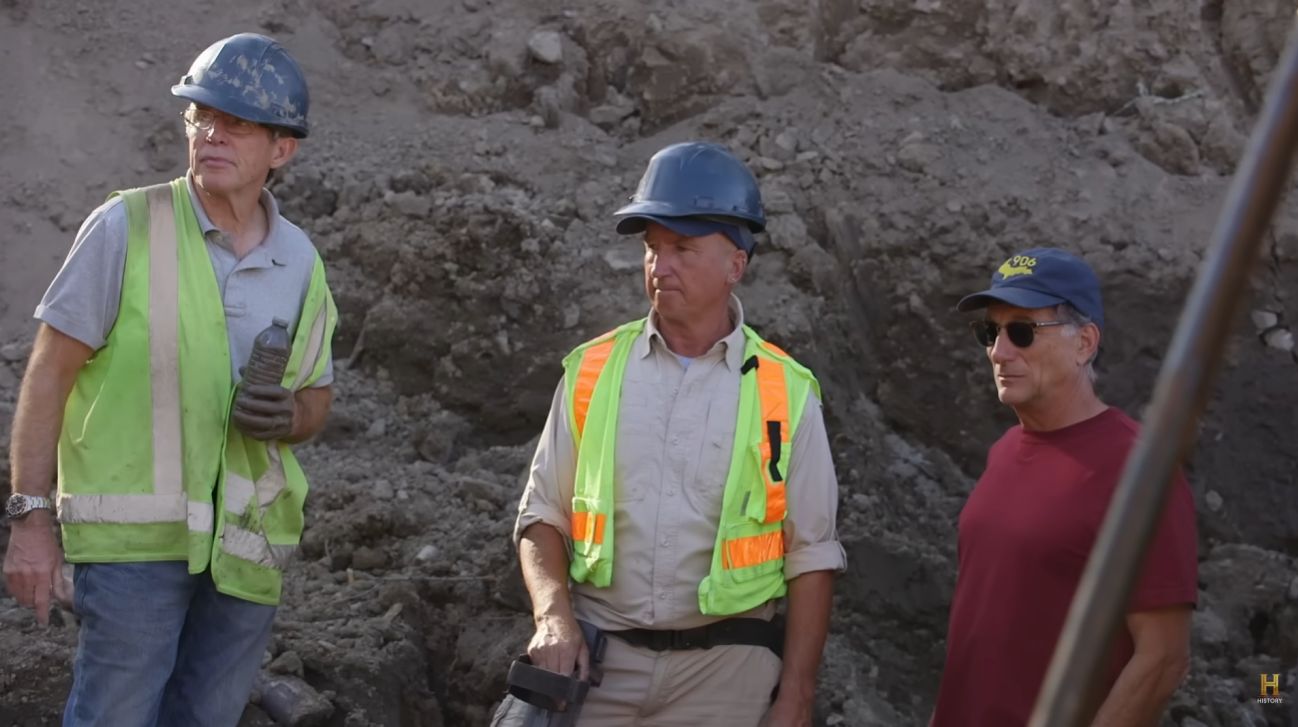
For Rick Lagina, the confirmation represents validation of longstanding accounts. “At the end of the day, we were looking for evidence that would corroborate the old story,” he said. “Now we have this evidence.”
Historical Implications
If dendrochronological testing of the recovered timbers places them prior to the discovery of the Money Pit in 1795, the implications could be substantial. Such a result would suggest deliberate engineering predating modern treasure-hunting efforts — reinforcing theories that a sophisticated system was constructed to guard something of importance.
Sceptics continue to argue that some wooden features may be remnants of later searcher activity. Yet the association of coconut fiber with structural timber in an undisturbed context strengthens the case for earlier origin.
For now, the team faces a pause imposed not by speculation, but by regulation and safety. The sheet piling must be removed, the site stabilized, and permits respected. Excavation will not resume until conditions allow.
Despite the setback, optimism remains measured but tangible. “We’re certainly finding what people were originally looking for,” Marty Lagina reflected.
After more than two centuries of attempts to defeat the flood system at Oak Island, the combination of structural timber, engineered alignment and verified coconut fiber suggests the search may be entering a decisive phase — even if, for this season, it must wait.