Carbon Dating Breakthrough and Heavy Machinery Escalate Oak Island Search in Season 13


Episode 15 of The Curse of Oak Island closed with mechanical frustration at the Money Pit — but also delivered what the team believes may be the most consequential scientific revelation in the show’s history.
While a 135-ton rotary drill stalled just 20 feet below ground after encountering dense surge rock from a previous excavation, attention quickly shifted to the war room, where preliminary carbon-14 dating results were unveiled. A fragment of leather shoe recovered from deep within the triangle-shaped swamp has been dated to between 1148 and 1216.
If confirmed, the finding would push documented human activity on Oak Island back to the 12th and early 13th centuries — centuries before the 1795 discovery of the Money Pit. The time frame coincides with the height of the Knights Templar era, a period often referenced in long-running theories about the island’s origins.
The dating also aligns with earlier archaeoastronomy research presented by Italian scholar Adriano Gaspani, who proposed that Nolan’s Cross — a large boulder formation on the island — may have been constructed in the early 1200s. For the fellowship, the convergence of scientific timelines strengthens the argument that organized activity took place on the island far earlier than traditional accounts suggest.
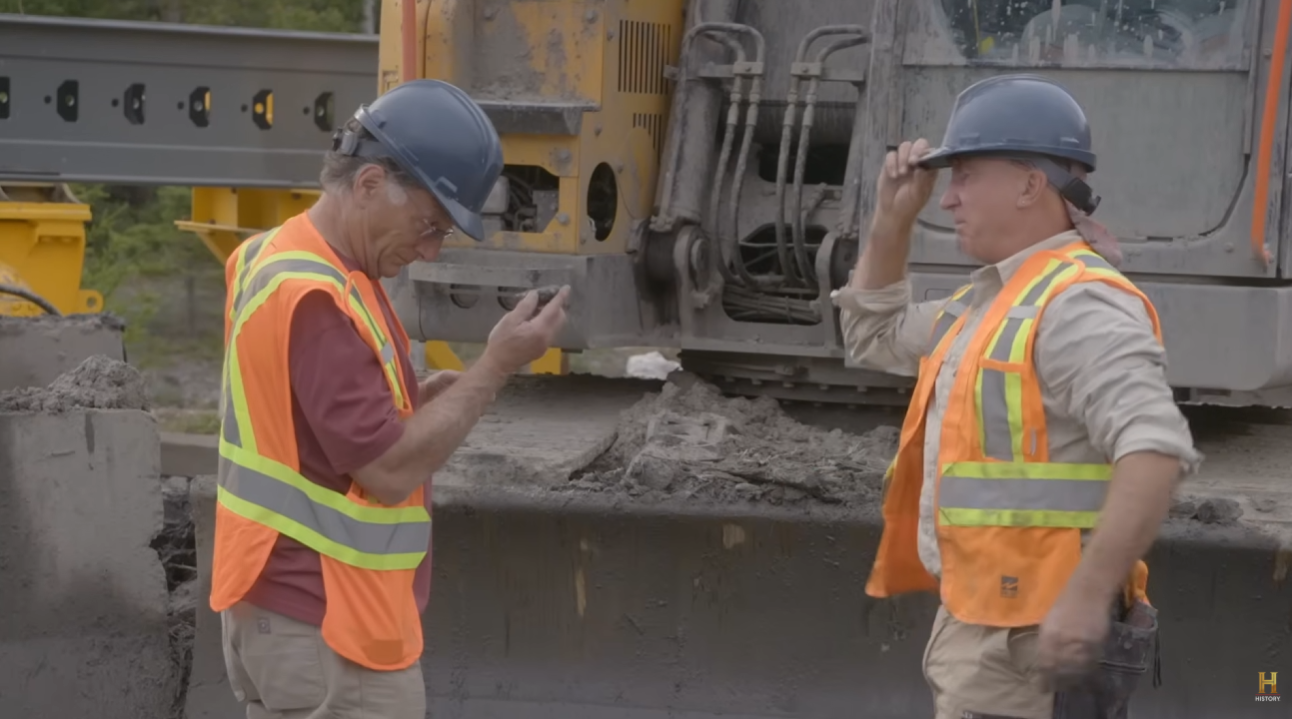
Craig Tester described the carbon dating results as a critical milestone. Combined with previously discovered artifacts — including an ancient key recovered along the swamp’s stone road — the team believes the evidence supports the possibility of significant medieval-era operations.
Despite the historical breakthrough, excavation at the Money Pit remains central to the mission. The stalled drill at the Top Pocket Fine Shaft (TPF) was temporarily halted after the steel casing became lodged in compacted backfill from a 2019 dig. Engineers have since installed specialized reduction inserts and a hydraulic oscillator to overcome the resistance.
The target zone lies more than 200 feet below surface level, near boreholes that previously yielded elevated readings of elemental silver. Earlier in the season, geoscientist Dr. Ian Spooner presented X-ray fluorescence data showing unusually high silver concentrations in subterranean water samples from the area.
The drilling site is also located near the historic 19th-century borehole where a drill rod was reportedly recovered — the same rod that, according to historical accounts, once brought up fragments including a silver coin linked to the Portuguese Order of Christ.
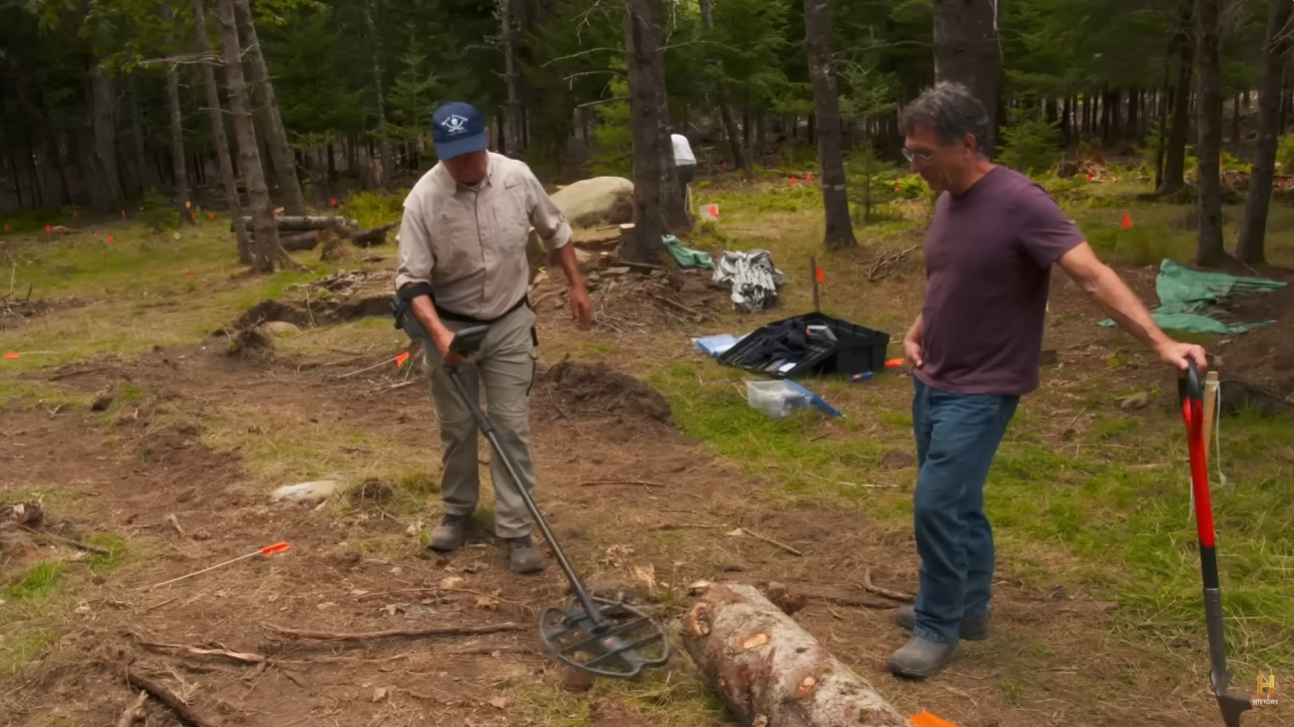
While the Money Pit operation intensifies, a second high-profile excavation is unfolding on Lot 8. A 130-ton crane has been positioned to lift a massive capstone covering what appears to be a man-made trench. Archaeologists previously documented wedge stones and structural indicators beneath the boulder, prompting approval for heavy lifting.
Earlier camera footage inserted beneath the stone revealed rock formations streaked with gold-colored veining. Laboratory testing will determine whether the material is genuine precious metal or naturally occurring mineralization.
Another theory under examination involves environmental testing conducted beneath the boulder. Soil samples showed elevated lead levels — significantly higher than natural background concentrations. Dr. Spooner suggested the contamination could be consistent with historical fire-ventilation techniques used in deep mining operations, in which combustion was employed to draw air through underground shafts.
If the capstone conceals evidence of a vertical shaft or ventilation system, it could indicate a network of tunnels extending across the island. Alternatively, if gold-bearing material is confirmed, it may suggest secondary cache locations separate from the complex flood tunnel system traditionally associated with the Money Pit.
With two large-scale operations advancing simultaneously — one drilling toward a scientifically indicated silver deposit, the other exposing a sealed subsurface feature — Episode 16 is positioned as a pivotal installment in Season 13.
For the Lagina brothers and their team, the combination of medieval-era carbon dating and modern geochemical data has transformed speculation into what they describe as measurable targets. Whether the forthcoming excavations yield silver, structural evidence or additional artifacts, the next phase of the search represents one of the most technically ambitious undertakings in the island’s long investigative history.