Oak Island team investigate buried structure after Emma Culligan links material to mid-20th century work

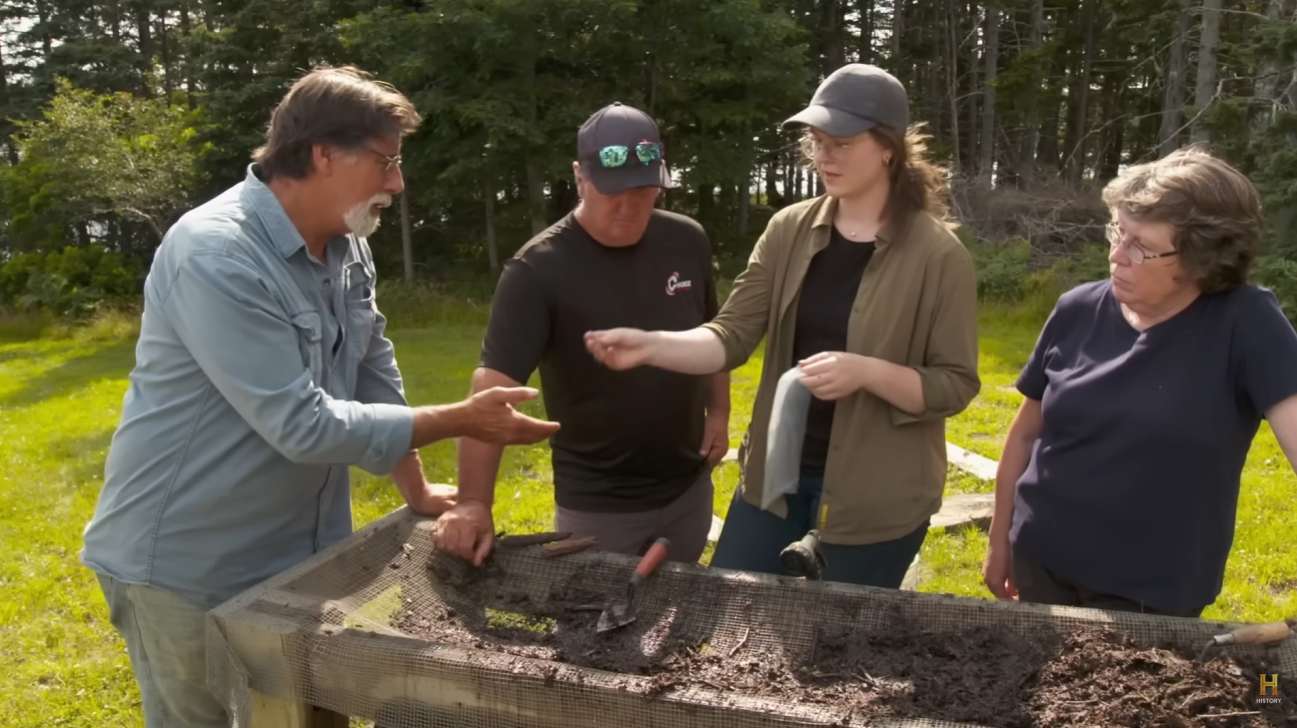
A newly uncovered underground structure on Oak Island has prompted fresh debate over whether the team may finally be tracing one of the site’s most enduring mysteries.
During excavation in thick, waterlogged ground, the search team uncovered what first appeared to be an isolated wooden board. On most sites, that might have passed with little attention. On Oak Island, where every buried feature is examined for signs of deliberate construction, it quickly became a point of interest.
As work continued, the discovery expanded. What began as a single board reportedly led to the identification of additional timber, a beam and, most notably, a layer of concrete. For the team, the presence of concrete at that depth raised an immediate question: was this simply later disturbance, or evidence of an intentional effort to block, protect or reinforce something below ground?
That question brought archaeometallurgist and materials specialist Emma Culligan into the centre of the latest investigation.
Culligan’s analysis suggested the concrete was made from cement, aggregate and sand consistent with a man-made mix rather than a natural formation. More significantly, she indicated the cement could likely be dated to somewhere between the 1920s and the 1970s. The material was also said to contain Portland cement, with components that appeared consistent with local Nova Scotia sand and gravel.

That dating matters because it places the structure not in Oak Island’s earliest treasure-hunting era, but in a more modern phase of exploration. It opens the possibility that the material may be connected not to an original depositor of treasure, but to later searchers who believed they had located something important and attempted to seal it, stabilise it or redirect water flow.
The team has considered whether the find may be linked to efforts by the Restall family, who were among the most determined Oak Island searchers in the mid-20th century. If so, the concrete and timber could represent an attempt to plug or manage what they believed was part of the island’s flood tunnel system, the long-rumoured network said to protect the Money Pit by channelling seawater into excavation zones.
That interpretation remains unproven, but several features appear to support the idea of deliberate human activity. Alongside the boards and concrete, the team also identified what was described as an organised wall or alignment of rocks rather than random natural scatter. Buried more than 30 feet down, the combined presence of timber, stone arrangement and poured concrete has strengthened the view that this was a constructed intervention rather than a geological accident.

Rick Lagina, who has often urged caution in interpreting new finds, appeared to treat the discovery as potentially significant because of how closely it aligns with long-standing theories about hidden infrastructure beneath the island. If the structure does sit along the route of a flood tunnel, it would add weight to the idea that earlier searchers reached a meaningful point in the underground system, even if they were unable to complete the work.
Back in the war room, Culligan’s findings reportedly helped narrow the historical context. The materials suggest the structure is old enough to belong to a serious earlier phase of excavation, but not so old that it can be connected directly to 17th- or 18th-century origins. That distinction is important because Oak Island investigations often hinge on separating original activity from later treasure-hunting interference.
For years, one of the island’s central problems has been exactly that: the landscape has been altered repeatedly by generations of diggers, engineers and speculators. Every timber, void, shaft and stone feature must therefore be judged not only for what it is, but for when it was placed there and by whom.
Culligan has become increasingly important to that process. Her role on The Curse of Oak Island has centred on bringing scientific analysis to discoveries that might otherwise be left to theory. By examining composition, wear, manufacturing methods and likely origin, she helps the team distinguish between imagination and evidence.

In this case, her assessment does not confirm treasure, a chamber or even a flood tunnel. But it does suggest that the buried structure was likely built with purpose, using materials available in Nova Scotia during the mid-20th century. That alone could prove valuable, especially if it helps map how previous searchers approached the island and what they believed lay beneath.
The latest discovery also feeds into broader questions surrounding Oak Island’s layered history. Alongside the Money Pit, flood tunnel theories and Smith’s Cove works, the island continues to generate interest through features such as Nolan’s Cross, unusual stone formations, carved objects and scattered artefacts whose interpretation remains disputed.

Some of those finds have encouraged expansive theories involving pirates, military engineering, religious symbolism or European visitors. Others have led to more restrained conclusions about industrial-era search activity and local construction. The challenge for the current team is to determine where this newly uncovered structure belongs on that spectrum.
For now, the discovery appears to offer something more grounded than fantasy but more intriguing than routine debris: evidence that someone in the last century may have reached a meaningful underground point and taken steps to close, reinforce or conceal it.
Whether that work protected a tunnel, marked a failed excavation or covered an important feature remains unclear. But on an island where so much has been guessed and so little firmly established, even a dated layer of concrete can change the direction of the search.