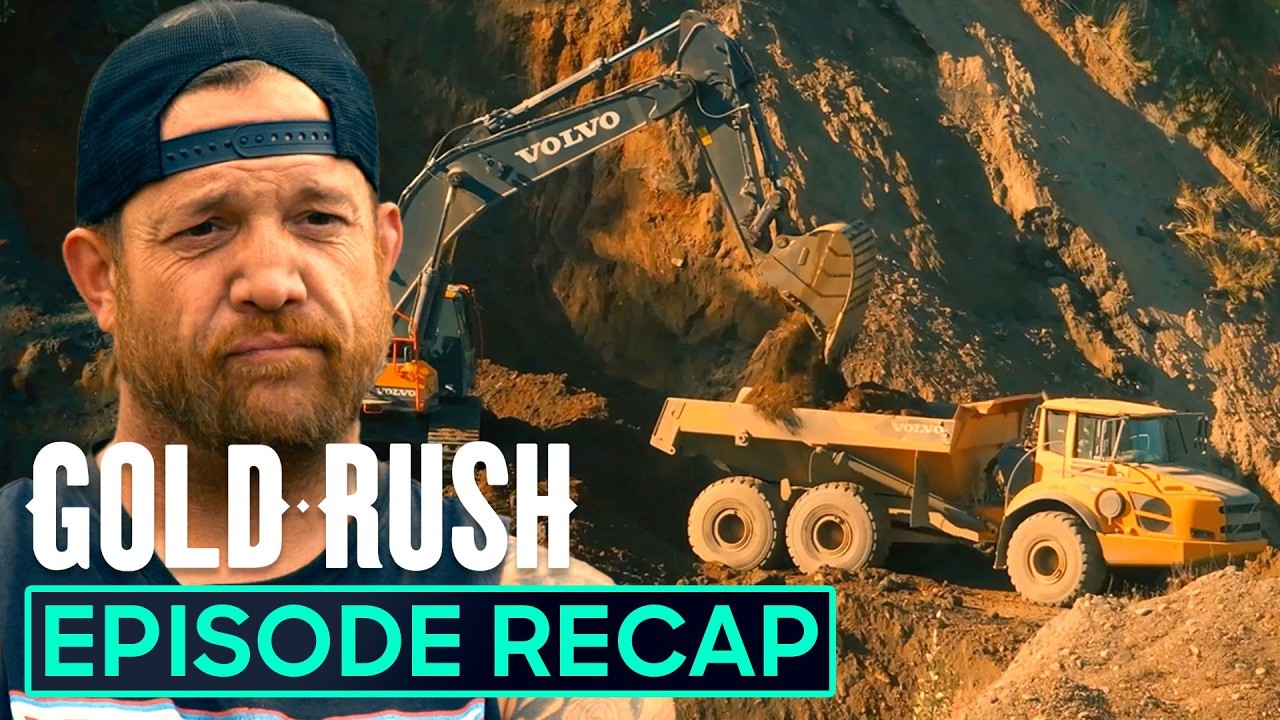
Midway through the mining season in Gold Rush, Parker Schnabel finds himself confronting a difficult reality: strong equipment performance does not always translate into strong gold totals. With two-thirds of the season already behind him, the young mine boss has banked more than $23 million worth of gold, yet the operation is under increasing pressure as weekly returns begin to fall and critical ground remains unfinished.
Schnabel’s mining strategy this year revolves around several key cuts and three major wash plants operating across the claim. Foreman Tyson Lee oversees the operation, managing the Bridge Cut alongside the Golden Mile pits, where the Sluicifer and Big Red wash plants process hundreds of yards of pay dirt every hour. Combined, the plants are capable of running roughly 680 yards of material per hour, a powerful system that has driven Schnabel’s success in previous seasons.
However, as winter approaches, the Golden Mile has become a major concern. After four months of mining, more than 300,000 yards of pay dirt still remain in the pit. The unfinished ground presents a logistical problem that could disrupt not only this season’s results but also next year’s mining plan.
Schnabel explained that leaving the pay dirt in place would prevent crews from stripping the overburden required to open new ground. If the pit remains partially filled, future operations could stall before they even begin.
“We have a major problem with the depth of pay,” Schnabel said during a meeting with his team. “If that dirt stays in the hole, we can’t strip into the next cut. That creates a knock-on effect that causes a huge amount of problems.”
Faced with the challenge, Schnabel made a controversial decision: temporarily shut down two of his wash plants to redirect crews toward hauling pay dirt out of the Golden Mile. The move allows trucks and workers to focus on building massive stockpiles of pay dirt that can later be processed once the stripping work begins.
But the strategy comes with a heavy financial cost.
By pausing both Sluicifer and Big Red, Schnabel risks losing roughly three-quarters of a million dollars in gold production each week. In a business where timing is everything, halting production is rarely a comfortable choice.
“I don’t know another option,” Schnabel admitted. “It’s not where we want to be, but dealing with it now is better than facing a bigger problem later.”
The decision also weighed heavily on Tyson Lee, who prefers to keep wash plants running whenever possible.
“Wash plants are meant to wash,” Lee said, acknowledging that the shutdown was difficult but necessary under the circumstances.
While Schnabel struggles with operational challenges, another crew faces a very different battle across the region.
Rick Ness, once one of the show’s strongest competitors, is experiencing one of the toughest seasons of his mining career. His crew has produced less than 500 ounces of gold so far, far short of the ambitious 1,800-ounce goal set at the beginning of the year.
Ness has placed his hopes on a massive excavation project known as the Valhalla Cut. The site is believed to contain a rich gold deposit buried beneath 160 feet of overburden. After three weeks of excavation, the crew has reached only halfway down, leaving another 80 feet of material to remove before they reach the promising pay layer.
The scale of the project is enormous. The volume of dirt already moved is equivalent to more than half the mass of the Empire State Building.
Despite the daunting workload, Ness insists the team must continue pushing forward.
“It’s easy to give up out here,” he said. “But sometimes you just put your head down and keep working. We’re fighting for our lives.”
The small crew of six has been stretched thin, with nearly every team member operating rock trucks to haul material away from the pit. Even Ness’s cook, Heather, has stepped behind the wheel to help move dirt.
Mechanic Ryan Kent has also spent long hours driving trucks instead of repairing equipment, highlighting how limited manpower has become a major obstacle.

The pressure of the season is not only financial but personal. During a short break at home, Kent spoke openly with his family about the emotional toll of spending months away from them while chasing uncertain mining returns.
“It’s tough,” he admitted. “You miss everything back home.”
Returning to the claim after the visit, Kent confessed he had considered leaving the operation entirely. However, a candid conversation with Ness helped restore his confidence in the team’s plan.
Ness assured him that he would do everything possible to ensure the crew is taken care of, even if the season fails to deliver the gold bonus everyone hopes for.
“I’ll make sure nobody walks away empty,” Ness told him.
Back on Schnabel’s claim, the consequences of shutting down two wash plants quickly became clear during the week’s gold weigh-in. The Golden Mile produced just over 53 ounces, far below its usual output of around 240 ounces per week. Combined with results from other cuts, the operation finished the week with 306 ounces — down sharply from the previous total of 433 ounces.
Although the drop was expected, Schnabel acknowledged that watching the numbers fall was difficult.
“It feels like our season is going backwards,” he said.
Still, he remains confident the decision will pay off later if the team can reopen the wash plants and process the massive stockpiles before winter arrives.
For Schnabel and Ness alike, the season has entered a critical phase where every decision carries serious consequences. With limited time remaining and millions of dollars on the line, the race to uncover more gold is far from over.
 hs
hs