Jeremy Clarkson Slams Clarkson’s Farm Fan Account for Viral AI Video Depicting Violence Against Keir Starmer

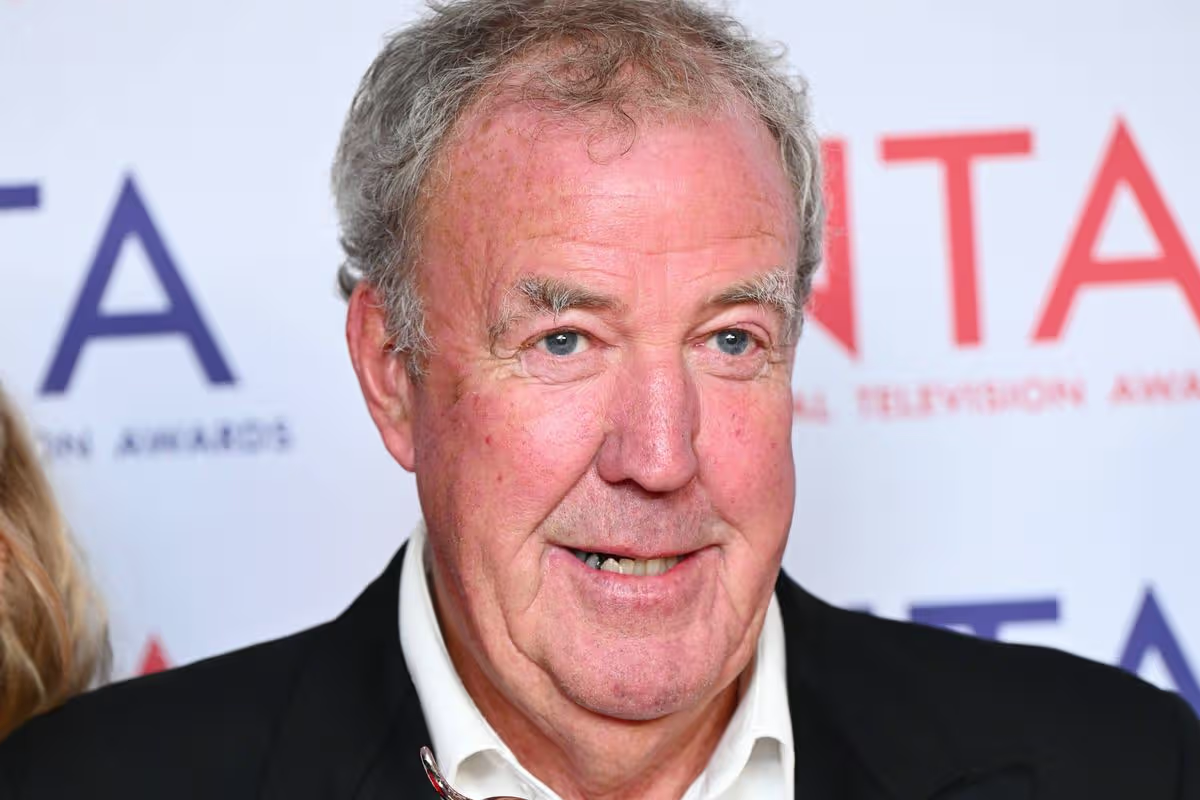
Jeremy Clarkson has condemned a fan account on X/Twitter after it shared a viral AI-generated video depicting the presenter physically attacking UK Prime Minister Sir Keir Starmer. The video, which has sparked widespread outrage, shows a digital avatar of Clarkson throwing Starmer out of his Oxfordshire pub, The Farmer’s Dog, before delivering two punches to the Prime Minister. The clip, posted on March 10 by the account @ClarksonsFarm1, has generated an eye-popping 5.7 million views and garnered 69,000 likes. However, the video’s viral success was short-lived, as it was eventually flagged by the platform for potentially violating its rules against promoting violent speech.
The video has drawn sharp criticism from politicians, media figures, and the public alike, with many calling for it to be taken down. Trade minister Chris Bryant was one of the first to speak out, urging the account to remove the video. “Come on @ClarksonsFarm1, take it down. I’m all for freedom of speech but not inciting or glorifying violence,” he tweeted. Bryant’s plea reflects growing concerns over the normalisation of political violence and its dangerous implications.
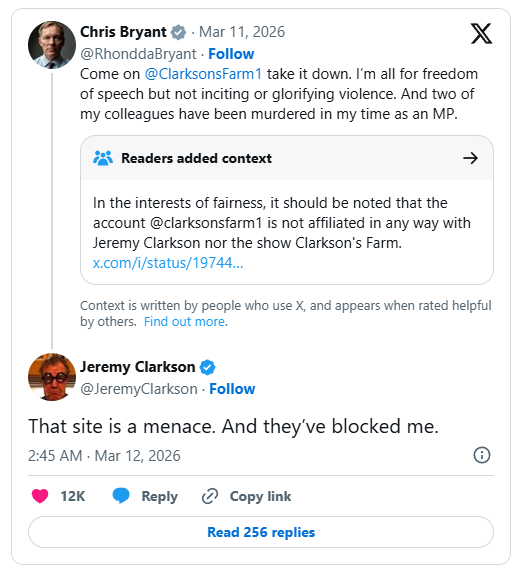
Clarkson himself responded to the uproar by calling the fan account a “menace” and revealing that the account had blocked him. “That site is a menace. And they’ve blocked me,” Clarkson tweeted, adding his frustration with the account that has repeatedly used his name and image without permission. This isn’t the first time Clarkson has addressed the issue—he has made several public remarks denouncing the account over the past few months.
The presenter has been clear in distancing himself from the account, which operates under the name “Clarkson’s Farm,” but is not affiliated with either him or his hit Amazon Prime Video series. Clarkson made his stance clear in September 2022, writing, “It is important to remember that this account has nothing to do with me.” Just earlier this month, he once again expressed his displeasure, stating, “That operation drives me mad. I wish they’d stop it.” Despite his repeated requests, the account has continued to generate content that Clarkson believes misrepresents him and his brand.
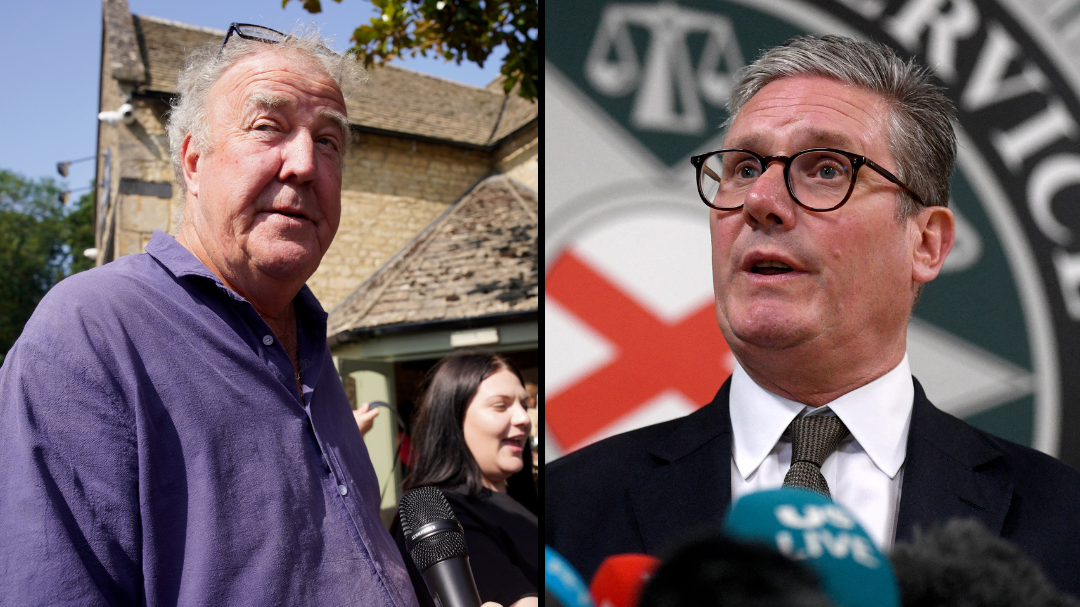
The backlash against the video also prompted further commentary from political figures, including Labour MP Dawn Butler, who criticized the video for normalising violence in political discourse. “Millions watching an AI video of Jeremy Clarkson beating up Keir Starmer. It might seem like a ‘joke’ but normalising violence in politics damages our democracy,” Butler wrote. “I’m calling for an urgent Digital Human Rights Bill to protect people’s identity and likeness online.” Butler’s comments underline the growing concern over the use of deepfake technology and AI-generated content to spread harmful and misleading messages, often without accountability for the creators behind them.
This incident has raised questions about the responsibility of social media platforms in regulating content that can potentially incite harm. While X (formerly Twitter) initially flagged the video for violating its rules against violent speech, the incident highlights the difficulty platforms face in curbing the spread of harmful content that can be disguised as entertainment or satire.
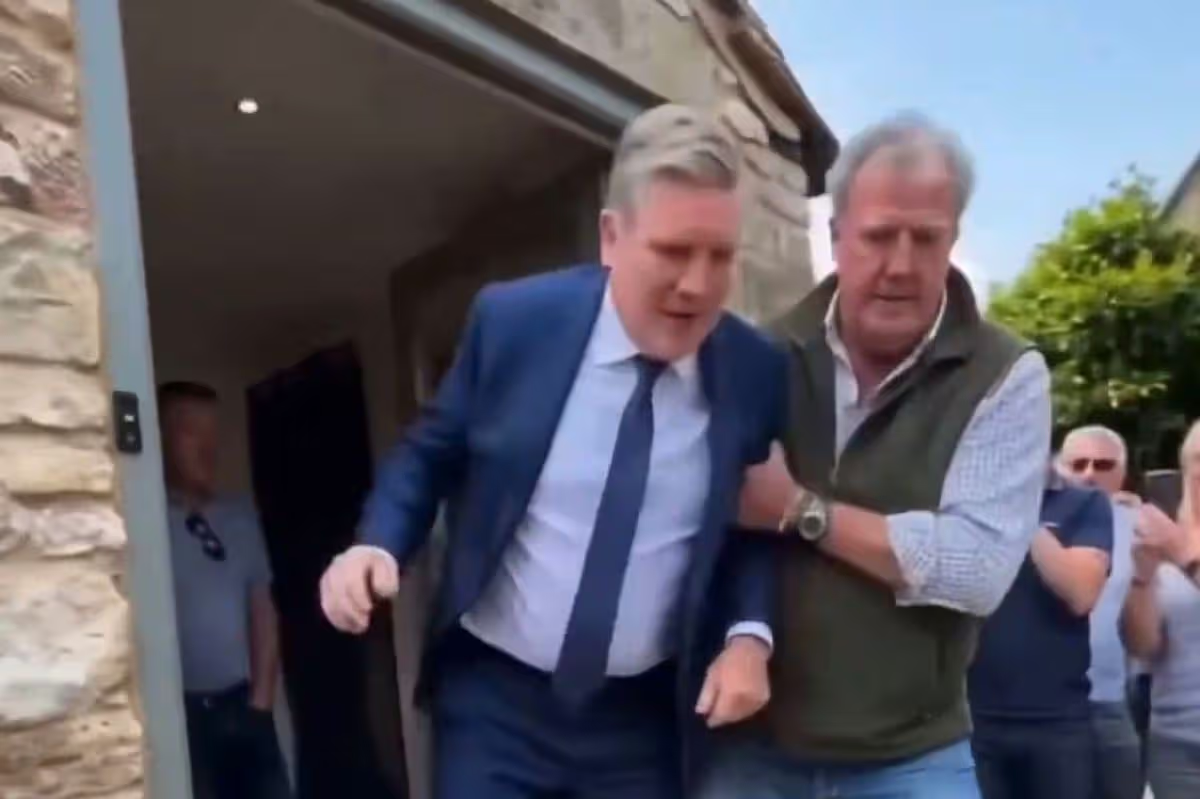
The incident is not the first time Clarkson’s name has been misused by fan accounts, but it is the most high-profile case yet, drawing attention to the broader issue of digital identity theft, impersonation, and the ethics of using AI technology to create content. For Clarkson, the situation serves as a reminder of the challenges faced by public figures in an era where technology and social media can blur the lines between reality and fiction.
As the controversy continues to unfold, many are calling for more stringent regulations to prevent the misuse of digital technology and to protect individuals from having their likenesses manipulated without consent. The debate surrounding the Clarkson’s Farm fan account and its viral video has highlighted the need for clearer guidelines on what constitutes harmful content and how social media platforms can enforce their rules to prevent abuse.
For Clarkson, the focus remains on continuing his work on Clarkson’s Farm and engaging with his fans in a positive and constructive way. However, the ongoing issue of impersonation and online harassment is likely to remain a point of contention as he continues to address the challenges that come with fame in the digital age. Clarkson’s call for the fan account to cease its activities underscores the wider issue of unregulated online content and its potential to cause harm to public figures and ordinary individuals alike. As the debate rages on, it’s clear that the conversation around online conduct, identity, and responsibility is only just beginning.