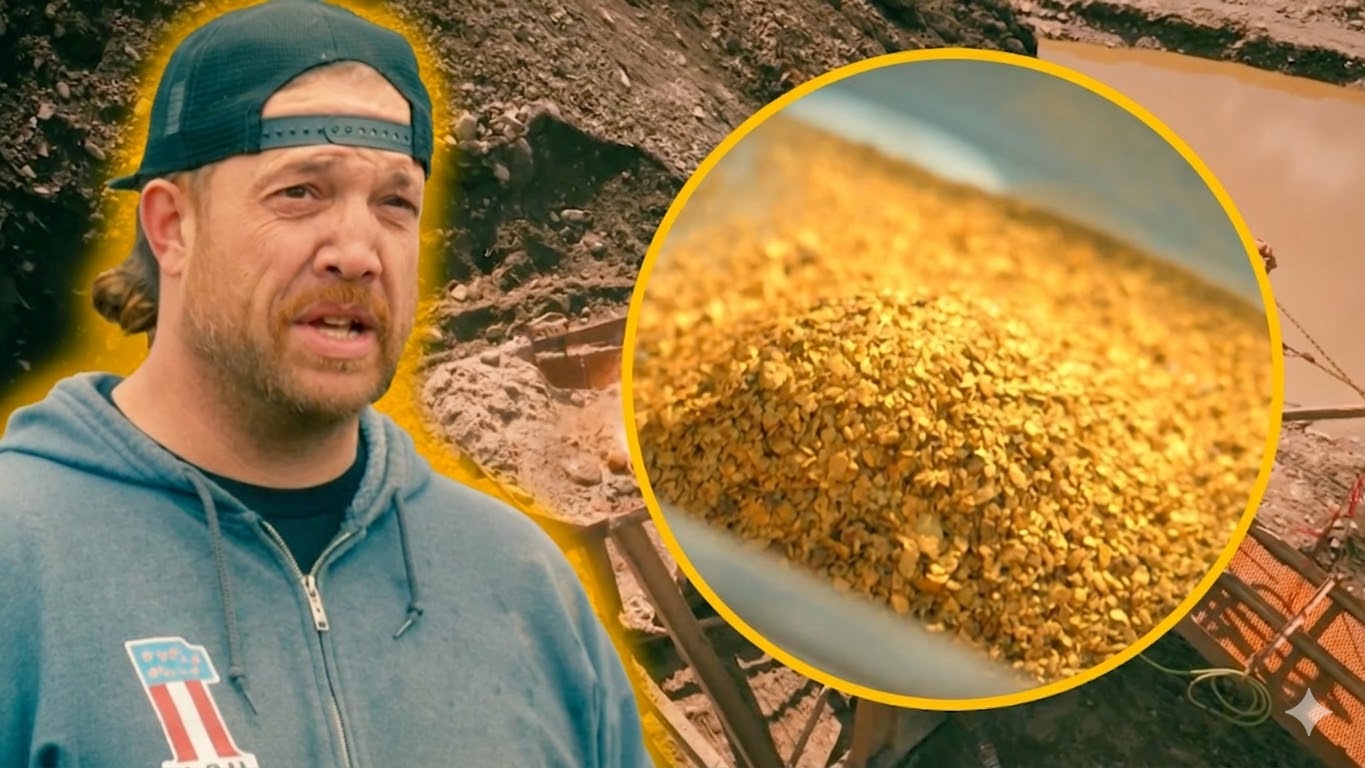
Rick Ness may have received the most important piece of news of his season, but in Gold Rush fashion, the breakthrough has only made his next decision more difficult.
In the latest development from his Yukon operation, Rick and his crew learned that they had officially secured an extension on their water licence at Lower Duncan until November 2025, reopening the door to Vegas Valley and reviving a site that had previously been central to his long-term plans. For a miner trying to keep pace with an ambitious seasonal target, it should have felt like a moment of pure relief. Instead, it has created a new dilemma, one that could define the rest of his season.
The timing could hardly be more critical. At Lightning Creek, Rick’s team has been trying to make the most of a new section of ground known as the boulder cut, where larger rocks and boulders offered fresh hope that stronger gold deposits might be hiding beneath the surface. The thinking is grounded in the region’s glacial history. As explained on site, a giant glacier once tore through the valley, carrying gold from the Mount Hinton motherlode before leaving it scattered in pockets alongside heavier rocks and boulders when the ice melted. For Rick’s crew, that geology made the ground look more promising than the nearby Diamond Cut.
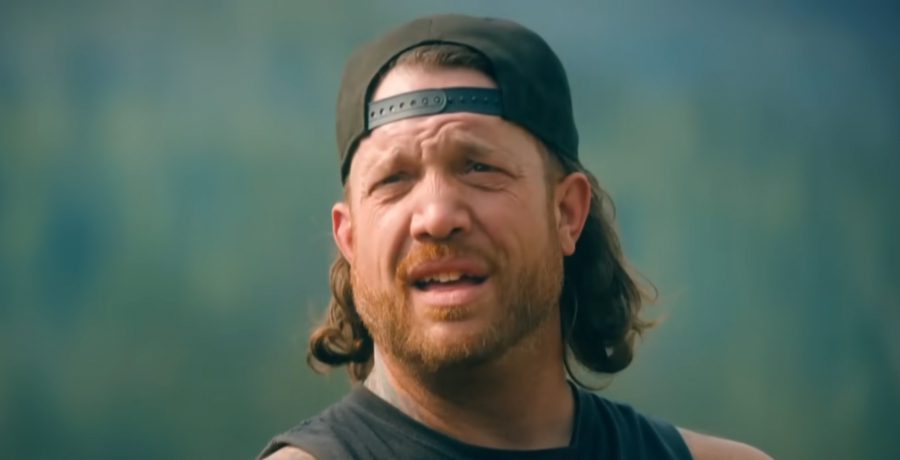
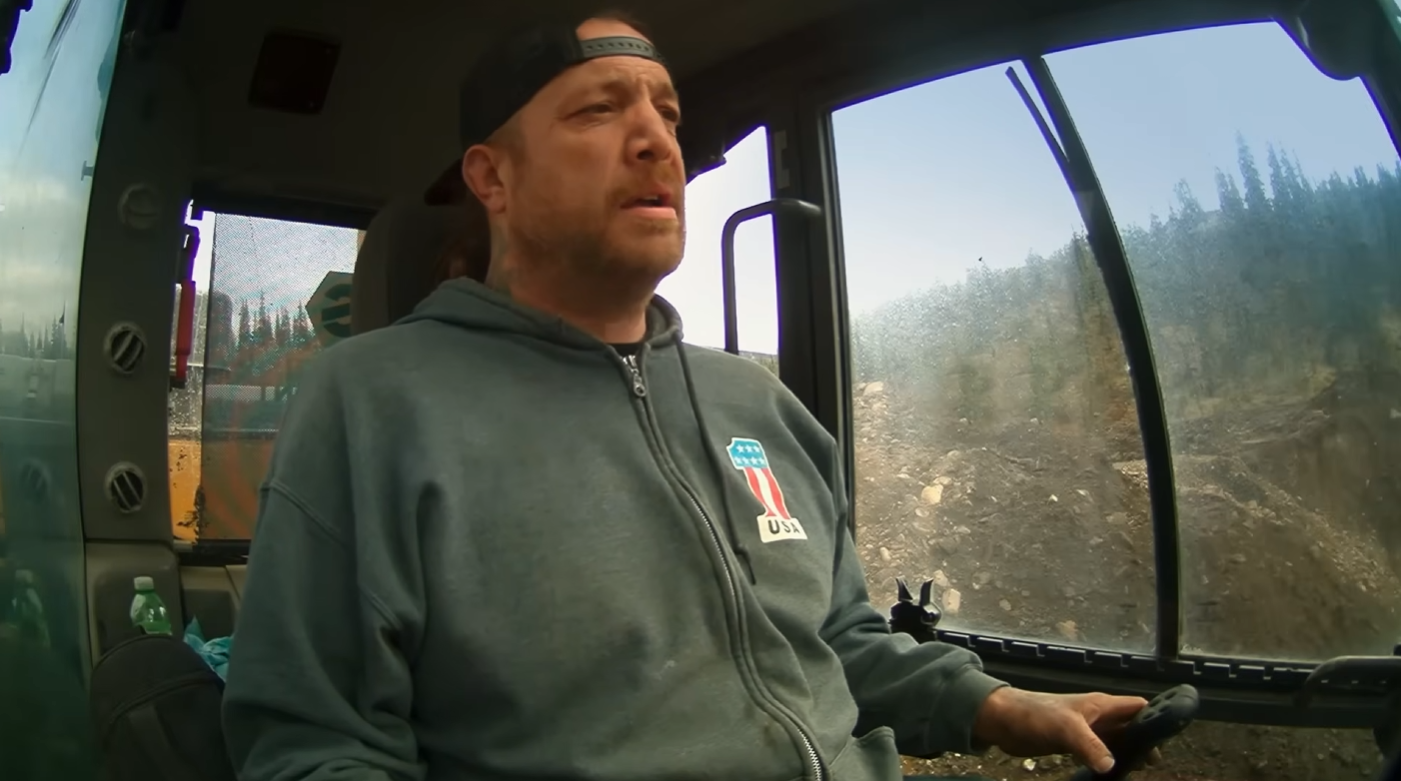
There were early signs of optimism. Crew members pointed to the bigger rocks in the cut as a positive signal, and Rick himself said he had a good feeling about what they were uncovering. But as has often happened this season, momentum did not last long. The team’s 750 excavator went down with a hydraulic hose leak, temporarily halting their ability to dig pay dirt and putting immediate pressure on the operation. With only a limited amount of pay already stockpiled and the wash plant relying on a constant supply of material, the breakdown quickly became more than a mechanical nuisance. It threatened to interrupt the only active stream of gold production Rick had.
Ryan moved quickly to diagnose the fault and replace the damaged hose, allowing the excavator to return to work and the team to keep hauling material to the plant. The repair brought some badly needed momentum back to site, but it was what happened next that changed the tone entirely. Rick arrived with news from his attorney: the water licence extension had been granted. After a period in which Lower Duncan had effectively been out of action, the crew now had permission to return, break ground in Vegas Valley, and begin recovering gold there again.
The significance of that decision is enormous. In just four years, Rick’s Lower Duncan ground had produced nearly 6,000 ounces of gold. Even after operations were disrupted by the loss of the licence, there was still a pay pile left behind that could contain more than $1.4m worth of gold. For a crew searching for consistency and scale, Vegas Valley suddenly looked like the stronger option again. It was not just a legal victory. It was the reopening of one of Rick’s most valuable assets.
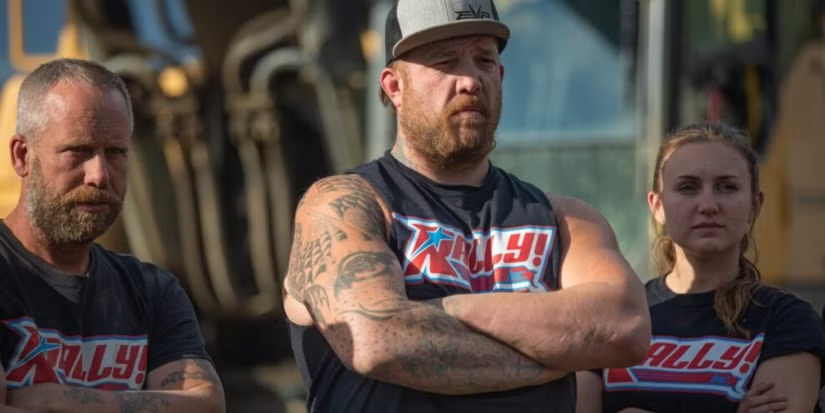
Yet the problem is that Rick cannot simply walk away from Lightning Creek. He reminded his crew that he still owes Troy 100 ounces as part of the deal to buy the claim, a commitment worth roughly a quarter of a million dollars. In practical terms, that means Rick is trapped between two pressures. On one side is the immediate promise of Vegas Valley, with its proven history and potentially rich pay pile. On the other is the obligation to keep mining Lightning Creek long enough to honour the terms of the deal and continue bringing in gold while the Duncan ground is prepared.
That tension was reflected in the team’s reaction to the latest gold weigh. The crew recovered 22.35 ounces, worth around $78,000. It was an improvement, roughly three times better than the previous result, but still not enough to settle the broader debate. Several on the team made clear that they believed the real opportunity now lies back at Vegas Valley, particularly if Rick still hopes to reach his 1,800-ounce target by the end of the season. Rick did not dismiss that view. In fact, he openly acknowledged that Lower Duncan could hold much better gold and that the pay pile there alone might contain as much as 400 ounces.
Even so, he chose caution over haste. Rick said the timing was not yet right to move immediately, arguing that it would take several days to get Vegas Valley ready and that he was not prepared to stop producing gold at Lightning Creek until that transition could be made properly. His message to the crew was clear: they would stick it out where they are for now, but the return to Vegas Valley is coming soon.
It is a classic Gold Rush dilemma. A miner finally gets the permission he has been waiting for, only to find that the real challenge begins after the approval arrives. Rick now has two viable sites, but not the time or freedom to treat both equally. Every day spent at Lightning Creek keeps gold coming in, but may also delay access to more profitable ground. Every day spent preparing Vegas Valley could bring him closer to a bigger payoff, but risks leaving his current obligations unfinished.
For Rick Ness, the water licence extension is unquestionably good news. But it is not simple news. It has reopened a path that could rescue his season, while also forcing him to make one of the hardest choices of the year. And on Gold Rush, those choices often matter more than the breakthrough itself.
