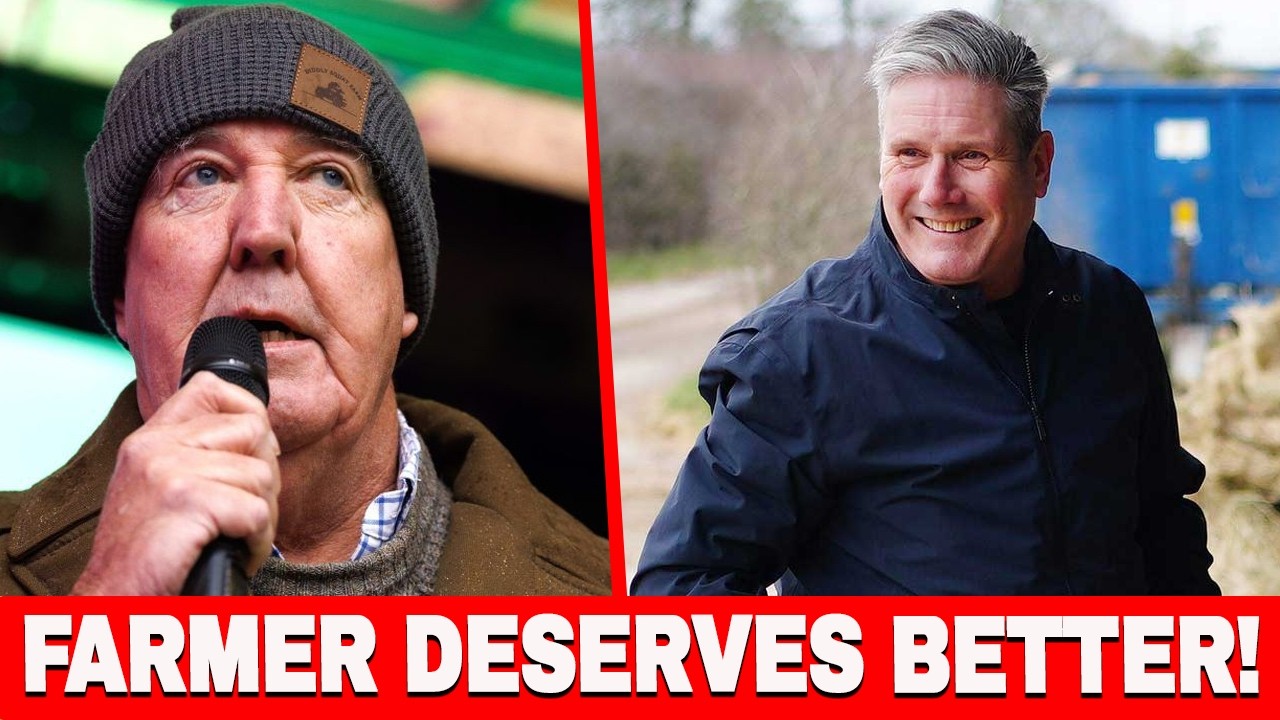
Jeremy Clarkson has renewed his public attack on Sir Keir Starmer, insisting the Prime Minister remains barred from entering The Farmer’s Dog and using the dispute to press his wider case that Labour still does not understand the pressures facing Britain’s farmers and rural businesses. What began as a pointed remark at the launch of his Oxfordshire pub has now hardened into a longer-running political feud, one that stretches well beyond a pub doorway and into the heart of the countryside debate.
The ban itself dates back to the opening of The Farmer’s Dog in Asthall, near Burford, on 23 August 2024. As the venue opened to large crowds, Clarkson said Starmer had been placed at the top of the pub’s banned list, presenting the move as both a joke and a protest against a government he believed was detached from rural life. The pub, closely tied to the Clarkson’s Farm brand, quickly became more than a hospitality business. It turned into a highly visible stage for Clarkson’s arguments about farming, food production and the cost of running a British business.
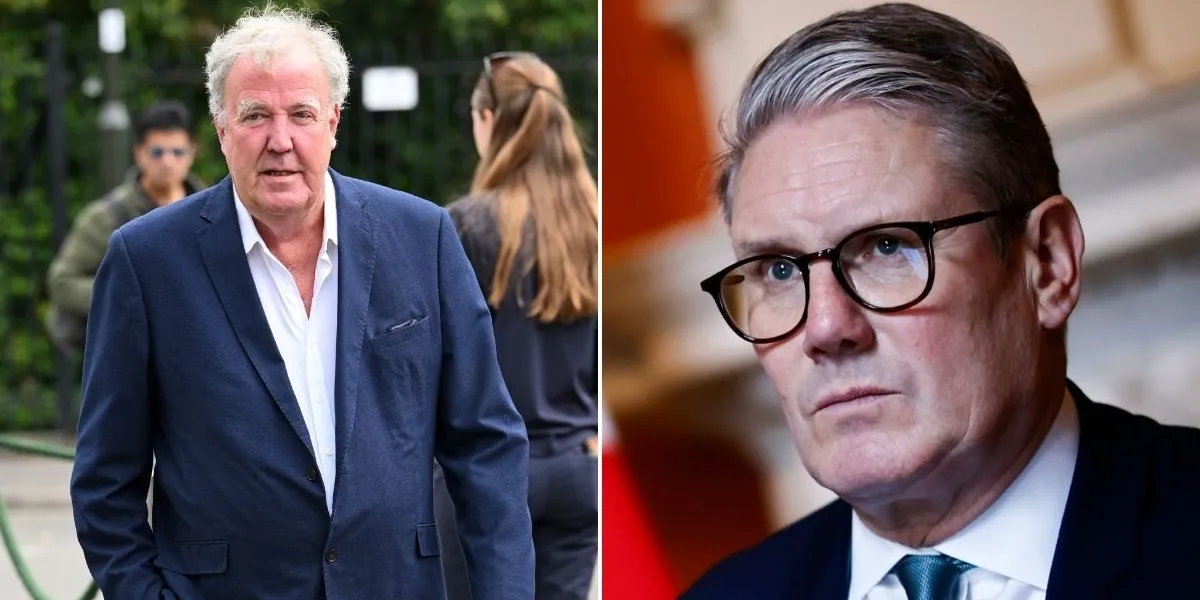
That argument resurfaced forcefully in August 2025, when Clarkson used a Times Radio appearance to say the Prime Minister was still not welcome and to accuse him of being dismissive whenever farming was raised. The interview came during a difficult week in which Clarkson was also speaking about a bovine tuberculosis outbreak at Diddly Squat, but the exchange soon widened into familiar political territory. For Clarkson, the condition of the farm and the conduct of government are now part of the same story.
Since then, the protest has expanded. By December 2025, Clarkson said the ban no longer applied only to Starmer, but to almost the entire Labour parliamentary party. He linked that decision directly to the rising cost of running The Farmer’s Dog, saying the pub’s annual business rates had climbed from about £28,000 to more than £50,000. His remarks echoed a wider backlash from publicans who argued that tax and rate pressures were making survival harder for pubs already facing thin margins and fragile consumer demand.
Yet the real engine behind Clarkson’s anger has been farming policy. He became one of the highest-profile critics of Labour’s changes to agricultural and business property relief after the 2024 Budget triggered widespread protests across the farming sector. Reuters reported at the time that ministers argued most farms would not be affected, while many farming families warned that succession plans would be damaged and inherited land could become harder to keep within the family. Clarkson placed himself firmly on the side of those arguing that the changes created uncertainty in an industry already working with narrow returns, volatile weather and mounting input costs.
Starmer’s position, at least initially, was that the vast majority of farmers would remain outside the scope of the change. But the row did not disappear. In December 2025, the government announced that the relevant relief threshold would rise to £2.5 million from April 2026, allowing spouses or civil partners to pass on up to £5 million in qualifying agricultural and business assets before inheritance tax applied. Even so, the House of Commons Library has noted that debate has continued over how many farms and family businesses would still be affected when the revised rules take effect.
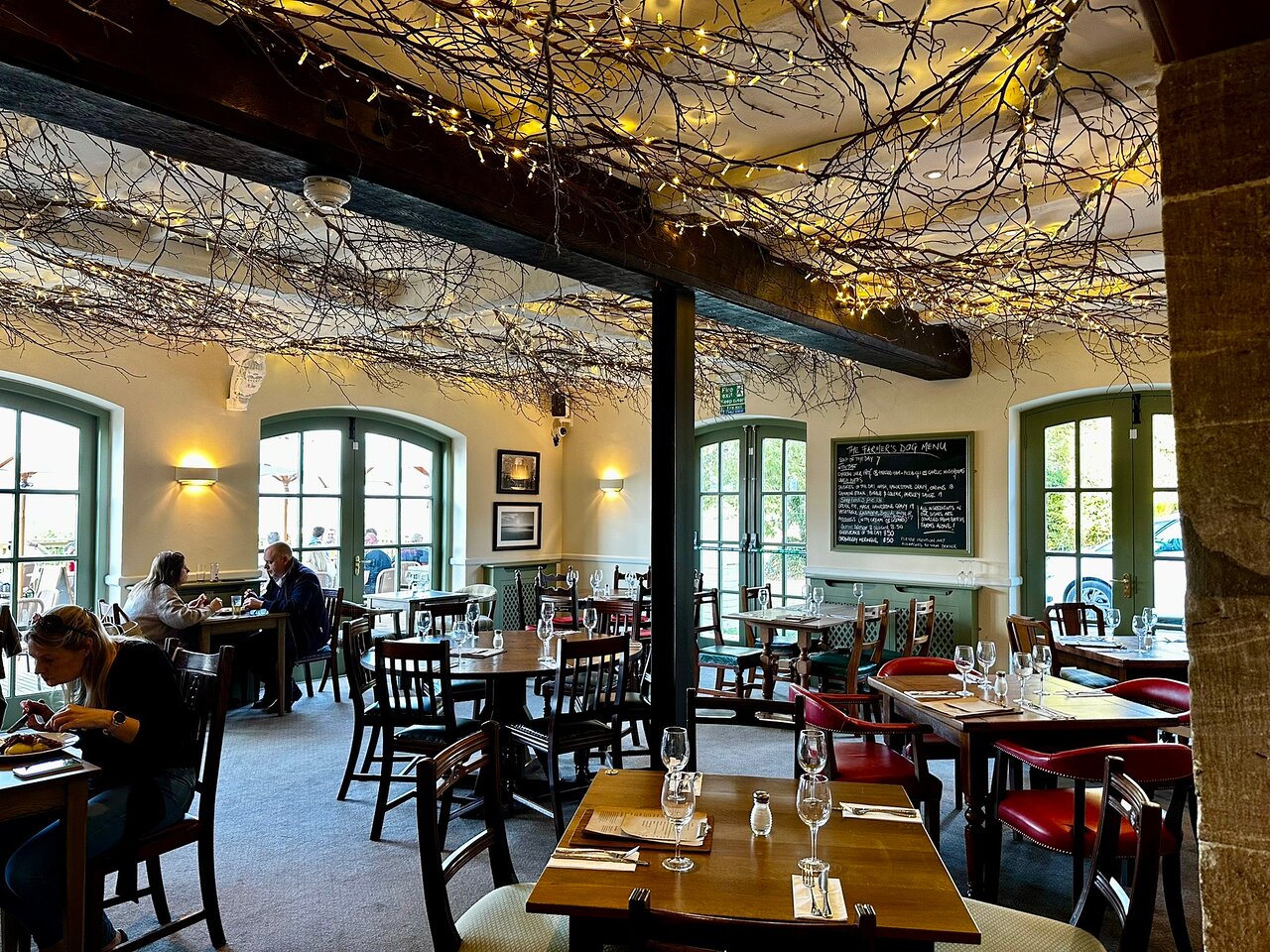
That leaves Clarkson in a position he appears comfortable occupying: part broadcaster, part campaigner, part rural businessman under pressure. The Farmer’s Dog is no longer simply a pub attached to a television personality. It has become a symbol of the way Clarkson’s public image now blends entertainment, agriculture and political complaint into a single running narrative. His supporters see that as plain-speaking advocacy for communities they believe Westminster overlooks. His critics see a celebrity turning grievance into theatre.
Either way, the effect is unmistakable. A local licensing venture in Oxfordshire has become a recurring national headline, while a ban that was once treated as a pointed sideswipe has evolved into a continuing statement of protest. Clarkson’s latest outburst suggests that, for as long as farming taxation, business rates and countryside policy remain politically charged, The Farmer’s Dog will remain more than a pub. It will stay a platform for a dispute that shows no sign of fading quietly.
If you want, I can also turn this into a cleaner BBC-style 700-word article with a stronger tabloid-style headline and opener for Facebook traffic.
