The Curse of Oak Island turns treasure hunt into television empire as questions grow over what the real prize has become


For more than a decade, The Curse of Oak Island has sold viewers a familiar promise: that one day, after years of drilling, digging and disappointment, Rick and Marty Lagina might finally uncover the treasure that has haunted the island’s story for generations. But as the series has grown into one of History’s most durable hits, another question has become harder to ignore. Has the real treasure already been found — not in the Money Pit, but in the success of the show itself?
The fascination with Oak Island is nothing new. The legend of buried riches, mysterious shafts and centuries of failed searches has drawn treasure hunters for generations. For Rick and Marty Lagina, the obsession began in childhood after reading about the island in Reader’s Digest in 1965. What started as a dream eventually became a full-scale operation when the brothers secured rights to explore the island in 2006, turning a personal passion into a major television franchise.
That move changed everything.
What had once been a difficult and expensive private search evolved into a long-running media property, complete with spin-offs, merchandise, books, public appearances and tourism interest tied to the island’s mystique. According to the material, the Lagina brothers have reportedly earned substantial sums from the show, with claims that executive production roles and episode payments have brought in millions over the life of the series. Yet while such figures are often repeated in fan discussions and online speculation, many of them remain difficult to independently verify. What is clear is that Oak Island is no longer simply a treasure hunt. It is a business.

That distinction matters because it changes the lens through which the search is viewed.
On screen, the series continues to present Oak Island as an active mystery filled with tantalising clues. Over the years, the team has uncovered a long list of intriguing finds, including old coins, fragments of parchment, human bone, metal objects and carved stones. Some discoveries have been treated as potentially historic, others as suggestive but inconclusive. Together, they have helped sustain the series’ central argument that something important happened on the island, even if the final answer remains out of reach.
Yet critics have long argued that the programme thrives less on resolution than on suspense. Minor discoveries are framed as major developments. Speculation often runs ahead of certainty. Artefacts that raise questions do not always produce definitive conclusions. As the text notes, many viewers have begun to suspect that the real value of Oak Island lies not in any giant cache of buried riches, but in the ongoing narrative itself — the perpetual promise that the next dig, the next borehole or the next fragment might finally change everything.
That tension sits at the heart of the show’s appeal.
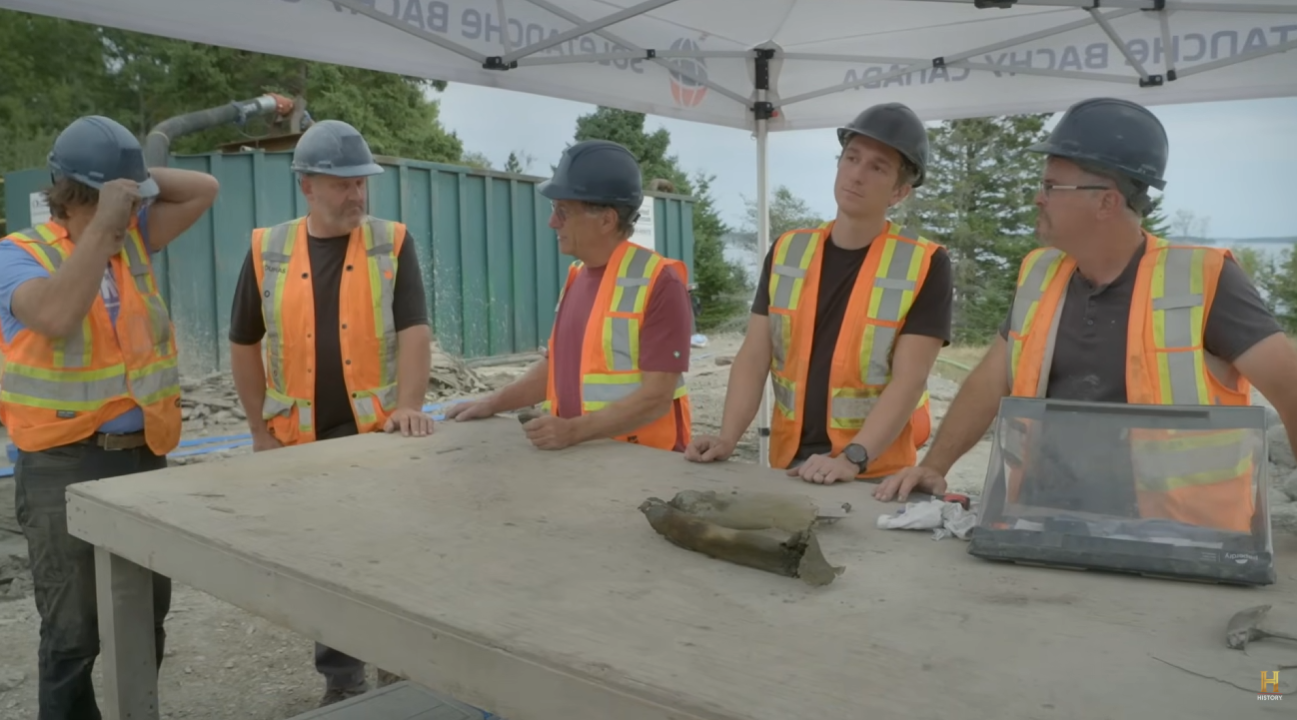
Rick Lagina has always been presented as the dreamer, driven by wonder, mythology and the hope that history has not yet surrendered all its secrets. Marty, by contrast, is often cast as the more practical brother, shaped by engineering, business and hard calculations. Together, they form the emotional engine of the series: belief on one side, pragmatism on the other. It is a dynamic that has helped keep viewers invested even as the hunt repeatedly shifts from one theory to the next.
The broader team has also become part of that success story. Figures such as Craig Tester, Alex Lagina, Jack Begley and Gary Drayton are no longer just support players in a niche excavation project. They have become recognisable television personalities, each contributing to the wider Oak Island brand. The transcript also discusses their business interests and estimated wealth, though again many of those financial claims should be treated cautiously unless supported by confirmed public records. Still, the larger point remains persuasive: Oak Island has evolved into an ecosystem of media, branding and celebrity well beyond the original treasure narrative.
The irony is hard to miss. A mystery built on the possibility of hidden wealth has itself generated visible wealth for those leading the search.

And yet the island still holds power over the imagination. That is why the story continues to resonate despite the absence of any universally accepted grand discovery. Oak Island is not just about the chance of finding gold. It is about the endurance of mystery. The island’s appeal lies in its refusal to fully explain itself. Theories involving pirates, knights, secret manuscripts and lost religious objects continue to thrive because the site never quite closes the door on any of them.
This is also why comparisons to other treasure legends remain so compelling. The material moves beyond Oak Island to invoke pirate stories, buried hoards, remote islands and centuries-old claims from places as far apart as New York, Panama, Scotland and the Seychelles. In each case, the pattern is similar: a rumour of enormous wealth, generations of searchers, a handful of clues and very little final proof. What survives, often more than any treasure itself, is the story.
That may be the truest way to understand Oak Island today. The series has become successful not because it has solved the mystery, but because it has kept the mystery alive. Every fragment, every shaft and every theory adds another layer to a narrative that has become more valuable with each passing season. Even failure, in that sense, can be profitable, provided it produces another episode, another theory and another reason for viewers to keep watching.
This does not mean the Lagina brothers are insincere in their search. The evidence from their long commitment suggests they remain genuinely invested in uncovering the island’s secrets. But it does raise a more complicated question about what success now means. Is it finding a legendary treasure chest beneath Oak Island? Or is it having already turned a childhood obsession into a television empire with global reach?
For now, the island continues to offer no final answer. The Money Pit remains unresolved. The artefacts remain open to interpretation. The legends keep growing. And the cameras keep rolling.
On Oak Island, buried treasure may still exist. But after all these years, the more visible fortune may be the one built above ground.