The Curse of Oak Island Season 13 Episode 22 “Road Trip”: What the Hell Is Going On?

As the search for answers on The Curse of Oak Island enters what is being presented as the closing stretch of season 13, the focus has widened far beyond the familiar theories surrounding the Money Pit. A new preview for episode 22, titled Road Trip, points to discoveries that could dramatically expand both the geography and the timeline of the mystery, suggesting that the team may now be dealing with evidence linked to the 1400s and to a location more than 2,000 miles away from Nova Scotia.
According to the transcript, the episode is set to air on Tuesday, 14 April 2026, and centres on three major fronts at once: the stone road in the swamp, the increasingly significant excavation at Lot 8, and a drilling operation in the Money Pit area that appears to have struck a dense obstacle in a zone associated with elevated traces of precious metals. Taken together, these strands are being framed not as separate clues, but as parts of a much larger and more coordinated historical operation.
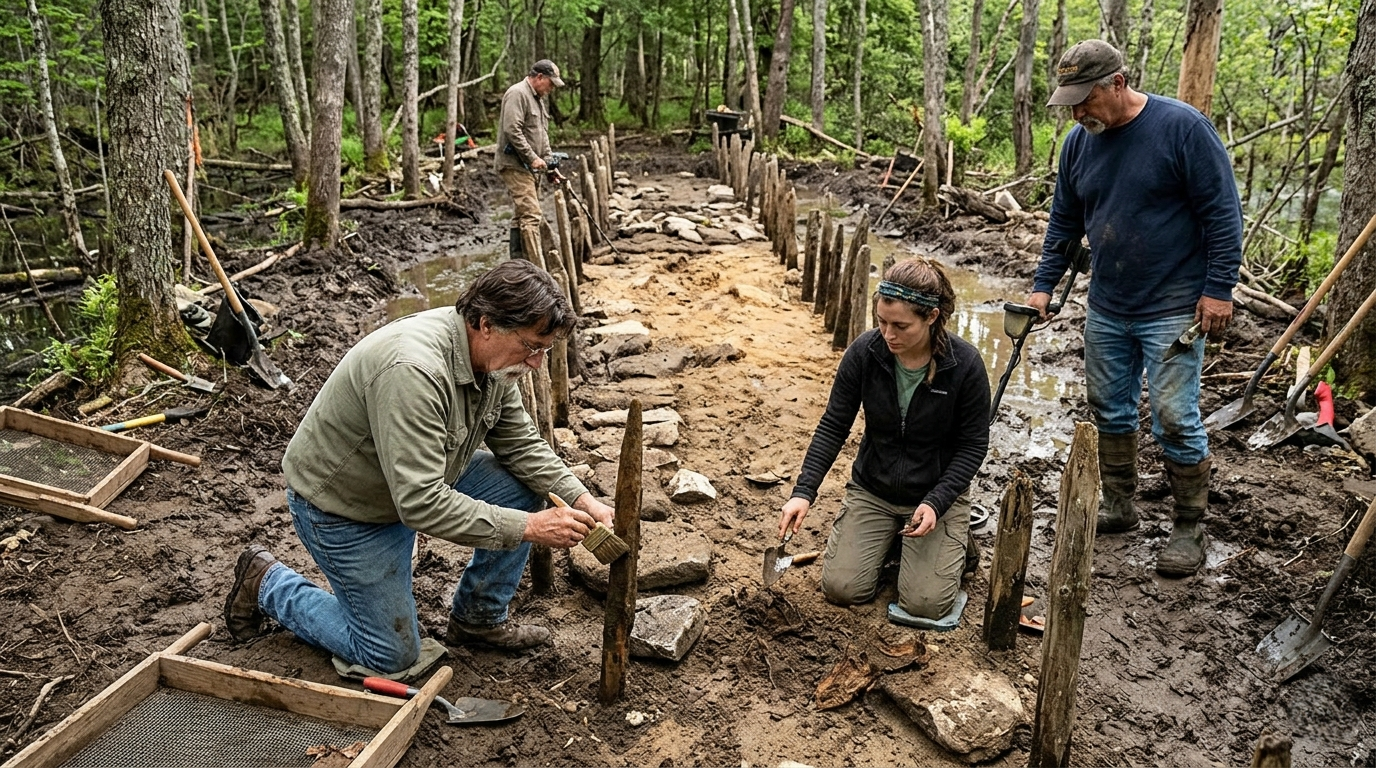
The swamp remains one of the most intriguing parts of the island. For weeks, the team has been uncovering a substantial sand and stone road lined with wooden stakes and interpreted as a deliberately engineered pathway or staging area. In the latest material, the swamp crew is shown looking for something datable within that feature, whether organic material or a diagnostic artefact that can firmly place its construction in time. The implication in the transcript is that such evidence may already have been found, and that the date attached to it could challenge accepted ideas about early activity in North America.
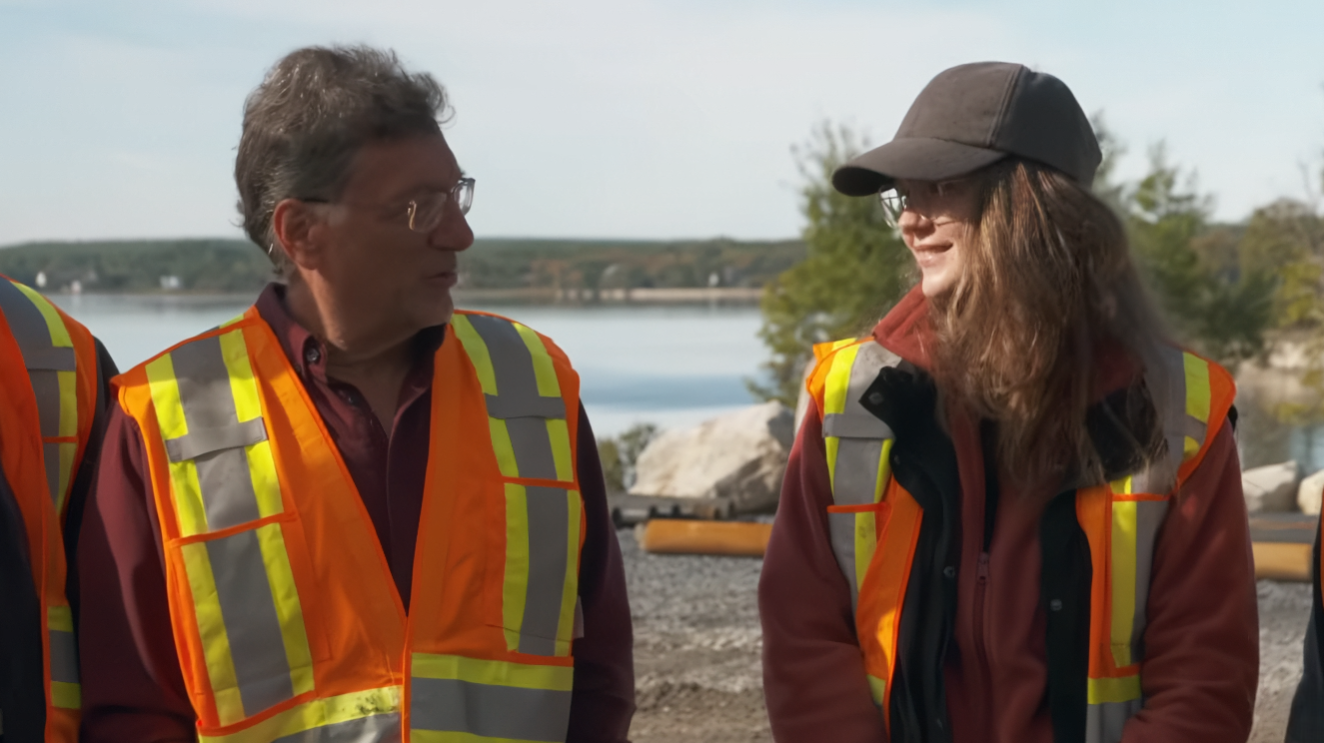
That suggestion is reinforced in the war room, where an expert is described as saying that the evidence points to possible human presence on Oak Island in the 1400s. If supported, that would place activity on the island before Columbus’ 1492 voyage and far earlier than conventional interpretations of the site have generally allowed. For long-time followers of the programme, that date immediately invites familiar theories involving medieval European groups, including ideas linked to the later legacy of the Knights Templar or associated maritime networks in the Atlantic. The transcript stops short of proving such claims, but it clearly presents the 1400s timeline as one of the episode’s most significant developments.
Lot 8, meanwhile, is being described as an archaeological hotspot rather than a side location. The preview material builds on the recent removal of a 40,000-pound boulder, beneath which the team reportedly found an artificial stone cradle filled with waterproof blue clay. The structure is presented as a possible sealed entrance to something below ground, and the crew is now shown digging beneath the spot where the boulder once sat. The language in the transcript reflects rising anticipation that the site may reveal a dry shaft, timber cribbing or another deliberately built underground feature. If Lot 8 does prove to be an offset chamber or secondary access point, it would elevate the area into one of the most important discovery sites in the show’s history.

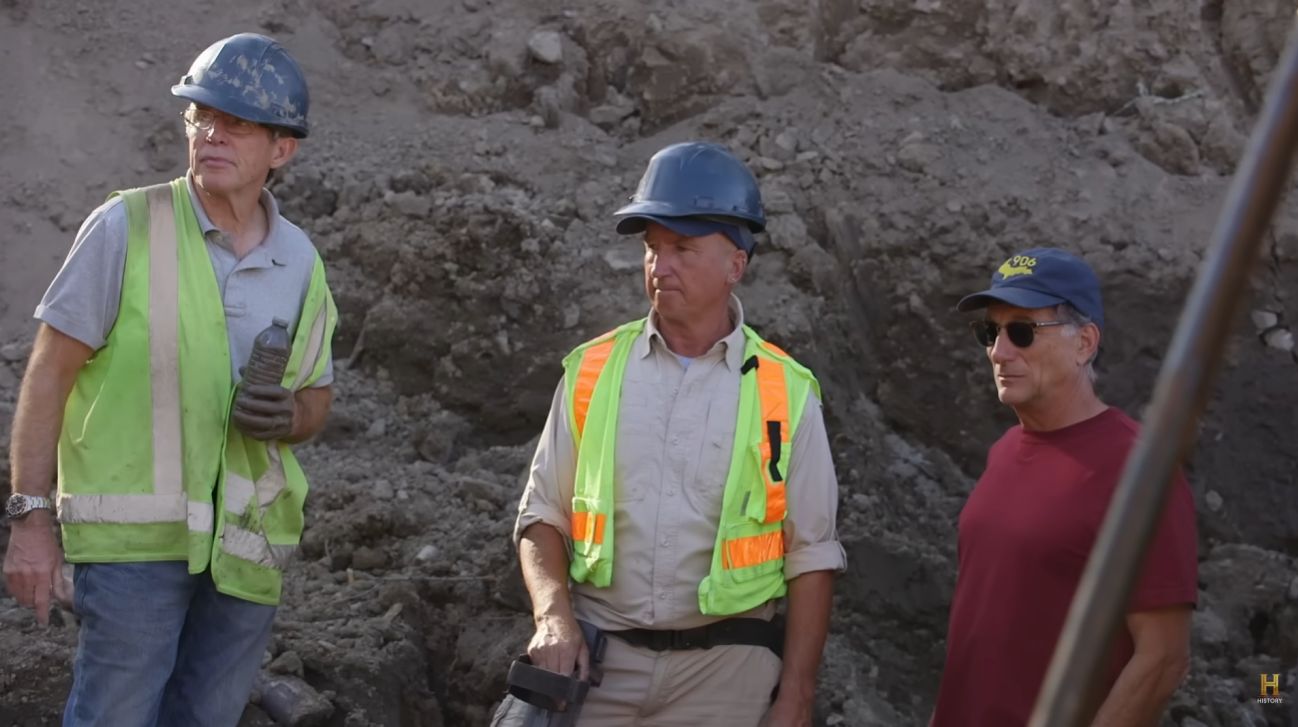
At the Money Pit, the operation has taken on a more industrial tone. The team is drilling into the so-called solution channel, where earlier testing indicated microscopic traces of gold and silver in the water. In the preview, someone reports that the highest gold and silver values appear in a specific area just before the drill meets what is described as hard material. That moment is treated in the transcript as highly significant, with the possibility raised that the equipment has encountered something man-made or concentrated, rather than ordinary natural ground. Whether that turns out to be timber, iron, rock or something more valuable remains unknown, but the moment is presented as a potentially important contact point in the search.
Perhaps the most expansive claim in the transcript concerns a clue suggesting that the true origins of the Oak Island treasure may lie more than 2,000 miles away. The preview is said to tie that distance to a new interpretation of what the team has recovered from the Money Pit, opening speculation about wider Atlantic connections. The text explores several possibilities, from the Caribbean and Mesoamerica to the Azores, but places particular attention on the Portuguese and Templar-linked history of the Azores in the early 1400s. It also references the idea that Oak Island may not have been an isolated hiding place, but part of a larger transatlantic route involving staging points, transport and long-term planning.
That framing matters because it changes the tone of the investigation. Oak Island is no longer being presented simply as the site of a buried cache. Instead, the island is increasingly cast as the centre of a broad medieval engineering effort, with roads, shafts, sealed structures and transport routes all feeding into one coordinated design. Whether that interpretation will survive closer scrutiny is another question. But the transcript makes clear that the show is now positioning its discoveries as part of a much bigger historical picture.
For viewers, Road Trip appears set up as an episode intended to connect years of scattered clues into a more unified theory. The swamp could provide a datable construction timeline. Lot 8 may offer a new entrance or sealed structure. The Money Pit drilling could reveal whether the metal traces point to a real source below. And the war room may push the story beyond Nova Scotia altogether. After more than a decade of searching, the programme is now suggesting that the mystery may not just be about what is buried on Oak Island, but about who brought it there, when they arrived, and how far they travelled to do it.