Moonshiners revisits Abraham Lincoln’s early years through a bold attempt to recreate the whiskey he may once have sold

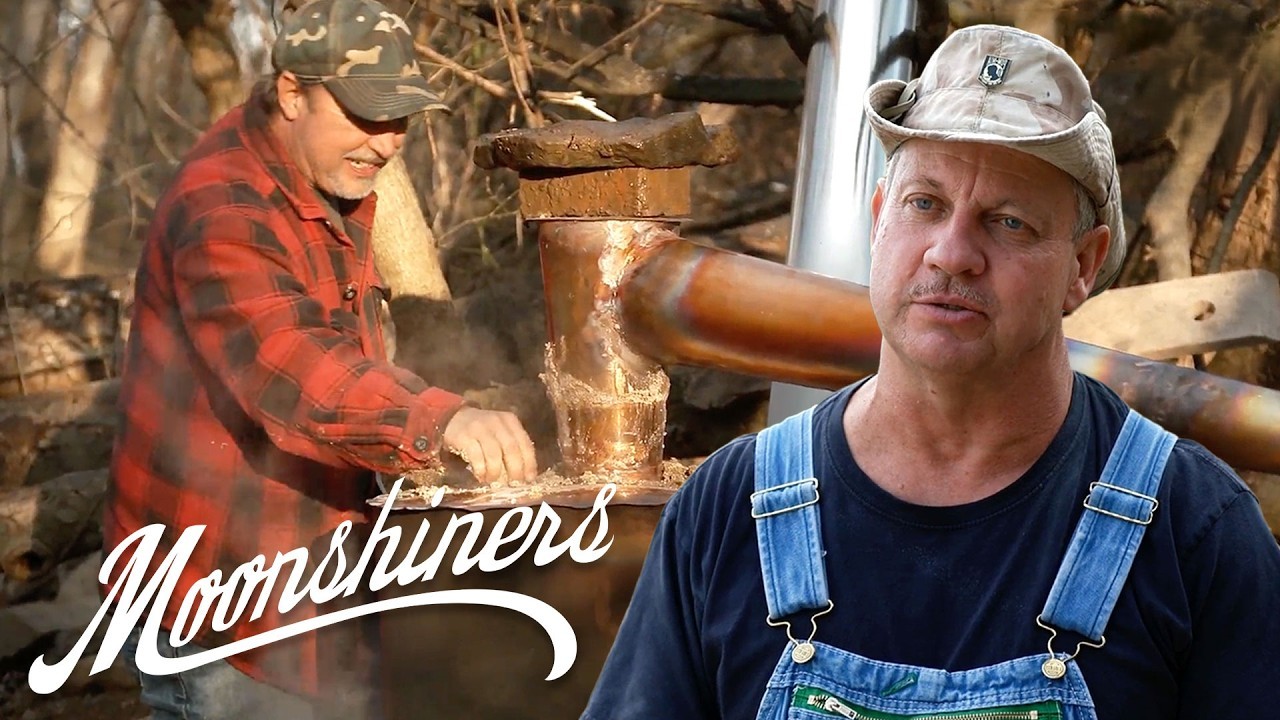
Long before Abraham Lincoln entered the White House and became one of the defining figures in American history, he was a young man working in a frontier store where alcohol was part of daily trade. That lesser-known chapter of his life became the focus of a striking Moonshiners storyline, as Tim Smith and Josh Owens set out to recreate what they believe could be one of the closest modern versions of the whiskey Lincoln may once have sold in his early years.
The project begins with a question that has long hovered around Lincoln’s pre-political life. Before he became a lawyer, congressman and president, Lincoln worked in a general store in New Salem, Illinois. According to the material in the source transcript, that store sold goods in bulk, including alcohol, and had a licence allowing drinks to be consumed on site. That detail opens the door to a provocative historical possibility: that Lincoln was not simply around spirits, but may have had a much closer connection to them than later political mythology preferred to admit.
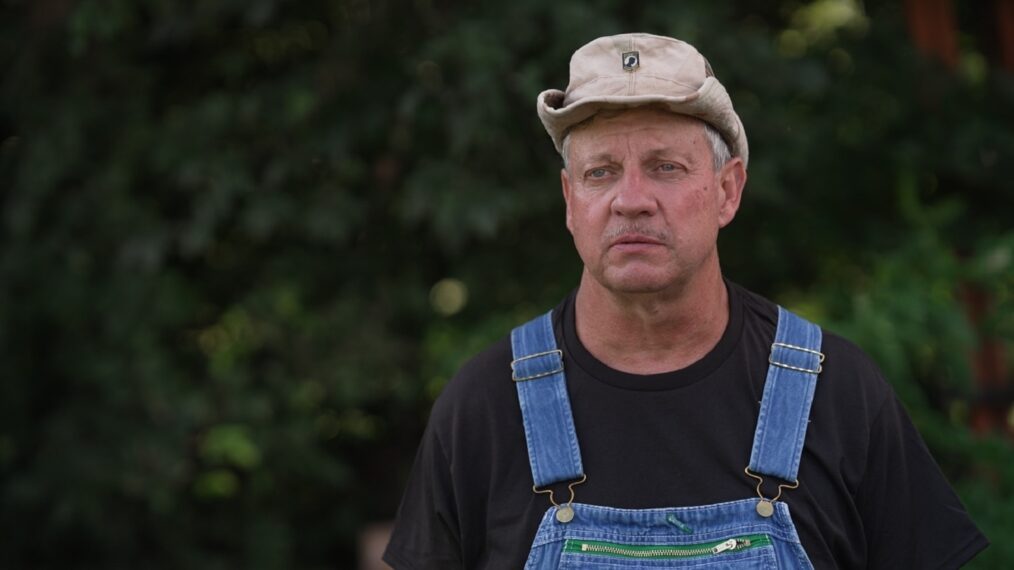
In the episode material, Tim and Josh travel back to Lincoln’s roots in Kentucky, where they explore the idea that his family’s environment may have made knowledge of whiskey production almost unavoidable. They are told that while there is no hard proof Lincoln’s father was distilling, the conditions were all there. Corn was being grown, mills were nearby, and distillers were common in the area. In other words, Lincoln grew up in a place where whiskey was not an exotic luxury but part of ordinary rural life.
That becomes the foundation for their reconstruction.
Rather than simply making a generic corn spirit, Tim and Josh aim for something more historically grounded. Their research leads them to one crucial ingredient: sorghum syrup. In the transcript, local sources explain that sugar would have been expensive, while sorghum offered a practical substitute that could add sweetness and raise alcohol yield. For Tim, that was more than a technical note. It was the missing link that gave the project its direction. If early frontier distillers around Lincoln were working with white corn and sorghum, then that combination offered the best path toward creating a whiskey rooted in Lincoln’s time and place.
The result is a mash that leans heavily on sorghum, supported by corn, and designed to echo the kind of spirit that might once have been poured across a rough wooden counter in an Illinois store. The syrup itself is described in the source as rich, sweet and more complex than ordinary sugar, bringing flavour as well as fermentable potential. That matters because Tim is not merely chasing proof. He is trying to build a whiskey with an identity. Sorghum, in his view, does exactly that.
To match the ambition of the recipe, the team also uses a custom-built still that visually nods to the era they are trying to honour. The apparatus is tall, narrow and old-fashioned in appearance, with a shape that the men jokingly compare to Lincoln’s famous stovepipe hat. It is a theatrical detail, but also an important one. On Moonshiners, the act of recreating historic liquor is never just about chemistry. It is about atmosphere, memory and trying to place the final product inside a believable historical frame.
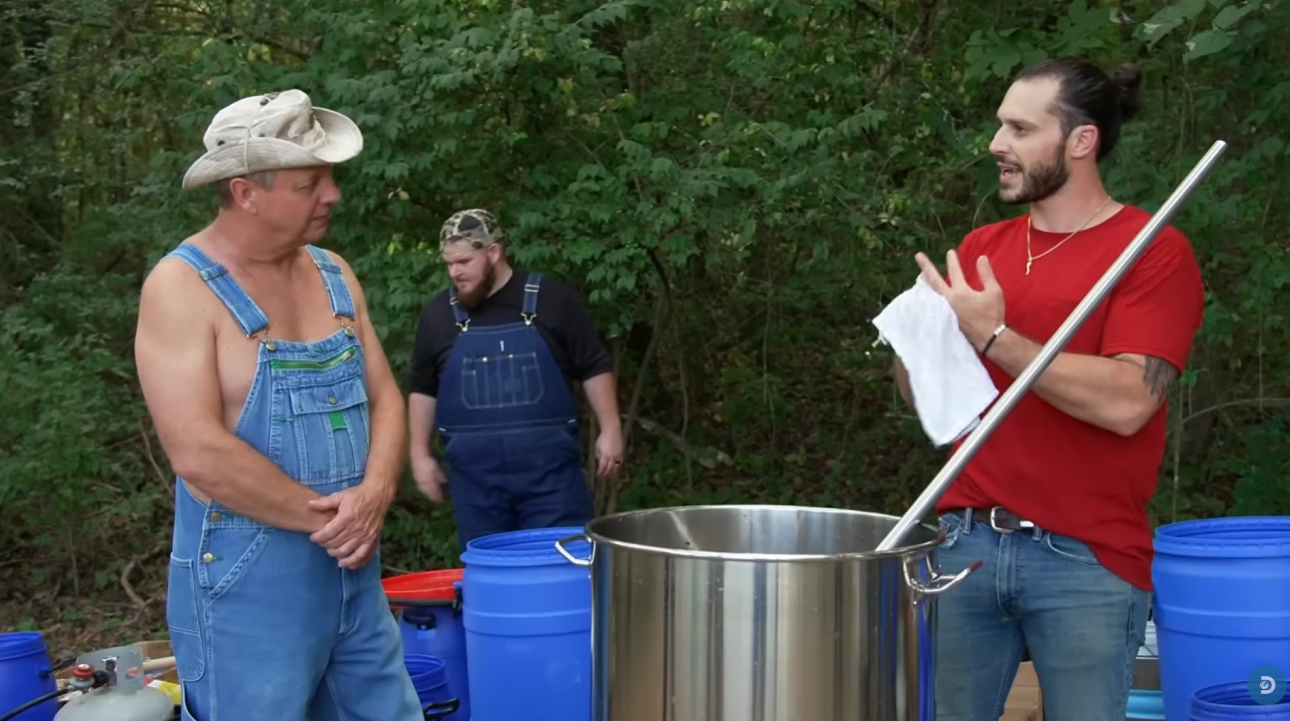
When the mash is finally ready, the men describe it as sweet, fully worked off and clearly carrying the sorghum character they were hoping for. Because the still is unusually tall, they gradually charge it with mash rather than filling it all at once, a practical choice meant to get heat moving through the system faster. Soon, the first flow begins to come through. For Tim, that moment is the payoff to the entire exercise: Abraham Lincoln sorghum whiskey is finally running.
What follows is the kind of verdict the series always builds toward. When they taste the finished spirit, the response is immediate and emphatic. The smell is dominated by sorghum. The palate is described as sweet from beginning to end, with corn present but secondary. Rather than fading quickly, the flavour lingers, encouraging another sip. Tim concludes that this may be the closest recipe to what Lincoln would have been selling at his store, while the others describe it as unusually complete, with the sorghum carrying through both aroma and finish.

It is, of course, still an act of interpretation rather than historical certainty. The transcript never claims there is documentary proof of Lincoln making this exact whiskey, or any whiskey at all. Instead, the episode works in the space between record and plausibility. Lincoln sold alcohol. He grew up in a region where distilling knowledge was widespread. Sorghum and corn were accessible ingredients. From those facts, Tim and Josh build a liquid theory of history.
That is what makes the segment more interesting than a simple novelty experiment. It is not merely asking what Lincoln drank. It is asking what Lincoln’s world tasted like. Before the speeches, before the presidency, before the marble monuments, there was a young man shaped by the textures of frontier America. In Moonshiners, that world is imagined not through books or portraits, but through fire, mash and copper.
And in that sense, the whiskey matters less as a definitive answer than as a vivid piece of historical storytelling. Whether Abraham Lincoln ever poured a drink quite like this cannot be proved here. But by the end of the run, the men are convinced they have brought something authentic back into the light: not just a whiskey, but a flavour from the America that made him.