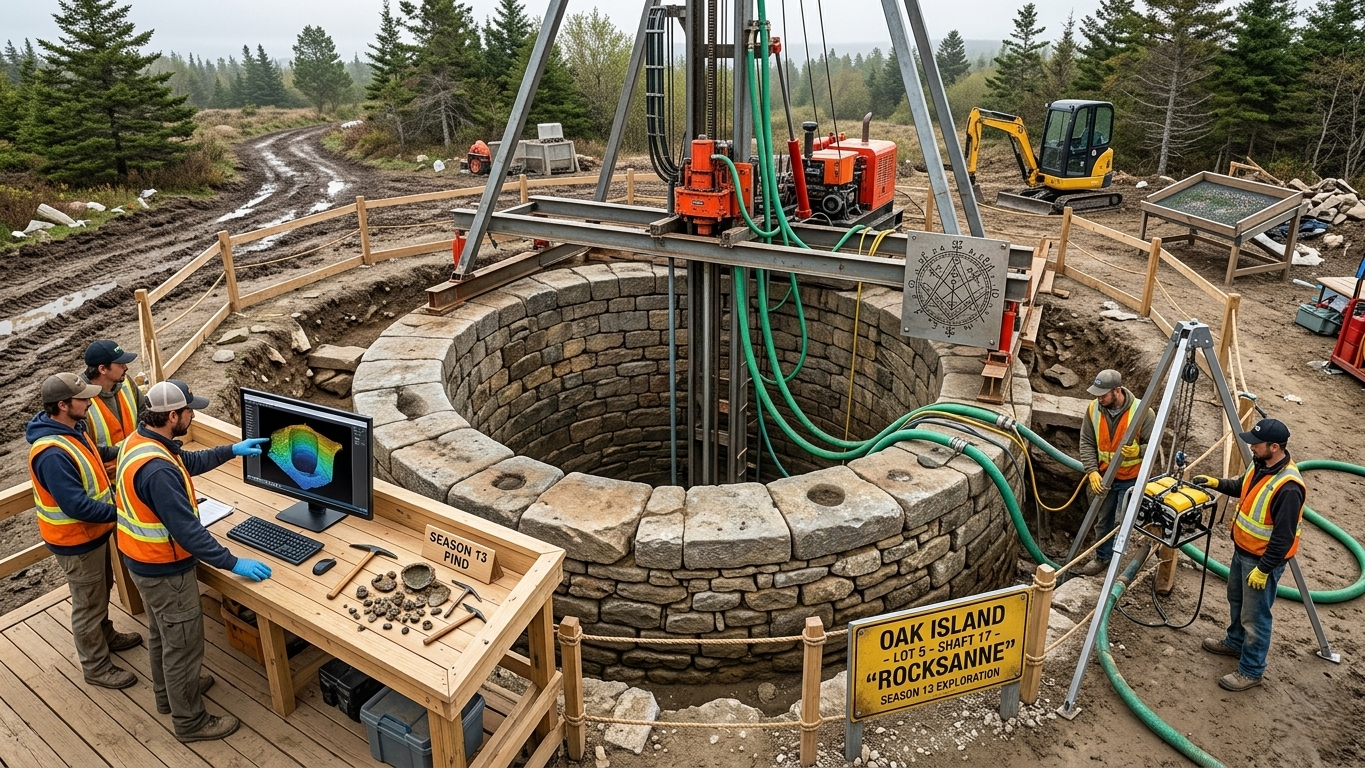
A long-overlooked well on Oak Island is now at the centre of renewed speculation after a series of discoveries in season 13 suggested the site may be far older and more significant than previously believed. What was once dismissed as an unimportant feature on Lot 5 is increasingly being viewed as a possible key part of the island’s deeper mystery, with new finds prompting fresh debate over whether the shaft was ever intended to serve as a simple water source.
For years, attention on Oak Island has remained fixed on the Money Pit, the legendary location tied to theories of buried treasure and centuries of failed recovery attempts. By comparison, the well on Lot 5 attracted far less interest. It sat away from the main search area and was often treated as a modern or secondary structure with little real historical value. That assumption has now come under serious pressure.
The turning point came when the team began uncovering objects near the well that appeared inconsistent with the accepted timeline of activity on the island. Among the finds were a bronze button and an iron spike, both said to date back to the 13th century. Those discoveries alone were enough to raise eyebrows, suggesting there may have been organised human presence on Oak Island centuries before the traditional 1795 origin story attached to the Money Pit.
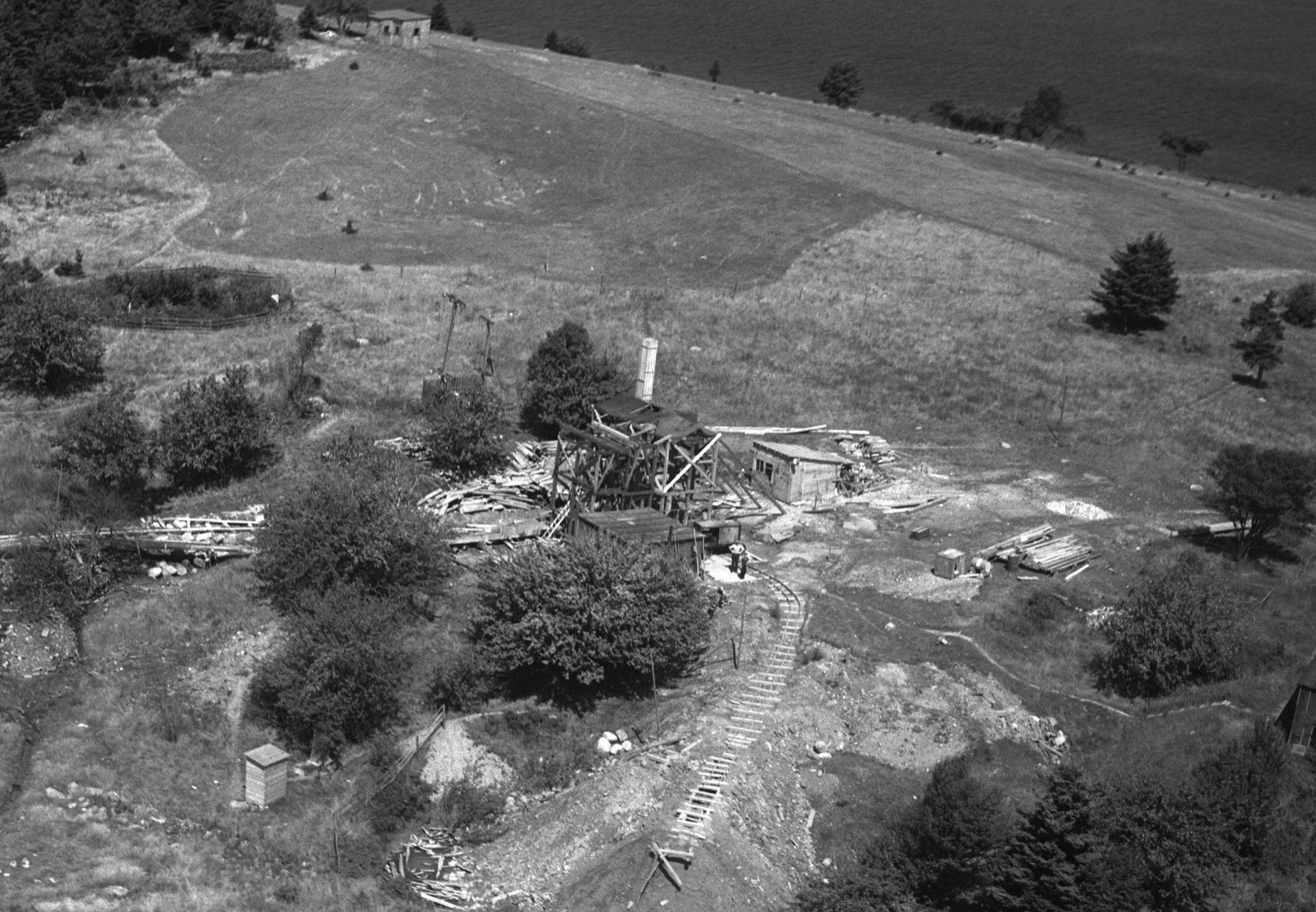
The questions deepened further when researchers examined the nearby stone structure on Lot 5 and linked it to precise stellar alignments from the 1200s. If that interpretation is correct, it would suggest planning, technical knowledge and intentional design rather than random settlement activity. In that context, the well no longer appears to be an isolated feature. Instead, it starts to look like part of a broader system, one that may have served a specific and carefully chosen purpose.
One of the central arguments now being explored is that the well may never have been built for freshwater at all. The reasoning is straightforward: its position close to the ocean makes it an unlikely choice for a conventional drinking well, since saltwater contamination would have been a serious concern over time. That detail has led to a more provocative theory — that the shaft was intended not for survival, but for concealment.
That theory gained momentum when the team uncovered a heavy iron hook fixed near the well. Analysis reportedly suggested the object had not been designed to move like a hinge or pivot, but to stay anchored in place. Researchers also concluded that the hook’s metallurgy did not match the British profile commonly seen in many other Oak Island iron finds. Instead, it appeared purer and more consistent with continental European sources. Even more striking was the suggested dating, which placed it as early as the mid-700s.

If that dating is accurate, the implications are significant. It would push human activity at the site far earlier than most Oak Island theories typically allow, and it would strengthen the idea that Lot 5 was part of a larger, coordinated operation rather than a random outpost. The comparison with other iron pieces found on different parts of the island has only added to the intrigue, with investigators noting possible links between artefacts on Lot 5, Lot 8 and Lot 15.
Perhaps the most important point, however, is that no one has yet reached the true bottom of the well. When the shaft was examined, investigators concluded that the visible floor was not the actual base, but a buildup of organic material, soil and debris accumulated over centuries. That means whatever may have been placed inside could still be sitting far below, untouched and out of sight.

This has opened two competing but equally compelling possibilities. The first is practical: that the shaft functioned as a hidden vault, with the fixed iron hook forming part of a retrieval system used to lower or raise objects. The second is more symbolic: that the well may have served as a ritual site, a place where objects were deliberately placed to mark an agreement, boundary or event rather than to be recovered later. Either interpretation would make the well far more important than previously assumed.
For the Oak Island team, the next step now appears unavoidable. Rather than relying on surface scans and limited inspection, the site would require a full archaeological excavation carried out layer by layer. Only that kind of methodical dig could establish the well’s real depth, its chronology and the nature of any artefacts still hidden at the bottom.
Whether the shaft ultimately proves to be connected to the Money Pit, to a much older European presence, or to something more ritualistic, the discoveries on Lot 5 have already changed the conversation. A place once written off as irrelevant is now being treated as one of the most potentially revealing sites on the island. And if the evidence continues to point backward beyond the accepted timeline, then Oak Island’s history may be even stranger — and far older — than many believed.
