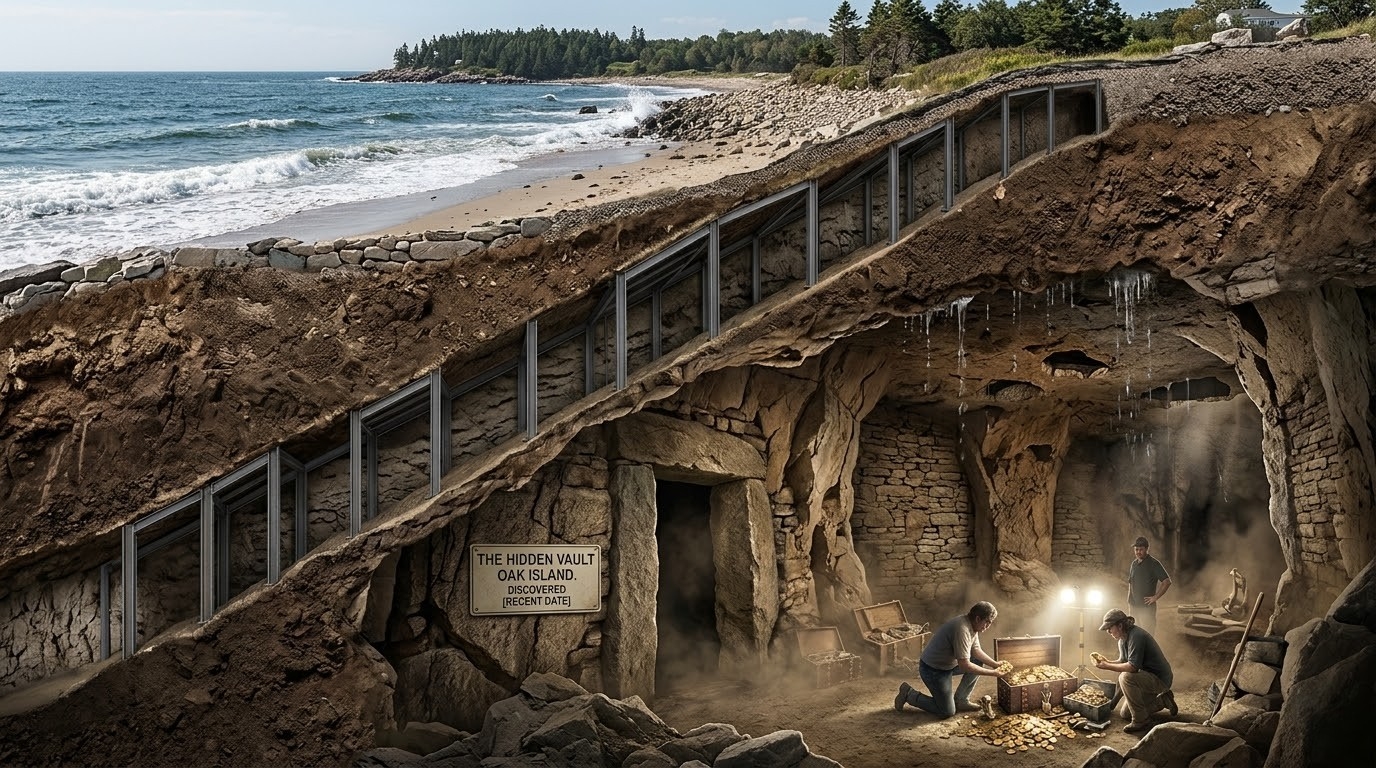
The Curse of Oak Island team may have opened one of the most important new chapters in the long-running treasure hunt after a series of discoveries at Smith’s Cove appeared to point back toward the island’s legendary flood tunnel system.
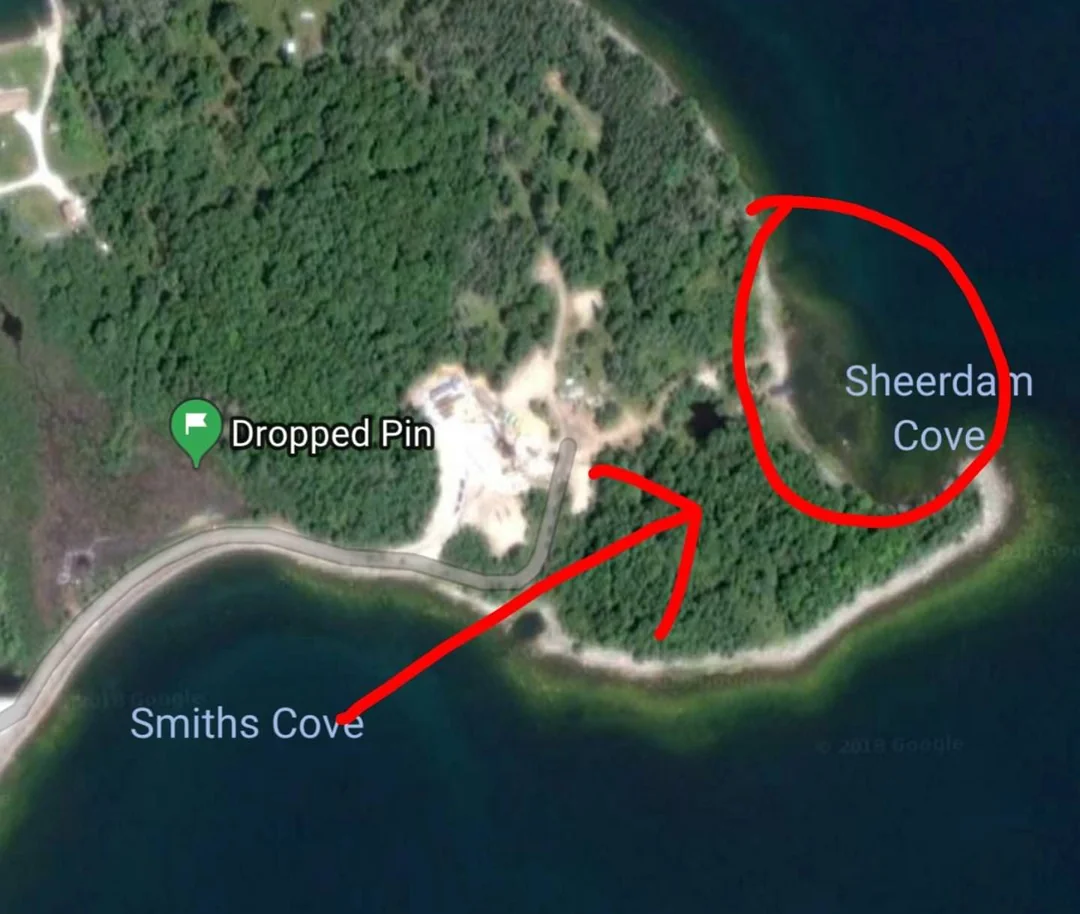
The latest developments centre on a cluster of unusual structures, old timber, possible tunnel features and mysterious objects found around Smith’s Cove, an area long believed to be connected to the original Money Pit. For Rick and Marty Lagina, the findings raise fresh questions about whether the team is finally closing in on the engineering system that has protected Oak Island’s secrets for more than two centuries.
One of the most intriguing discoveries came when Dan and Charles Barkhouse’s team identified a triangular opening surrounded by flat rocks. The layout immediately drew attention because historical accounts from the 19th century described similar stone formations in the area. With coconut fibre also found nearby, the team considered whether the opening could be linked to one of the fabled flood drains believed to have carried seawater toward the Money Pit.
That theory is important because coconut fibre has often been associated with Oak Island’s flood tunnel story. If the material was used as part of a filtration system, it could support the idea that Smith’s Cove was once the starting point of a carefully built underground water trap.
The team also uncovered a metallic sphere encased in clay and surrounded by stones. Its origin remains unclear, but the object sparked immediate interest. Some suggested it could be a ballast stone, while others wondered whether it might be a cannonball or another man-made item with historical value. The crew planned to remove it carefully and continue investigating the area.
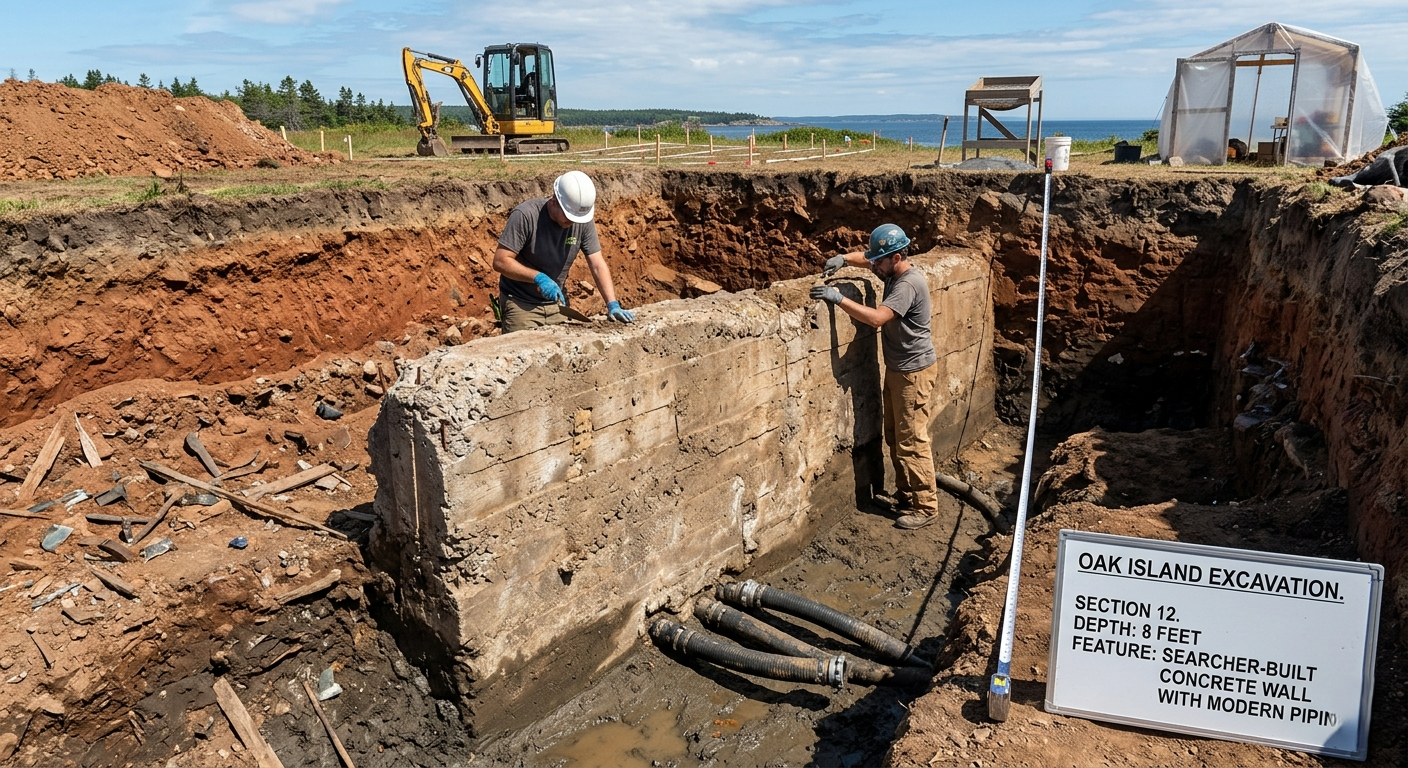
Another major moment came with the discovery of a buried concrete wall around eight feet below the surface. At first, the find raised large questions about its age and purpose. Because poured concrete has ancient origins, some wondered whether the structure could push the Oak Island timeline further back than expected. However, later evidence, including rubbery pipes at the base of the wall, suggested it may have been built by searchers in the 19th or 20th century rather than by the original depositors.
Still, the wall was only one piece of a much larger puzzle.
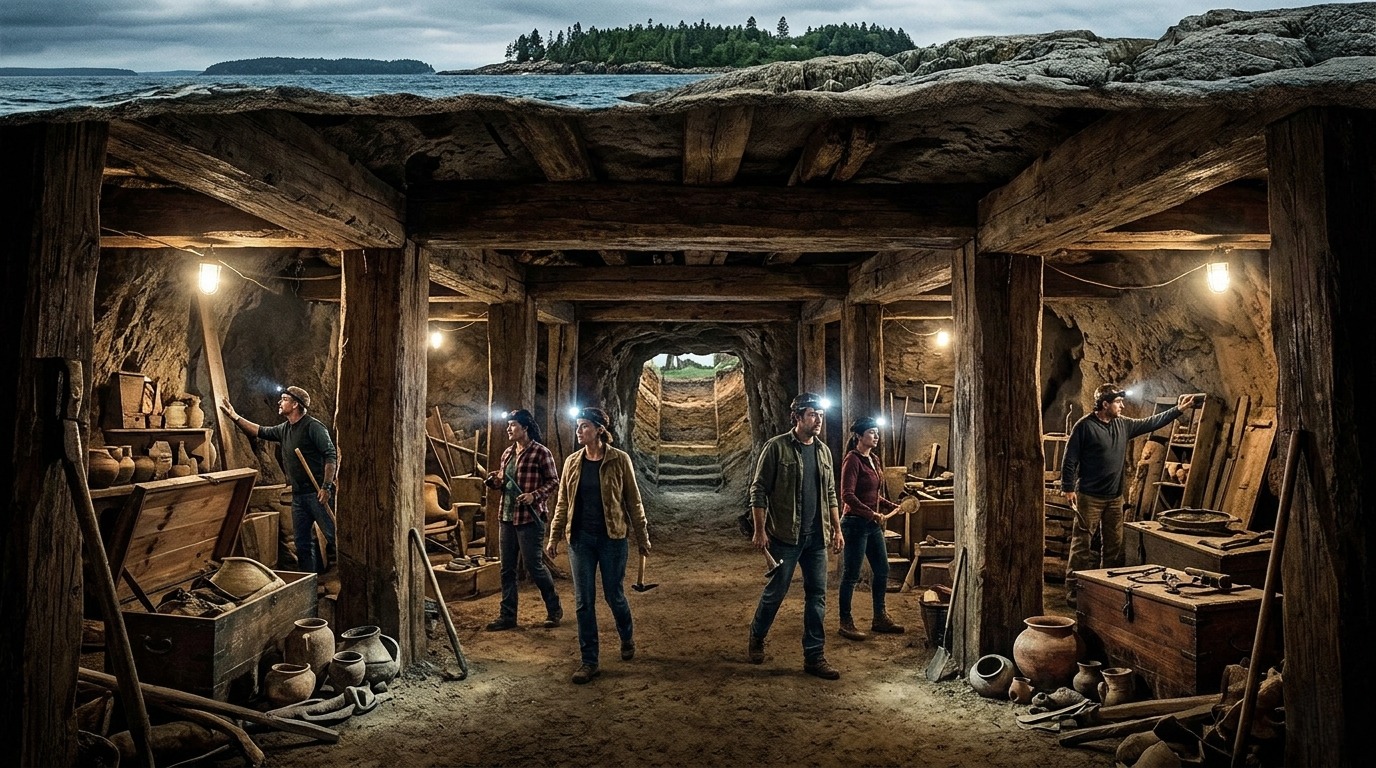
The team also examined an L-shaped wooden structure at Smith’s Cove. Built with wooden pegs instead of iron fasteners, the construction method stood out as unusual. The structure appeared solid and deliberate, leading the crew to question whether it could have been an old boat slip, a dock-related feature or part of a larger system connected to the Money Pit.
That possibility became more compelling after dendrochronology testing on wood samples from Smith’s Cove reportedly dated some structures to around 1770 and 1771. Those dates are significant because they place activity in the area before the Money Pit was first discovered in 1795, suggesting that major work may have taken place on the island earlier than many searcher-related explanations would allow.
The discoveries did not stop there. Archaeologist Laird Niven, geologist Terry Matheson and heavy equipment operator Billy Gerhardt also came across a large wooden wall beneath Smith’s Cove. The wall was made of vertical timbers and had not been documented as part of previous searcher work. That raised the possibility that it could be older and potentially linked to the original construction of the flood system.
In another section of the dig, the team investigated a U-shaped structure embedded in clay-rich till. The material reminded some researchers of blue clay previously associated with the Money Pit. Several theories remain open: the structure could be part of an old searcher cofferdam, a remnant of original depositor work, or even a colonial-era structure built for another industrial purpose.
Meanwhile, the Money Pit area continued to produce its own clues. In borehole work near Shaft 6, the team recovered wood believed to be from an old tunnel. Some members speculated that material found deeper than expected could be linked to the collapse of the original Money Pit or to earlier searcher activity.
Other finds added to the mystery, including parchment fragments, leather, wood and a possible piece of human bone recovered from H8 spoils. One parchment fragment appeared to show red and yellow markings, leading to speculation that it could have come from an old manuscript-style document.
The team also revisited the long-running flood tunnel theory through dye tests. Earlier historical tests had suggested that water connections may exist between the Money Pit, Smith’s Cove and the island’s South Shore. Although modern dye testing has produced mixed results, the idea of a hidden tunnel system remains central to the Oak Island story.
By the end of the investigation, Smith’s Cove appeared more complicated than ever. The team had uncovered stone formations, timber structures, possible tunnel features and dated wood that may predate the Money Pit’s discovery. None of the evidence proves that treasure has been found, but it strengthens the idea that the area was once the site of significant construction.
For the Lagina brothers and their team, the challenge now is to determine whether these structures are searcher remains, colonial works or evidence of something much older. Every new find seems to bring them closer to an answer, but also adds another layer to the mystery.
Oak Island has always been defined by uncertainty. Smith’s Cove may now be offering some of the clearest clues yet — but as the team continues to dig, the island is still refusing to give up its full story.
