The Curse of Oak Island: The Knights’ Hidden Path: Oak Island Team Digs Into Malta’s Underground Mysteries

Secrets Beneath Malta: Knights of Malta’s Mysterious Tunnels May Hold Clues to the Oak Island Mystery
From the ancient streets of Valletta to the fortified island of Gozo, the Oak Island team embarks on a journey 4,000 miles east to explore possible Templar connections that could change everything they know about the legendary Money Pit.
Underground in Valletta: Following the Footsteps of the Knights
In the heart of Valletta, Malta, researcher Emiliano Sacchetti leads Oak Island investigator Rick Lagina and his team deep beneath the city streets for a rare look at the hidden world constructed by the Knights of Malta.
Guided by investigative journalist Jean-Paul Mifsud, the team explores an elaborate system of tunnels, cisterns, and chambers carved from limestone in the late 1500s. Built in the wake of the Great Siege of 1565, these underground structures served as military strongholds, water reservoirs, and possible hiding places for treasure linked to the Knights—and perhaps even the legendary Templars.
“These tunnels,” Rick remarks, “are massive—like highways underground. The workmanship is incredible.”
Striking Similarities to Oak Island
As the team examines the ancient cisterns, a striking detail catches their attention: the use of blue clay—a natural sealant found in both Malta and Oak Island’s infamous Money Pit.
“This is impactful,” Rick says. “In the Money Pit, we found evidence of blue clay used for waterproofing shafts and tunnels. Seeing the same technique here, built by the Knights of Malta, is powerful.”
Could the same medieval engineering seen in Malta’s underground be the blueprint behind Oak Island’s mysterious subterranean works?
“We have limestone. We have blue clay. We have water diversion. The parallels are undeniable,” Rick notes. “The same kind of skilled hands may have built both.”
A Clue from the Past: The Starburst Button

The team’s quest continues on the nearby island of Gozo, where they visit the Citadel of Victoria—another fortress built by the Knights of Malta in 1565. There, they meet historian Denis Darmanin, an expert in military artifacts and buttons.
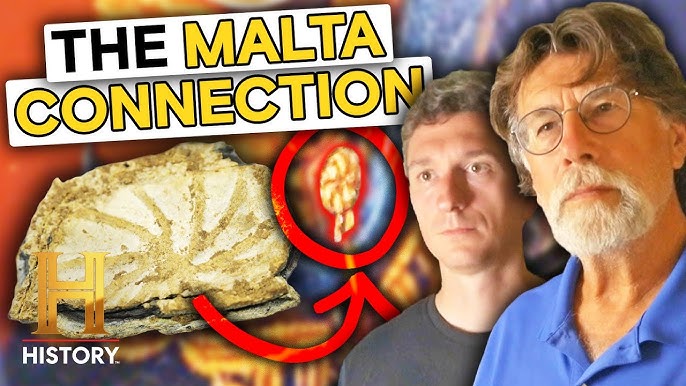
Doug Crowell presents Denis with a mysterious starburst button, discovered a year ago on Oak Island’s Lot 5.
Denis offers a startling assessment.
“This design,” he explains, “is consistent with Spanish styles worn by aristocrats—around 1650 to 1675. And yes, many Knights of Malta came from Spain. It’s very possible this button belonged to one of them.”
A finding like this not only pre-dates the discovery of the Money Pit by over a century—it could place the Knights directly on Oak Island.
“That’s quite remarkable,” Doug says. “It may reveal a period of construction for the feature on Lot 5—and possibly who was behind it.”
A Growing Case for the Knights of Malta
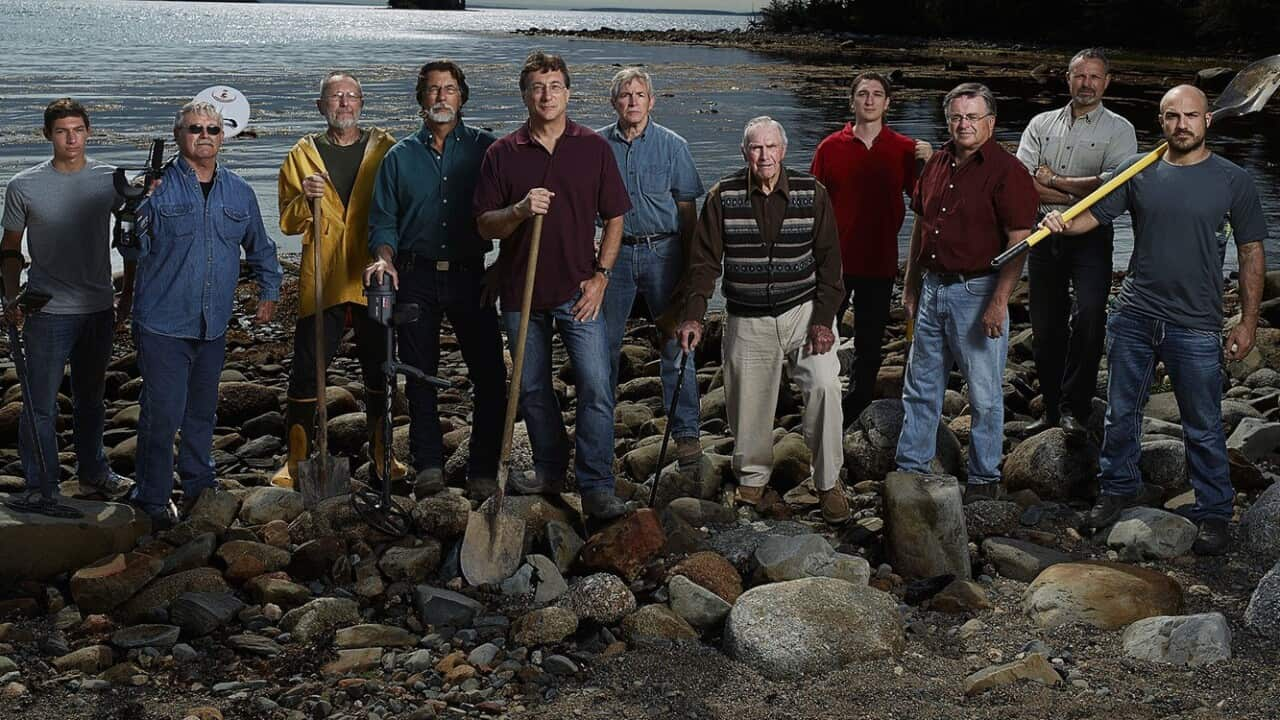
As the team leaves Malta, they do so with more than just photographs and maps. They carry potential evidence of a centuries-old connection between the Knights of Malta and Oak Island—a connection involving underground engineering, rare materials like blue clay, and even personal artifacts.
“If the Knights really were thinking globally, as far as the New World,” Rick reflects, “then Oak Island fits into that vision. Maybe they were safeguarding something much greater than we imagined.”
A Treasure Hidden in History?
Could the same minds who built Malta’s tunnels have laid the groundwork for the Money Pit? And if the Knights of Malta were on Oak Island long before the famed discovery, what exactly were they trying to protect?
One thing’s certain: the deeper the team digs into the past, the closer they may come to solving Oak Island’s greatest riddle.