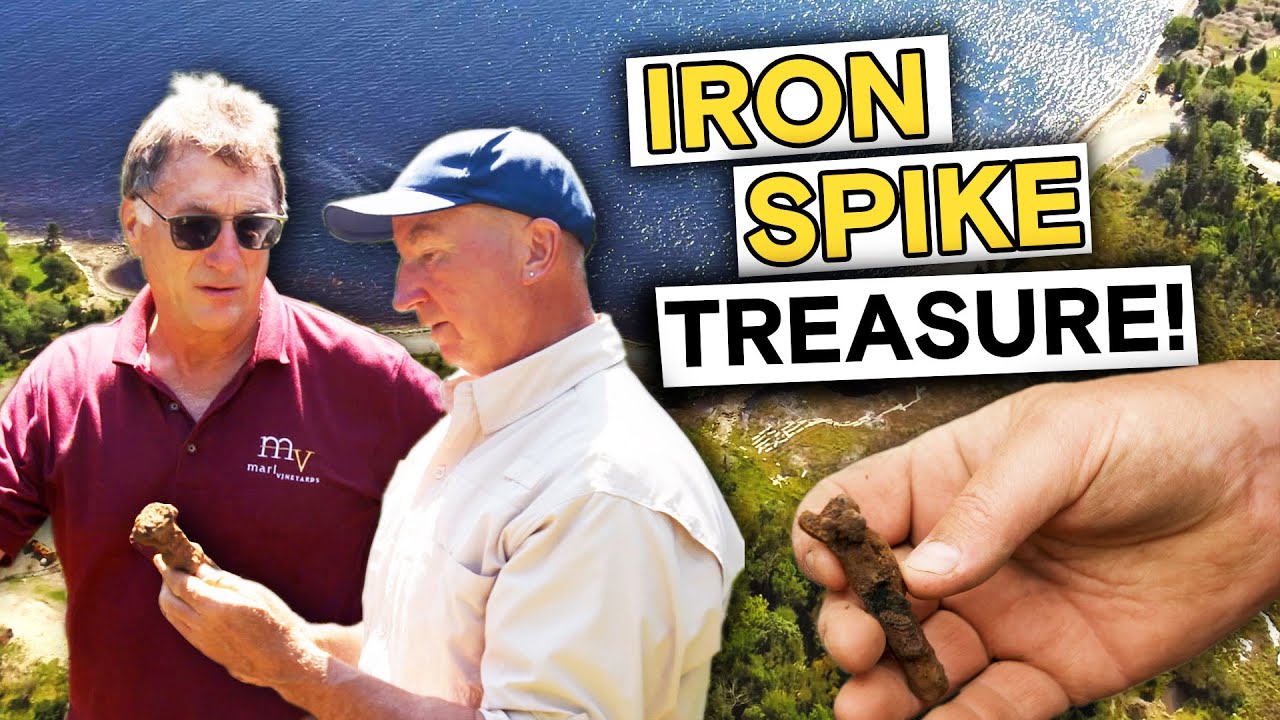
In a major development for the Lagina-led Oak Island treasure hunt, possible 18th-century artifacts—including hand-forged iron spikes—have been scientifically analyzed, potentially dating back to before the discovery of the famed Money Pit in 1795.
Craig Tester, Alex Lagina, and Oak Island historian Charles Barkhouse visited St. Mary’s University in Halifax earlier this week to consult with Dr. Christa Brosseau, a chemistry professor, and Dr. Xiang Yang. Their goal: to determine the origins of several iron spikes recently discovered in the island’s upland area.
Using a high-powered scanning electron microscope, the team found traces of phosphorus in the iron—an indicator that the material likely predates the 1840s. “It’s called phosphoric iron,” explained Dr. Brosseau. “It wasn’t until the mid-19th century that phosphorus was routinely extracted during iron production.” According to the professors, the spikes were likely manufactured in Britain or northern Europe.
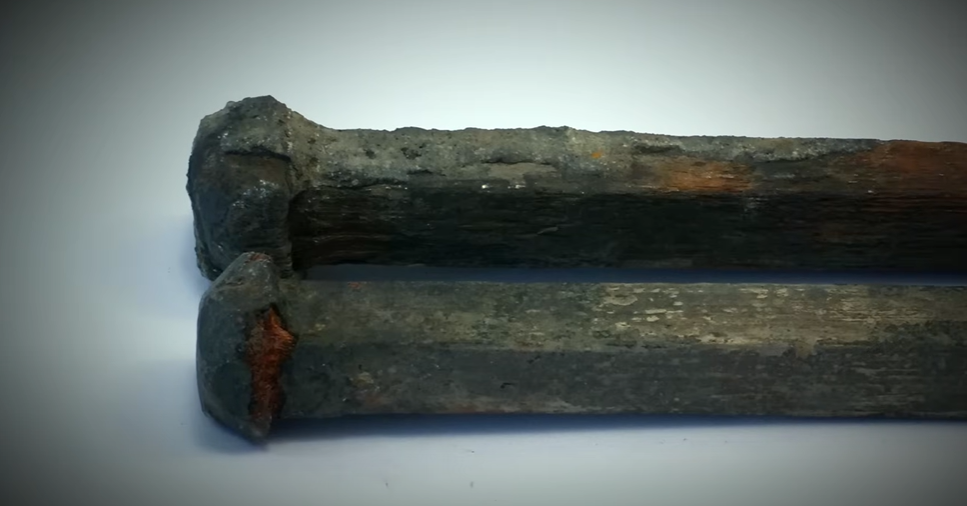
“It’s science, and it’s the truth,” said Tester. “We’ll pursue that.”
Meanwhile, another team on Lot 15 investigated a 130-foot-long serpent-shaped mound. Metal detection expert Gary Drayton unearthed a square, hand-forged spike—potentially a decking nail—which archaeologists estimate could date as far back as the 1700s. “It served a purpose,” Drayton noted, suggesting significant human activity on the site predating the Money Pit’s discovery.
Further intrigue unfolded in the Money Pit zone. A core-drilling operation revealed a wooden shaft at 95 feet deep. Charles Barkhouse performed the late Dan Blankenship’s water test: if the wood sinks, it’s old. The result? It sank instantly.
Even more surprising was the discovery of a small square nail fragment embedded in the shaft wood, later confirmed by Drayton as 18th-century in origin. “We nailed it,” he joked.

Over on Lot 32, Drayton and Marty Lagina uncovered an enormous iron spike embedded deep in the soil. Later identified by blacksmith expert Carmen Legge as an anchor spike possibly used for unloading cargo, it dated between 1710 and 1740—around the time of the Duc d’Anville’s failed French expedition to Nova Scotia in 1746.
According to historical researcher Doug Crowell, a ship’s log from that voyage mentions treasure being buried on a wooded island via a secret tunnel. This discovery adds weight to the theory that the French—potentially with Templar connections—may have hidden treasure on Oak Island.
With each new find, anticipation builds that the team may be closing in on the original Money Pit—or the long-rumored treasure hidden deep within the island’s mysterious tunnels.
“All it takes is one good find,” Drayton said.
And on Oak Island, it seems, they may have just found several.
