
For over 230 years, whispers of lost treasure have echoed through the winds of Oak Island, drawing fortune seekers, historians, and adventurers to its shores. Now, a newly discovered artifact may bring them closer than ever to solving the island’s legendary mystery. In Season 12, Episode 11 of The Curse of Oak Island, a copper plate unearthed from Lot 5 could be the key to unlocking a centuries-old puzzle—one that suggests Spanish silver was secretly transported to the island and hidden in an underground vault.
A Game-Changing Discovery
The recent discovery of a seemingly unremarkable copper plate in Lot 5 turned out to be anything but ordinary. Expert metallurgist Emma Culligan analyzed the artifact using a SKYIN 1273 CT scanner and an X-ray fluorescence spectrometer. The results were staggering: the plate contained copper, zinc, iron, lead, and, most intriguingly, arsenic—an alloying technique commonly used in the 1600s but largely abandoned by the 1700s.
This revelation sent shockwaves through the Oak Island team. Could this artifact predate even the infamous Money Pit by more than a century? And if so, was it linked to the enigmatic figure of Sir William Phips?
Sir William Phips and the Lost Spanish Treasure
In 1687, Sir William Phips, an English naval captain and politician, successfully salvaged 34 tons of silver, gold, and jewels from the sunken Spanish treasure ship Nuestra Señora de la Concepción. The ship, which went down off the coast of the Dominican Republic in 1641, originally carried over 100 tons of valuable cargo.
However, when Phips returned for a second salvage mission with Freemason Captain Andrew Beler, something unusual happened—he only reported retrieving an additional five tons of treasure. Where did the rest of it go?
Many researchers believe that Phips and his associates secretly smuggled a portion of the treasure to a hidden location. Could Oak Island have been their chosen vault?
Uncovering More Clues
The Oak Island team’s investigation led them back to the swamp, where they uncovered yet another stunning find—pottery with distinctive blue glazing, a hallmark of European craftsmanship from the 17th and 18th centuries. Even more compelling, the site of the discovery is directly linked to Anthony Graves, a 19th-century Oak Island landowner rumored to have found Spanish silver in the area. Could this mean that beneath the swamp lies a hidden vault still waiting to be discovered?
The Money Pit: Time for the Caissons?
Meanwhile, in the legendary Money Pit, activity is heating up. Rick and Marty Lagina, along with Craig Tester and their team, gathered in the War Room to discuss their next big move.
Recent drilling has uncovered large wooden structures at depths of 150 feet—possibly evidence of previously undocumented tunnels. Even more tantalizing, soil samples from the area revealed anomalously high concentrations of gold, suggesting that a treasure trove could be just within reach. With the stakes higher than ever, the team has made a monumental decision: to bring in the caissons—massive steel cylinders that allow for large-scale excavation.
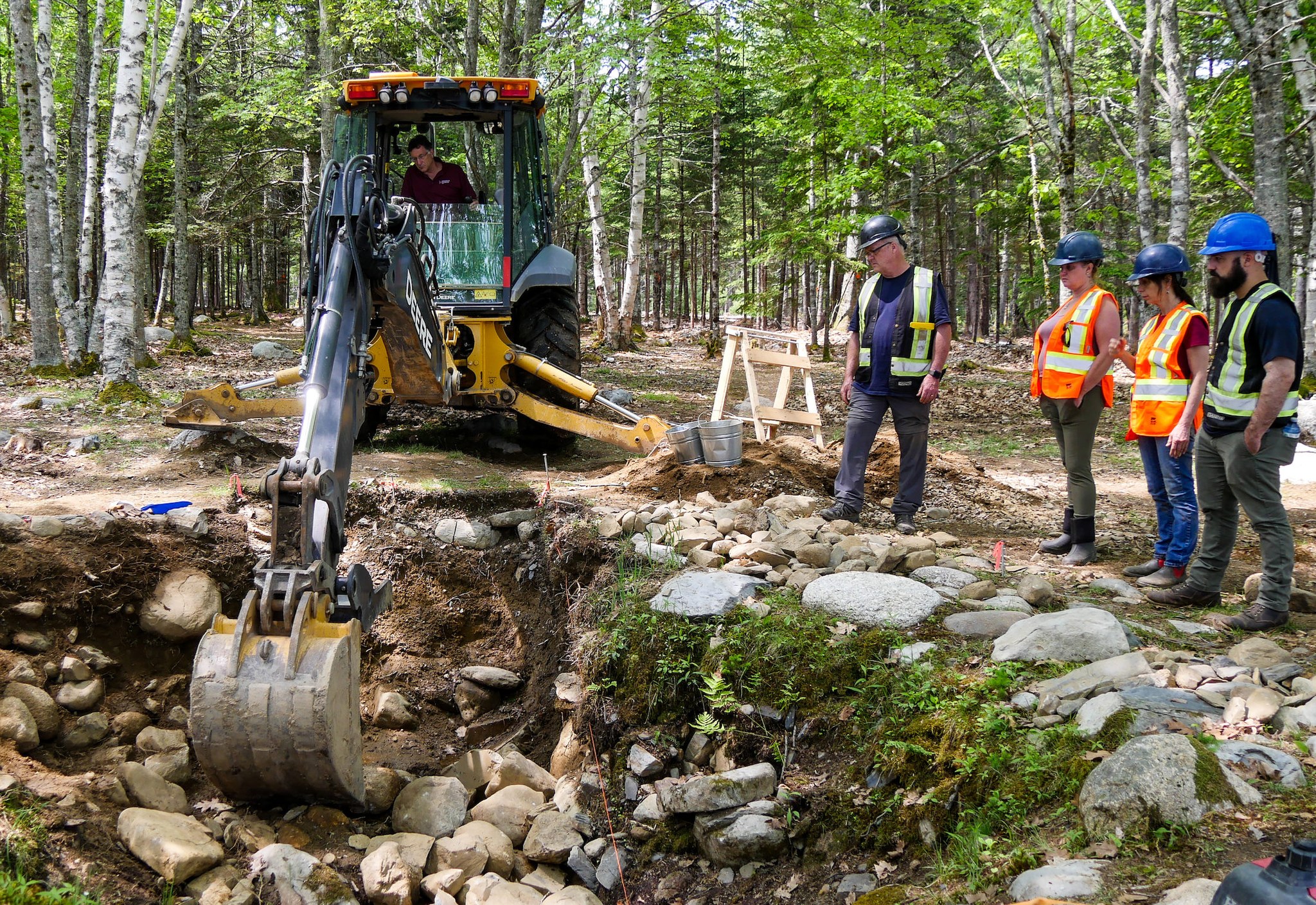
This multi-million-dollar operation marks one of the most significant moments in the search for Oak Island’s hidden secrets.
What Lies Beneath?
A copper plate potentially dating back to the 1600s, a mysterious link to Sir William Phips, a potential vault hidden beneath the swamp, and newfound evidence of tunnels and chambers beneath the Money Pit—all signs point to something monumental buried on Oak Island.
Could it be the missing silver from Nuestra Señora de la Concepción? A hidden Freemason cache? Or perhaps something even more astonishing?
As the team stands on the precipice of what could be Oak Island’s most significant breakthrough, one question lingers: what if this isn’t just about silver and gold?
A Secret Society’s Involvement?
Some researchers speculate that Oak Island may have been a covert depository for secret societies like the Freemasons or the Knights Templar. The recent discoveries align with known 17th-century European activity, leading some to believe that a lost chapter of history is waiting to be uncovered.
Adding to the intrigue is the discovery of a cobblestone pathway. If Oak Island were simply a natural landmass, why would such an organized structure exist? Some believe this road was part of an elaborate transport system for treasure.
Furthermore, the repeated connections to Anthony Graves and his rumored discovery of Spanish silver suggest that a hidden cache may still be buried on the island. Was Graves silenced, or did he deliberately keep his discovery a secret?
Science Confirms the Treasure’s Presence
Geochemical analysis has confirmed elevated levels of gold and silver deep underground. But are these traces natural deposits, or the remnants of a treasure hoard that has slowly leaked into the soil over centuries? If it’s the latter, the Lagina brothers and their team may be on the verge of uncovering one of the greatest treasure finds in modern history.
What Comes Next?
With the caissons being deployed, the excavation process is shifting into high gear. This is the moment fans have been waiting for—the opportunity to penetrate the depths of the Money Pit and finally determine if the legend is real.
Will the team uncover undeniable proof of a lost Spanish treasure? Will they finally unearth the fabled vault? Or will Oak Island, as it has for centuries, keep its secrets buried just a little while longer?
One thing is certain—the next few episodes could change everything. Stay tuned, treasure hunters. The greatest discovery may still lie ahead.
