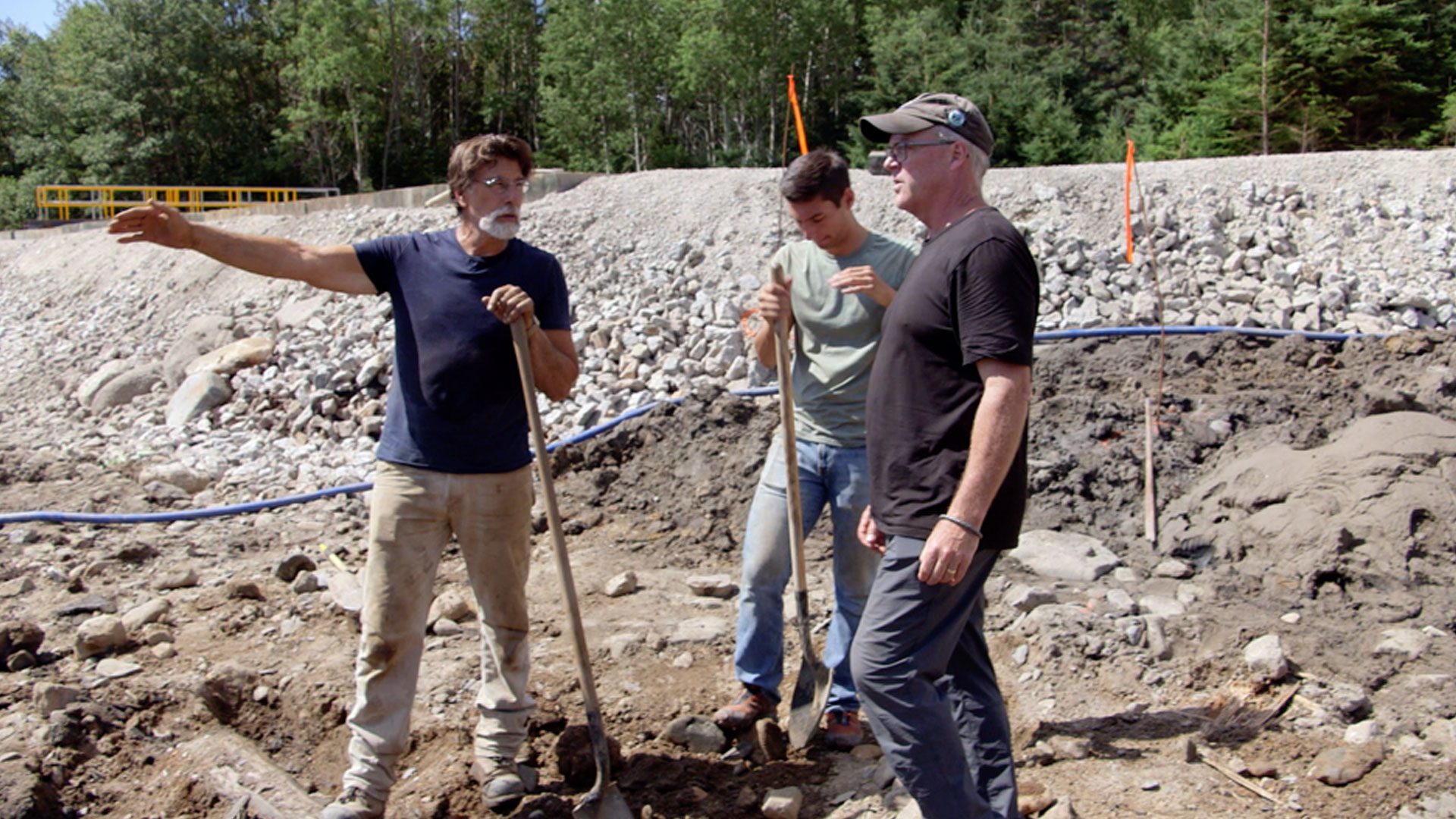
The legendary Oak Island mystery has once again captured the imagination of the public as a series of groundbreaking discoveries emerge from beneath its storied soil. The latest excavations, spearheaded by Rick and Marty Lagina’s team as chronicled in The Curse of Oak Island, have unearthed structural evidence and artifacts suggesting not only long-term human activity—but possible connections to buried treasure.
Drilling operations near Smith’s Cove, specifically borehole DN 11.5—revealed a significant underground void at a depth of 90 feet. This 1.5-foot cavity, detected through unusual soil pressure and void-collapse indicators, is the latest in a series of anomalies near the so-called “Treasure Zone.”
“Our instruments don’t lie,” said geologist Terry Matheson, after solid wood fragments were retrieved from the core samples. “The wood’s quality and depth suggest a deliberate construction—possibly a support structure or shaft.”
Even more tantalizing was the result of X-ray fluorescence (XRF) testing, which revealed trace amounts of gold embedded in both the wooden fragments and the borehole water. “It’s not conclusive treasure,” Matheson added, “but it’s certainly reason to keep digging.”
Meanwhile, over on Lot 5, archaeological teams uncovered a trove of relics dating as far back as the 13th century. Among them: fragments of red clay pottery from the early 1600s, a French denier coin from the late 1200s, and a British lead seal linked to the 18th-century supplier J. Lloyd Parker and Company.
“These finds rewrite Oak Island’s historical footprint,” said lead archaeologist Helen Sheldon, who also identified layered foundations of two structures—one rectangular, likely from the 1700s, and an older circular layout, whose origin remains under investigation.
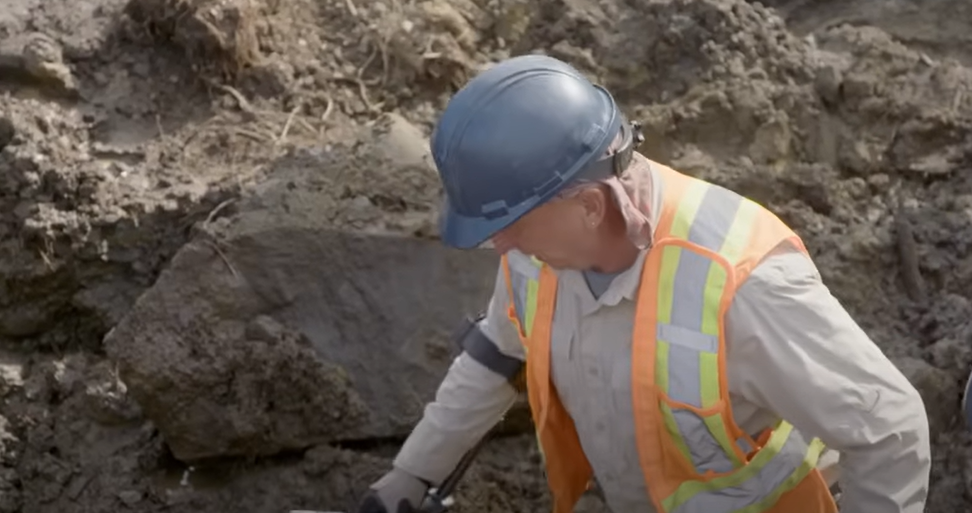
To supplement traditional excavation, the Lagina team turned to cutting-edge muon tomography, a density-mapping technology often used in volcanoes and pyramid exploration. Results revealed anomalous densities at depths of 65, 112, and 230 feet beneath the infamous Money Pit. Experts believe these readings could indicate previously uncharted chambers or passageways.
As anticipation grows, speculation continues about whether the island’s fabled treasure—rumored to involve Templar artifacts, British military spoils, or Spanish gold—is finally within reach.
“We’re closer than ever,” said Rick Lagina in a recent press briefing. “But as always, Oak Island gives up its secrets slowly.”
For now, all eyes remain fixed on the next borehole, the next artifact, and the ever-shifting shadows beneath Oak Island’s surface.
