HISTORIC BREAKTHROUGH IN MONEY PIT: NEW EVIDENCE MAY LEAD TO OAK ISLAND’S LONG-LOST TREASURE


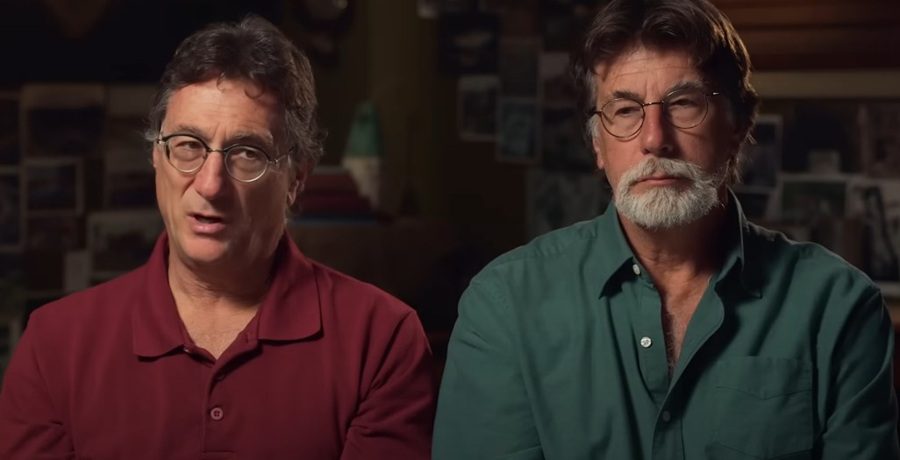
After over a decade of relentless exploration, the Lagina brothers and their determined team may be closer than ever to solving one of history’s most perplexing mysteries. In a dramatic turn of events during The Curse of Oak Island, Rick Lagina, Scott Barlow, and Roger Forte ventured underground into the notorious Money Pit, bringing renewed hope for uncovering the fabled treasure.
The team’s ongoing reconstruction of the Garden Shaft had been halted by winter, but not before a possible tunnel was discovered just ten feet below the shaft’s bottom. With renewed urgency, Rick and Marty Lagina descended to inspect the anomaly firsthand. Accompanied by their metal-detecting expert Gary Drayton, a scan of the area revealed a promising signal: a non-ferrous metal just two feet beneath the surface—potentially silver or copper.
Though initial excitement was tempered by concerns about structural stability and safety, the discovery has reignited speculation that they may be on the verge of unearthing Oak Island’s elusive treasure.
ANCIENT CLUES IN BLUE CLAY AND MYSTERIOUS STONE STRUCTURES
Elsewhere on the island, excavation efforts on Lot 13 have unveiled further tantalizing clues. A blue clay deposit—identical to that found in the original Money Pit in 1804—was uncovered beneath a boulder formation known as the Quadrilateral. Geoscientist Dr. Ian Spooner confirmed the unnatural presence of thick clay layers, some of which showed signs of heat exposure.
The formation appears to be man-made, possibly constructed to seal something underground. “It’s improbable this collected here naturally,” said Dr. Spooner, reinforcing the theory that the same builders responsible for the Money Pit may have also engineered this enigmatic structure.

SILVER TRACES IN A 900-YEAR-OLD WELL ON LOT 26
Meanwhile, Jack Begley and archaeologists Laird Niven and Helen Shelton turned their attention to a centuries-old stone well on Lot 26. Dr. Spooner’s analysis of water from the well revealed trace evidence of silver, prompting a careful excavation.
During the dig, the team unearthed a hand-wrought nail believed to date back to the 1700s, possibly linked to an old sailing vessel. Though later lab tests by Dr. Christa Brusso revealed the artifact to be ordinary metal, the well’s location and age continue to raise important questions: was this well an access point or a hiding place?
A BRASS DOOR HANDLE IN THE TRIANGLE-SHAPED SWAMP
The swamp, long suspected of hiding vital clues, yielded another stunning find. While exploring a stone ramp, metal detectorist Gary Drayton discovered a brass door handle—possibly from a ship’s cabinet or door. This adds to the growing theory that the swamp served as a docking area or offloading site for precious cargo.

The artifact may help date the ramp and connect it to the same builders who engineered the 800-year-old paved area nearby—evidence pointing to deliberate and large-scale human activity.
INTERNATIONAL CLUES: TEMPLAR SYMBOLS IN ITALIAN CAVES
The Oak Island team has also taken their quest overseas. Rick Lagina, joined by nephews Alex and Peter, historian Doug Crowell, and researcher Corjan Mol, traveled to Camerano, Italy. There, they met with researchers who guided them through ancient cave systems—ones that may have been used by the Knights Templar.
The team discovered carvings that eerily resemble the lead cross unearthed on Smith’s Cove years earlier, as well as symbols matching the mysterious Host Stone found on Oak Island in the 1920s. These findings lend credibility to the theory that Templar survivors fled Europe with sacred treasures, hiding them across the Atlantic.
ROMAN COINS AND THEORIES OF EARLY TRANSATLANTIC TRAVEL
Adding to the intrigue, Roman coins have been found on Oak Island—once again suggesting early European contact long before Columbus. Scholars remain divided, but the discovery of these coins in a 17th–19th century context hints at purposeful deposition, possibly tied to ancient maritime operations or treasure transport.
THE LEGACY CONTINUES: WHAT’S NEXT FOR THE LAGINA BROTHERS?
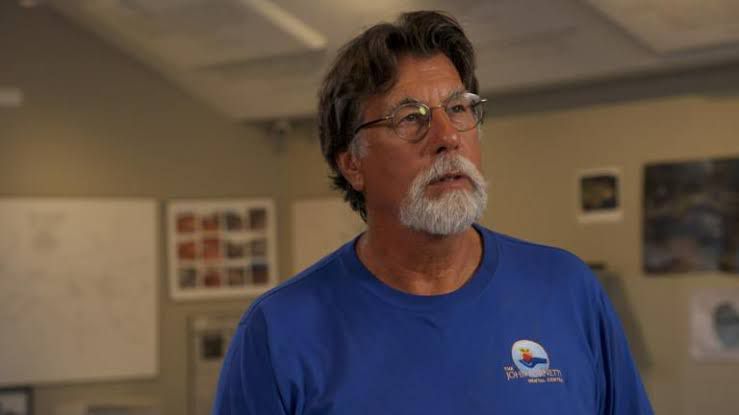
From mysterious tunnels and ancient wells to blue clay seals and international symbols, the Oak Island team continues to unearth evidence suggesting a vast and interconnected mystery. While the fabled treasure remains hidden, every artifact adds another piece to the centuries-old puzzle.
With Nolan’s Cross, Spanish coins, and ship components found in prior seasons—and more advanced technology and historical research than ever before—the Lagina brothers press on, closer than ever to revealing the island’s final secret.
Stay Tuned:
As summer excavation resumes, the Oak Island team promises more thrilling updates. For now, the mystery endures—but hope runs deeper than ever.