A War Room Gathering Signals Major Developments
In a rare full War Room meeting, Oak Island treasure hunter Rick Lagina convened his team for what promised to be an exciting discussion. The reason? A significant breakthrough following the discovery of a mysterious, empty vault-like structure in the swamp. The team had to follow where the clues led them—and the latest leads pointed to a long-lost treasure map.
Unveiling a Treasure Hunter’s Secrets
To aid their search, Rick tasked team members Doug Crowell, Judy Roudabush, and historian Terry Deveau with combing through archives known to contain past search records related to the Oak Island mystery. Their investigation took them to the Connecticut Museum of Culture and History, where they uncovered vital documents linked to William B. Goodwin, a businessman and historian from the early 1930s.
Goodwin, fascinated by Oak Island’s history, had compiled an extensive collection of documents, including records connected to Frederick Blair—the man who first reported the so-called Chapel Vault 153 feet deep in the Money Pit back in 1897. Among Goodwin’s papers, the team found intriguing references to a “Blair treasure map.”
An Ancient Map and Hidden Markers
According to Goodwin’s notes, Blair had possession of a treasure map that detailed three specific stones on the west end of the island. Although the original map’s whereabouts remain unknown, Goodwin’s notations depicted key landmarks that could indicate multiple treasure caches.
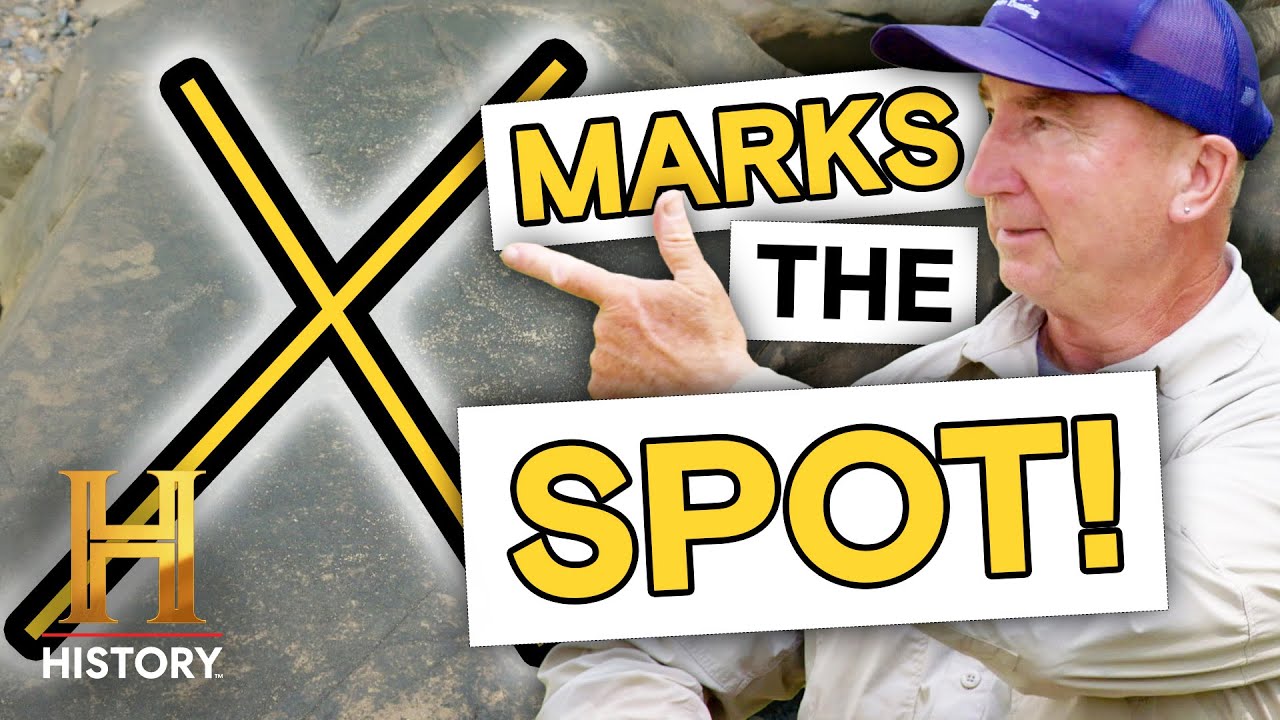
With this newfound knowledge, metal detection expert Gary Drayton, along with Marty Lagina and other team members, set out to locate the stones described in the map. The first objective? Finding a large, flat stone with a distinct “X” carved into it.
A Discovery in Stone
After a careful search, the team made a shocking find: a boulder with a prominent “X” engraved on its surface, precisely matching the description on the map. “There’s no mistaking this. This is in the right spot,” said Drayton as he examined the markings. However, metal detection scans around the rock yielded no immediate evidence of buried treasure.
Determined to follow the map’s clues further, the team searched for another landmark—a stone with an “X” and square shapes on it. Soon enough, they uncovered a second rock featuring the exact symbols Goodwin’s notes had described.

Mapping the Way to Treasure?
The map indicated a third key marker: a kidney-shaped stone located 91 feet inland. Using precise measurements, the team successfully located yet another stone matching the description. “We’re three for three now,” said Drayton, visibly excited by the implications of their discoveries.
Finally, the team set out to locate the fourth and final marker—a boulder with its top seemingly cleaved off, as if struck by lightning. Their search proved successful when they found a split rock that perfectly matched the map’s depiction.
A Game-Changing Find
As they examined the last stone, metal detection scans finally produced results. Beneath the boulder, Drayton unearthed an old, hand-forged iron artifact, which he estimated to date back to the 1700s or earlier. The discovery drew immediate comparisons to swages previously found nearby, tools historically linked to tunneling.
The find raised exciting new questions: Could this artifact be evidence of past searchers—or even proof of hidden treasure? “It takes this from just a rock on a map to a place where there’s been human intervention,” Drayton noted. “Someone’s been looking here, or maybe even depositing something.”
What Lies Ahead?
With every landmark from Goodwin’s map successfully located, the team now faces the critical task of determining what these markers signify. Do they simply serve as directional guides, or do they indicate the location of hidden riches?
As Billy Gerhardt’s excavation team prepares to clear the area for further investigation, one thing is certain
Oak Island’s mystery is far from solved, and the search for answers continues.
Stay tuned as the team deciphers the clues that could lead to one of the greatest treasure discoveries in history.