
The Mystery Deepens
For over two centuries, Oak Island has been the center of obsession, drawing treasure hunters, scholars, and skeptics alike. Strange markings, hidden tunnels, and ancient artifacts have surfaced, yet every answer leads to more questions. Now, the focus has turned to an area long dismissed—the swamp. Could this murky terrain hold the key to Oak Island’s greatest secret?
Historical records suggest the swamp may have been artificially created, possibly to hide something of immense value. Recent excavations have unearthed a paved stone road, massive wooden beams, and a perfect circular formation known as the Eye of the Swamp—findings that point to human engineering, not natural occurrence.
A Hidden Structure Uncovered
The team, led by Rick Lagina, made a breakthrough discovery while excavating near a cobblestone pathway within the swamp. Billy Gerhardt, operating the excavator, peeled away layers of mud and waterlogged soil when Rick suddenly called for a halt. Beneath the swampy surface lay a massive wooden beam running north to south, placed deliberately. Perpendicular to it, another beam appeared—evidence of intentional construction.
Archaeologist Laird Niven arrived on-site and, after careful examination, concluded, “This is highly unusual. Nature doesn’t do this.” With further digging, a line of cobblestones emerged, matching previous discoveries elsewhere on the island. The evidence is clear: someone built this structure centuries ago. But why?
Could This Be Linked to a Lost Treasure?
One prevailing theory ties the discovery to Sir William Phips, a 17th-century English naval commander and treasure hunter. In 1687, Phips recovered an estimated 100 tons of silver and gold from the wreck of the Spanish galleon Nuestra Señora de la Concepción. However, historical records indicate that over 50 tons of silver were never officially accounted for. Could Oak Island be the hiding place for this missing fortune?
Phips had strong connections to the Freemasons, a society known for secrecy. Some believe he and his allies needed a remote, well-defended location to store their treasure, making Oak Island the ideal choice. The swamp, with its now-confirmed man-made structures, could have been a hidden transport system designed to move and conceal valuable cargo.
The First Metallic Find
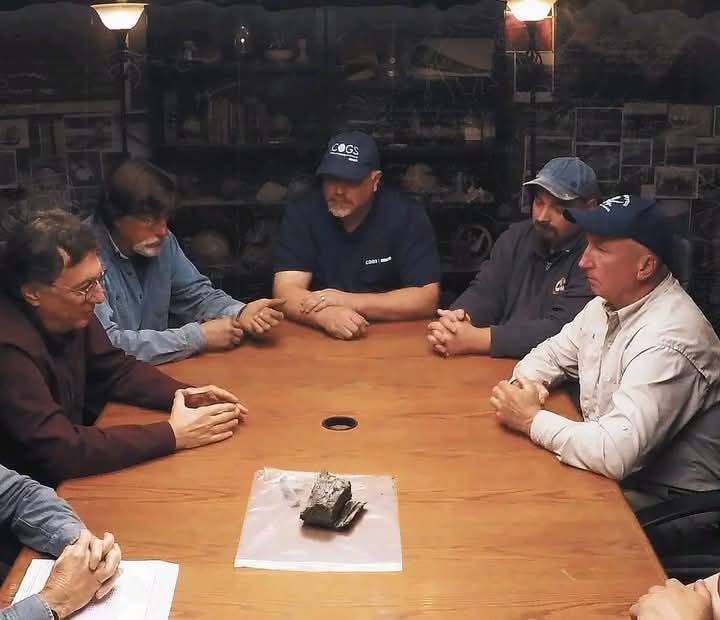
Adding to the intrigue, metal detection expert Gary Drayton recently unearthed a corroded metallic object within the swamp. Upon closer inspection, it appeared to be a nail or fastener—possibly part of an ancient ship or hidden structure. If scientific analysis confirms it dates back to the 1600s, it would provide compelling evidence that Oak Island was active during the time of Phips’ treasure expedition.
The Eye of the Swamp: A Puzzling Connection
In 2019, a remarkable discovery shook the team: a massive circular rock formation submerged beneath the swamp, eerily resembling the All-Seeing Eye, a well-known Masonic symbol. Samples taken from the site date back to between 1680 and 1700—aligning perfectly with Phips’ timeline. Could this be more than coincidence? If so, the Eye of the Swamp might not just be a marker but part of a larger effort to protect something hidden beneath Oak Island.
The Investigation Expands
With the discovery of wooden beams, cobblestone pathways, and metallic artifacts, the team is expanding their excavation efforts. Next steps include:
- Further Digging: Uncovering the full extent of the structure.
- Ground-Penetrating Radar: Scanning deeper layers for more hidden features.
- Scientific Testing: Carbon dating the wood and metal to confirm their true age.
If the swamp structures date back to the late 1600s, it would offer undeniable proof that this site was part of a historic treasure operation.
A Breakthrough on the Horizon?
The evidence is mounting, and the swamp is proving to be one of the most significant locations on Oak Island. If the team can connect these discoveries to a treasure-hiding operation in the 17th century, they may be on the verge of solving one of history’s greatest mysteries.
Next Issue: A Discovery That Could Change Everything
What was the true purpose of the wooden structure? How far does it extend? And most importantly, does it connect to William Phips’ missing silver? With expanded excavations and scientific results on the horizon, the answers may be closer than ever before.