High hopes for $25 million season hit by disappointing first gold weigh-in at Dominion Creek

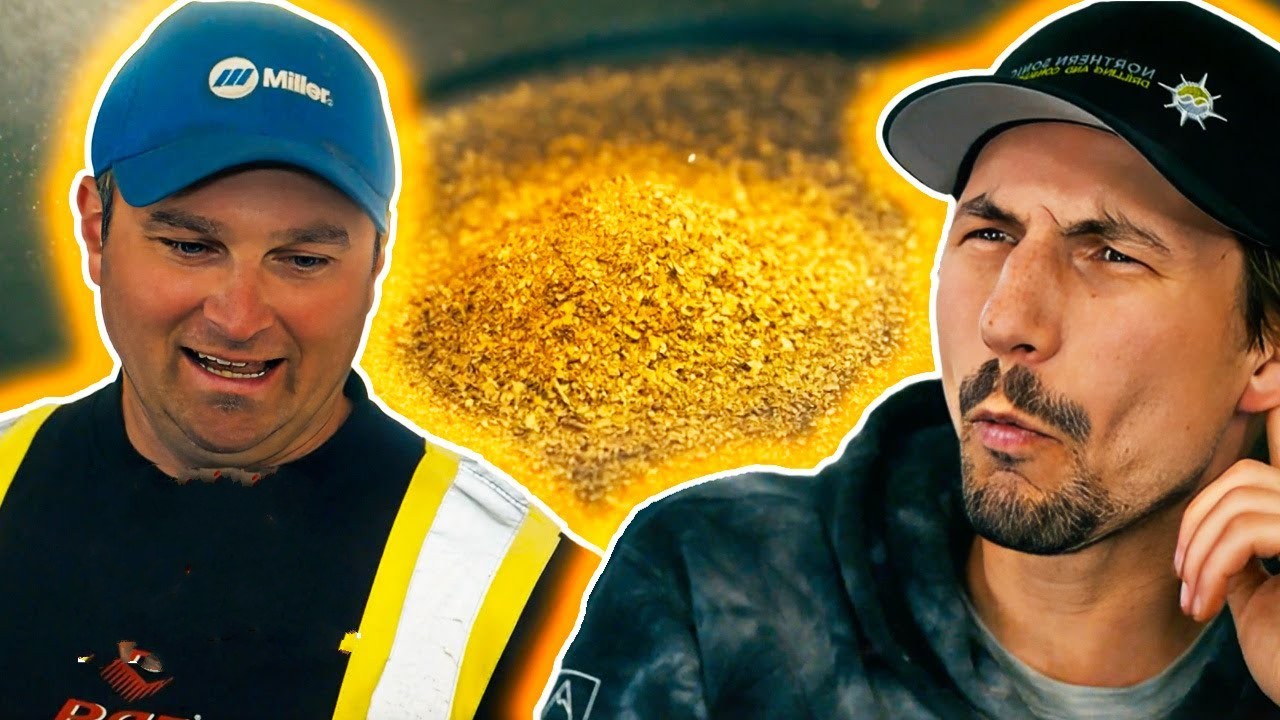
Dominion Creek, Yukon — With gold prices at historic highs, miner Parker Schnabel set out this season with a singular goal: break records and push his operation to a staggering $25 million haul, or 10,000 ounces of gold. But in a dramatic twist at Dominion Creek this week, his opening play fell flat, delivering the smallest cleanup in crew history — a mere 5.66 ounces, worth just $14,000 after more than a full day’s run.
The season’s entire success hinges on the Long Cut — Schnabel’s only stripped ground, expected to yield the year’s first gold. But in a snap decision driven by urgency, Schnabel diverted manpower and machinery to a different target: old waste gravel piles left behind by the claim’s previous owner.
The Gamble on Old Gold
The gamble was based on last year’s lucrative “Money Pit” cut, where rich pay had been unearthed. The discarded piles, Schnabel reasoned, might still hide overlooked ounces. “We have spent so much money in the last year,” Schnabel admitted during setup. “Gold prices are up — that’s good. But it’s only good if you have gold, which we don’t have yet.”
To act fast, Schnabel called on his helicopter pilot, Jack Friscorn, to assist with Big Red’s second relocation of the season. Heavy equipment maneuvered the massive wash plant into its new position beside the piles. “So boom up a little more, Jack… give it a lift in the front end… now just start walking,” Schnabel instructed over radio. Piece by piece, Big Red was assembled, with its feeder positioned for immediate operation.
How Big Red Works
Once running, the plant uses high-pressure water jets to wash gold-bearing pay dirt over a vibrating shaker deck. Rocks and oversized debris are screened out, while the finer material — where gold hides — flows into sluice boxes lined with riffles and mats designed to trap the heavier metal.
Rolling the Dice
With setup complete, Schnabel gave the go-ahead. “First bucket for Big Red. First bucket of the season,” he announced. Clean rocks emerged from the plant’s tailings, and the crew dared to hope. “There might be some gold in this,” Schnabel said.
Meanwhile, just over a mile upstream, foreman Mitch Blaschke was stripping overburden from the Long Cut, the real key to the season. But diverting manpower for the Big Red gamble meant slower progress there. “Things are happening fast,” Blaschke noted. “Definitely didn’t think we’d be doing this today.”
The Moment of Truth
After a 34-hour continuous run, gold room boss Chris Hawker stepped up to the scale. The verdict was immediate — 5.66 ounces. Silence followed before someone broke it: “Is that the worst cleanup we’ve ever done?” Schnabel responded with gallows humor. “Broke another record, you guys. Worst cleanup ever. Nailed it.”
The disappointment was clear. “It’s not the way we want to start off the year,” Schnabel said, his tone serious. “Especially considering how far we have to go. All that time we spent setting up Big Red could have been spent elsewhere.”

High Stakes Ahead
With gold prices soaring, every lost day represents lost opportunity. Hitting the 10,000-ounce target now requires even higher yields from the Long Cut and other pay zones. The failed Big Red experiment leaves no room for further missteps.
The Yukon goldfields are unforgiving. In an industry where time is as precious as the metal itself, Schnabel’s early-season stumble underscores the razor-thin line between bold strategy and costly distraction. As the crew resets its focus on the Long Cut, the season’s biggest question remains: will Parker Schnabel’s operation recover in time to turn his $25 million dream into reality?