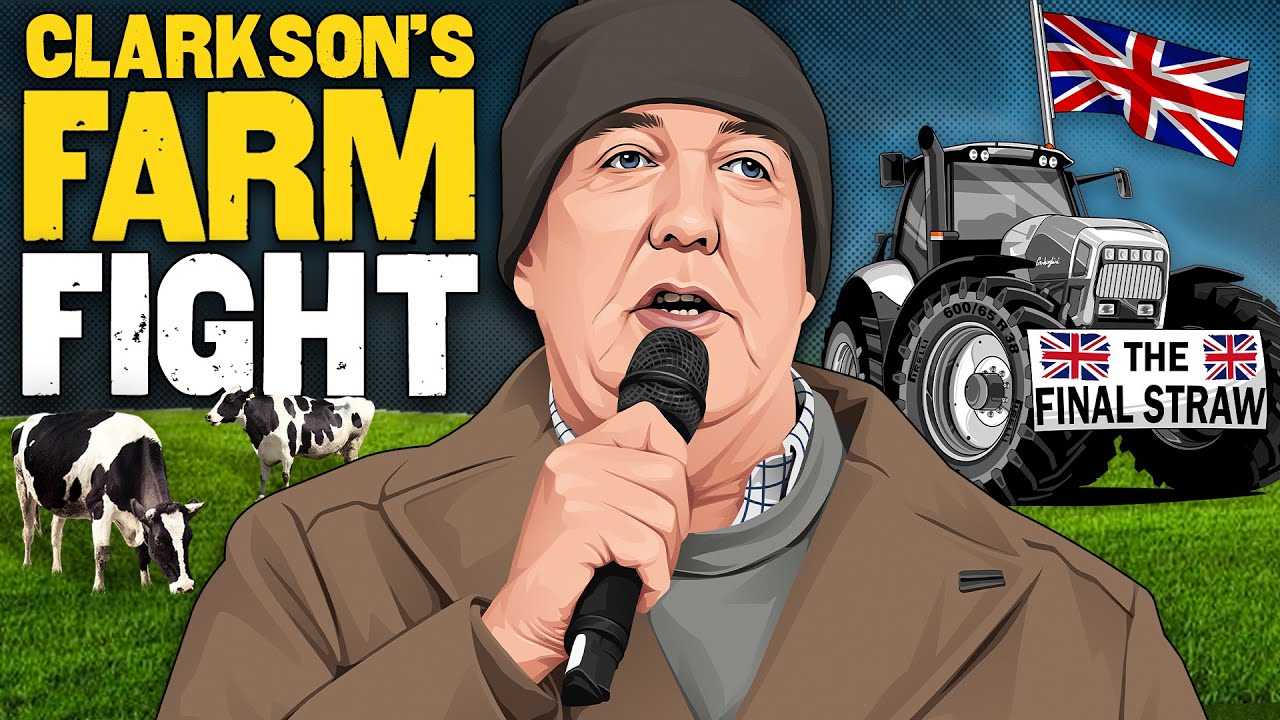
The Clarkson’s Farm star finds himself at the center of a national debate over inheritance tax reforms, farmer protests, and the future of rural Britain.
Over the last few years, Jeremy Clarkson has gone from being Britain’s most outspoken motoring journalist to an unlikely advocate for the nation’s farmers. Through his hit Amazon Prime series Clarkson’s Farm, the former Top Gear presenter has given millions a front-row seat to the realities of rural life — from weather disasters and bureaucracy to livestock chaos and razor-thin profits.
Now, however, Clarkson has become a vocal critic of the government’s Autumn Budget, which includes new inheritance tax measures on agricultural assets. The reforms, designed to address a £20 billion fiscal shortfall, could see land holdings above £1 million — or up to £3 million in certain cases — subject to inheritance tax for the first time.
According to the Treasury, the change “will not impact the majority of farmers,” arguing that estates worth up to £3 million could still be transferred tax-free between couples. Officials have defended the move as targeting only the wealthiest landowners and discouraging speculative land purchases.
But across Britain’s agricultural heartlands, farmers see it differently.
“A Threat to Family Farming”
Farming unions and rural campaigners have warned that the policy could have devastating consequences for smaller, family-run operations already struggling to stay afloat. The National Farmers’ Union (NFU) has called it a “ticking time bomb” for rural Britain, with one senior member warning that “cash-poor, land-rich” farmers could be forced to sell ancestral land just to cover tax bills.
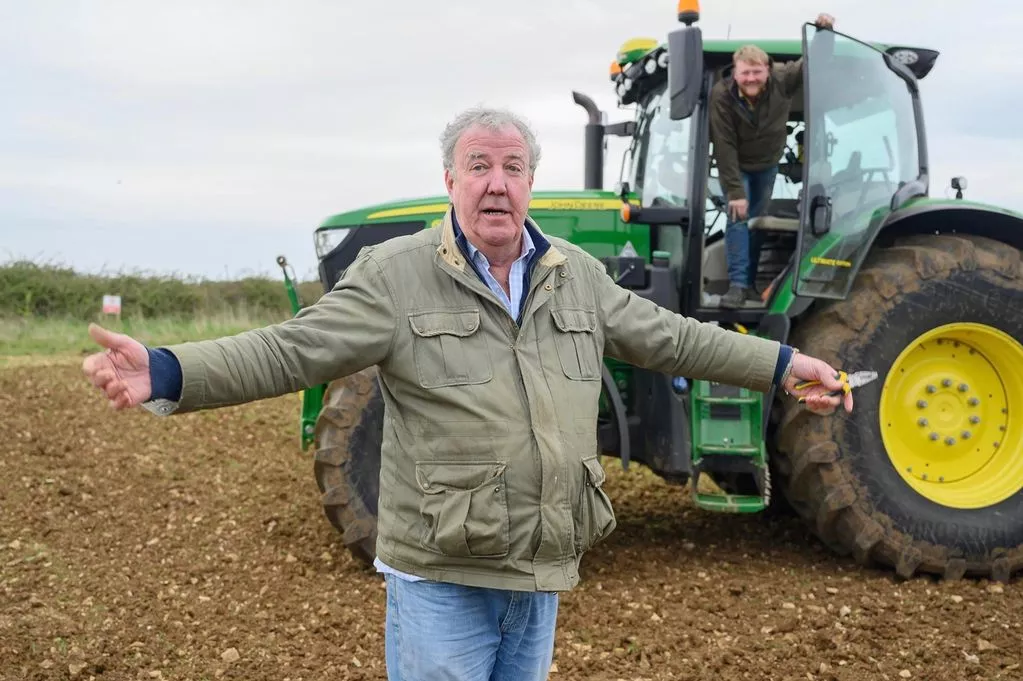
For Clarkson, whose Diddly Squat Farm in Oxfordshire has become the most famous patch of land in the country, the issue is both personal and political. In his Sun column, the 64-year-old broadcaster accused Prime Minister Keir Starmer and Chancellor Rachel Reeves of pursuing a “sinister plan” to “carpet-bomb farmland with new towns and wind farms,” claiming the government was “ethnically cleansing the countryside of farmers.”
While such inflammatory rhetoric sparked backlash, it also underscored the anger simmering across rural communities. Clarkson’s remarks came as the NFU organized a major protest in London on 19 November 2024. The demonstration, initially expected to draw 10,000 people, was limited to 1,800 attendees amid alleged police restrictions — a claim later denied by the Metropolitan Police, which said no such ban existed and pledged to facilitate “peaceful protest.”
Clarkson had planned to bus farmers from Oxfordshire to the capital. “We wanted to protest in a dignified, sensible way,” he said. “Perhaps if I’d draped my tractor in a Palestinian flag it would be different. It seems if you’re from Just Stop Oil or protesting about Gaza, you can do what you want.”
“I’m Not the Face of This”
Despite his growing prominence in the debate, Clarkson insists he does not wish to become the public face of the movement. “It should be led by farmers,” he said in a recent interview. “I don’t consider myself a farmer — my job is to report on farming and shine a light on rural poverty.”
He added that Clarkson’s Farm, while wildly successful, doesn’t reflect the full reality: “On Diddly Squat there isn’t any poverty, but trust me, there is absolute poverty. I’m surrounded by farmers — people with 200 or 400 acres, way past Rachel Reeves’s threshold. They’re struggling.”
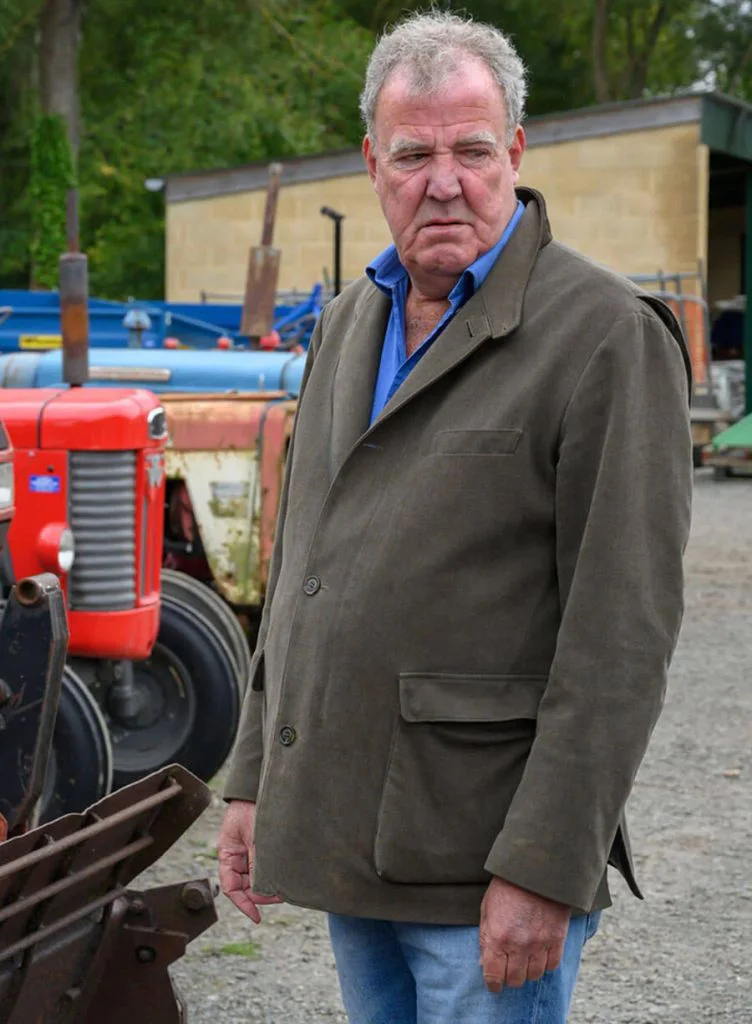
Critics have accused Clarkson of hypocrisy, pointing to past comments in which he said he bought his £4.2 million farm because “land is a better investment than any bank” and “the government doesn’t get any money when I die.” Clarkson has since clarified that he was being “naive,” claiming the tax comment was a PR-friendly joke and that he originally bought the farm to host shooting parties.
Nonetheless, the perception of a millionaire celebrity farmer championing the plight of struggling families remains controversial.
A Divided Nation — and a Divided Debate
The inheritance tax reform has sharply divided public opinion. Some argue that landowners like Clarkson and others, including composer Andrew Lloyd Webber, are wealthy enough to shoulder the cost. Others view the move as a betrayal of Starmer’s earlier pledge — made to 3,000 farmers at the National Farmers’ Union conference in February 2023 — that there would be “no tax rises under Labour.”
Adding fuel to the fire, just two days after the November protest, Starmer tweeted photos from a meeting with BlackRock and Bill Gates, writing that the UK needed “partnerships like theirs to capitalise on investment opportunities.” Critics saw the move as symbolic — a gesture that many farmers interpreted as government courting corporate investors to buy up British farmland.
Further controversy erupted when The Daily Express reported that £500 million in government funds were being directed toward overseas agricultural projects. Downing Street defended the policy, saying, “Our investment into British farmers is an investment in food security and national security,” and that foreign aid projects “benefit millions, including UK farmers.”
From TV Stardom to Political Symbol
What began as a TV experiment — a celebrity’s foray into farming — has turned Clarkson into an unexpected political lightning rod. Clarkson’s Farm has drawn record audiences, surpassing even Prime Video’s billion-dollar Lord of the Rings series, and has made him arguably the most visible advocate for rural Britain.
Alongside his co-star Kaleb Cooper and land agent Charlie Ireland, Clarkson has amplified the voices of struggling farmers, using his platform to expose the bureaucracy, policy changes, and financial strain gripping the sector. Cooper, now considered one of the leading voices for young farmers, echoed these frustrations in a recent BBC interview — an appearance that turned tense when the line of questioning drew his ire.
Reactions were swift. “If Jeremy Clarkson wants to be the face of farming protests, he needs to make an actual case,” one viewer commented online. Others, like comedian Freddy Quinne, highlighted the irony: “Clarkson becoming a protestor after years of moaning about Just Stop Oil is superb.”
Still, Clarkson’s supporters argue that whatever his flaws, his show has done more to raise public awareness of farming issues than any politician or press campaign in recent memory.
The Road Ahead
The government has shown no indication that it will reverse course on the new inheritance tax policy, despite the mounting backlash. Meanwhile, Clarkson’s profile within the farming world continues to grow.
Clarkson’s Farm has been renewed for two more seasons, with filming already wrapped on Season 5, due in spring 2026. Future episodes are expected to explore the fallout from the tax reform and delve deeper into the financial and emotional toll on Britain’s farmers.
For all his controversies, Jeremy Clarkson has done something few could have predicted: he’s turned Britain’s attention to farming — an industry often overlooked until crisis strikes. Whether or not he remains its loudest voice, his impact on the national conversation is undeniable.
As one farmer at the London protest put it: “You don’t have to like him, but at least he’s talking about us.”
