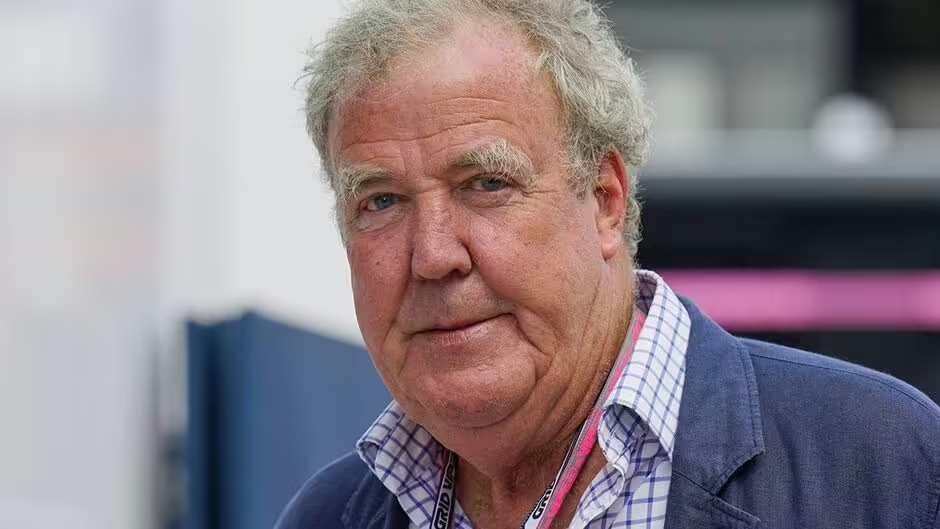
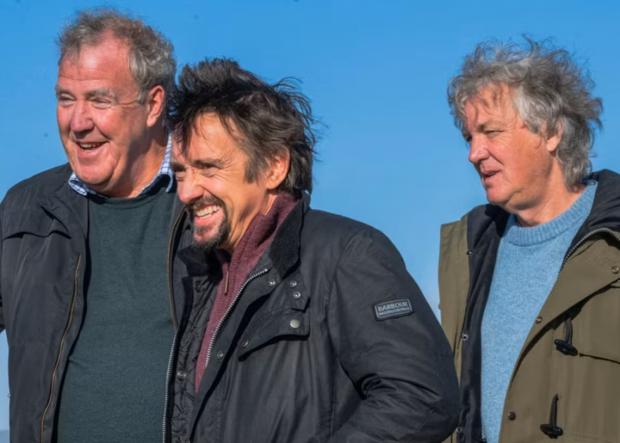
Jeremy Clarkson has recently revealed that he holds no ill will towards the BBC, despite his dramatic departure from the network a decade ago. The former “Top Gear” host, who co-presented the show with Richard Hammond and James May for over a decade, was famously dismissed in 2015 after allegations of verbal and physical abuse towards a producer. This event sparked a chain of events that led to his departure from the BBC, along with Hammond and May, who later went on to co-host the Amazon Prime series The Grand Tour. The final episode of The Grand Tour aired in September 2024, but Clarkson’s journey didn’t end there. He also launched another successful Amazon Prime series, Clarkson’s Farm, which focuses on his endeavors managing Diddly Squat Farm in the Cotswolds, a 1,000-acre estate he owns. The show, which has already aired four successful seasons, has made a star out of Kaleb Cooper, Clarkson’s young farmhand, and actress Lisa Hogan.
In a recent interview with The Sunday Times, Clarkson opened up about his feelings towards the BBC since his departure. Despite the acrimonious end to his tenure, he expressed that he doesn’t bear a grudge. Clarkson attributed much of his current success to his post-BBC ventures, which he believes have proven more fruitful than staying with the corporation. He even mentioned feeling “a tiny bit smug” given the BBC’s subsequent controversies.
Over the past decade, the BBC has been embroiled in a series of scandals that have marred its reputation, including the exposure of predatory behavior by disgraced television personality Jimmy Saville, the revelation of newsreader Huw Edwards’ involvement in a scandal, and its coverage of major international events like the Gaza war and the January 6th, 2021 U.S. Capitol attack. These events, coupled with the BBC’s struggles with ratings, have led Clarkson to reflect on his departure with some satisfaction. For instance, the BBC’s Christmas Day ratings in 2024 hit an all-time low, prompting Clarkson to comment on the network’s overall decline.
Clarkson, who has never been shy about sharing his opinions, also proposed a bold idea for the future of UK broadcasting. He suggested that the nation’s broadcasters should come together under one unified banner, sharing resources to strengthen the overall media landscape. As part of his vision, Clarkson advocated for a reduction in scheduled programming, allowing for more flexibility and efficiency across channels.
One of his most controversial ideas, however, was the proposal to drastically cut the BBC’s license fee. While he acknowledged the importance of the license fee for funding impartial news services, Clarkson argued that it should be trimmed significantly, with the remaining funds solely allocated for high-quality news content. This suggestion has stirred up debate across the country, as many are divided on the future of public service broadcasting in an age dominated by on-demand streaming services.
Ultimately, Clarkson’s reflections on his time at the BBC paint a picture of a man who has embraced his independence post-BBC, with a career that shows no signs of slowing down. Though he harbors no resentment, his success in the years following his departure stands in stark contrast to the struggles of the corporation he once helped define.
 hs
hs