Parker Schnabel Unearths Ancient Mammoth Tusks While Mining for Gold in Alaska
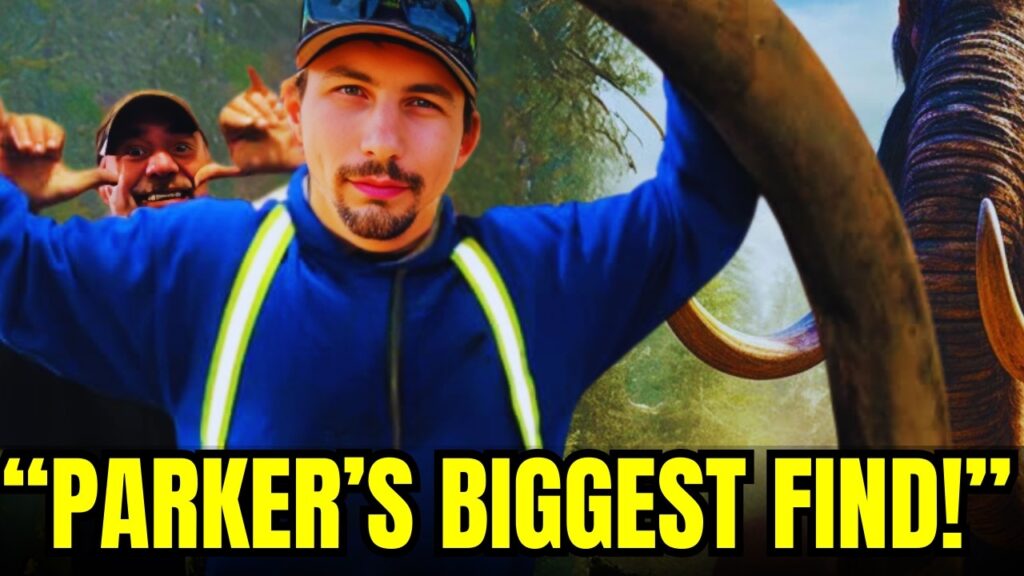
In Alaska’s frozen wilderness, Parker Schnabel has long made a living chasing gold. But recently, he dug up something even more extraordinary — a discovery from a world that existed thousands of years before the first human footsteps on North America.
A Stunning Discovery Beneath the Permafrost
While excavating through ancient permafrost layers on one of his mining claims, the Gold Rush star stumbled upon several astonishingly well-preserved woolly mammoth tusks. Smooth, curved, and gleaming despite their age, the tusks had been sealed away for millennia by the frozen ground — a natural time capsule hiding just beneath the surface.
“We found some mammoth tusks, which were really cool,” Parker said, clearly energized by the find. “They’re preserved because they’re ivory and were buried in the permafrost, so the weather doesn’t really get to them. Some of those came out in beautiful shape.”
Though mammoth ivory has occasionally been discovered in Alaska, pristine specimens remain rare, stirring excitement among scientists, historians, and miners alike. In recent years, mammoth tusks of exceptional quality have sold for well over a million dollars, depending on size, preservation, and provenance.
Beyond Gold: A Legacy Unearthed

For Parker Schnabel, however, the significance of the find runs deeper than its potential market value. The woolly mammoth — a colossal Ice Age creature standing up to 13 feet tall and weighing over 10 tons — roamed the plains and tundras of North America, Europe, and Asia until its extinction about 5,000 years ago. Their tusks served as tools, weapons, and now, vital clues to prehistoric life.
Scientists can study the fine growth rings inside tusks, much like those in trees, to reveal information about a mammoth’s age, health, and the ancient climates it lived through. Each tusk offers a tangible connection to a lost world — and to Parker, that connection is worth preserving.
“You can sell them, but it requires obtaining a few permits to export them,” Parker explained. “However, I found them so fascinating that I decided to keep them.”
His choice to safeguard the tusks rather than seek profit highlights a growing awareness within the mining community: a respect for the cultural and environmental heritage buried in the earth.
Mining the Past as Well as the Present
In regions like Alaska and the Yukon, gold mining operations often disturb ancient soil layers that haven’t seen daylight for tens of thousands of years. Fossilized bones, ancient plants, and even entire Ice Age animals — sometimes preserved with fur, muscle, and DNA intact — have been unearthed during mining activities.
Parker’s discovery raises important questions:
Should mining companies be required to report such finds?
What role should governments and scientists play in preserving them?
And perhaps most crucially, how do we as a society balance the pursuit of wealth with the stewardship of history?
Schnabel’s reaction to the discovery sets a powerful example — showing that modern miners can be stewards of the past as well as hunters of present-day riches.
A Broader Vision for Parker Schnabel

Over the years, Parker has evolved from a teenage rookie into one of the world’s most successful young miners. Yet moments like these — where his work intersects with ancient history — reveal a broader, richer narrative.
“When you’re mining in places like this, you learn to expect the unexpected,” he reflected. “Of course, we’re here for the gold, but it’s not the only valuable thing beneath our feet.”
While gold remains Parker’s primary pursuit, with each passing season he invests even more energy into expanding his operations, hiring larger crews, running multiple wash plants, and pushing his limits. His relentless drive remains: finding that one patch of ground others overlooked, that one breakthrough that changes everything.
Still, the discovery of mammoth tusks adds a new dimension to Parker’s legacy. No longer just a miner of gold, he’s also become a discoverer of forgotten histories — a man who recognizes that Alaska’s true wealth is measured not just in ounces, but in the ancient secrets buried in its frozen earth.
As Gold Rush fans tune in to watch Parker chase gold across unforgiving terrain, they’ll now also be watching for those rare, breathtaking moments when the past quite literally breaks the surface — and history is reborn in the hands of a modern-day pioneer.