
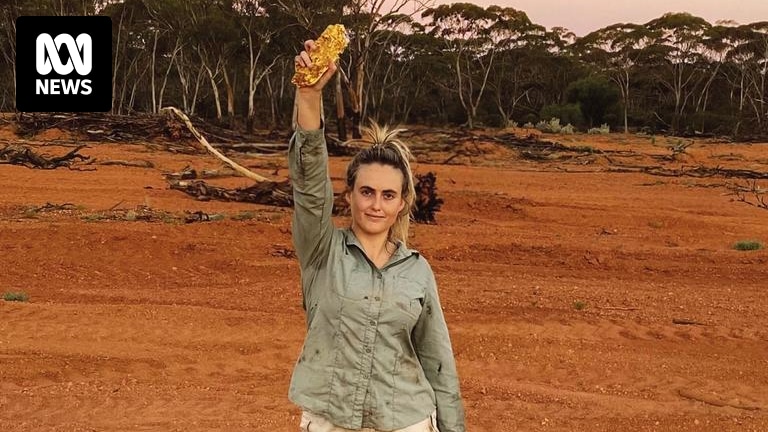
Tyler Mahoney, fourth-generation gold prospector and full-time gold miner, has launched a new educational series aimed at helping newcomers understand the often confusing world of mining jargon.
Currently working in Alaska, Mahoney is using her downtime to explain key terms and concepts for followers around the world who are interested in gold prospecting — particularly Australian prospecting rules.
“Every state and country is different when it comes to mining rights, leases, and claims,” Mahoney explained. “Today, I’m diving into tenements — a term that confuses a lot of people.”
In Australia, a mining tenement refers to a parcel of land where an individual or company holds the rights to prospect, fossick, or mine. In Western Australia, for instance, there are several types of tenements: mining leases, prospecting licenses, and exploration licenses.
-
Prospecting Licenses: Short-term permits, typically issued for four years with a possible four-year extension, allowing individuals to prospect but not establish large mining infrastructure.
-
Mining Leases: Long-term rights (up to 21 years with possible renewal), generally issued when proven mineral deposits are present, allowing for actual mining operations.
-
Exploration Licenses: Often held by larger mining companies, these licenses allow exploration over vast tracts of land, though actual mining is prohibited without further permissions.
Mahoney also clarified the difference between ownership and rights: “You don’t own the ground — you own the mining rights,” she said. Pastoral rights, which relate to land use like cattle grazing, usually remain with station owners.
In Queensland, she noted, prospectors must obtain written permission from both the pastoralist and the mining rights holder. In contrast, in Western Australia, while it’s courteous to inform station owners, it’s not a legal requirement.

Mahoney emphasized that regulations vary across Australia — and even simple terms like claim or lease can mean different things depending on the state.
Beyond legal jargon, Mahoney has also been breaking down geological terms. In her recent videos, she explained contact zones — areas where two different types of rock meet, often prime hunting ground for gold.
“Contact zones can be a gold prospector’s best friend,” Mahoney said. “In the field, you might spot a sharp color change where different rocks have come together. Prospectors like Sam Cash wrote about following these zones — they’re often where gold is hiding.”
Staying with the geology theme, Mahoney also discussed the difference between primary and secondary gold.
-
Primary gold forms in hard rock deposits — the source material mined in big operations like the Super Pit in Kalgoorlie.
-
Secondary gold — the type often sought by nugget hunters — has broken away from its source. If moved by water, it’s known as alluvial gold; if moved by earth, it’s eluvial gold.
Nugget hunters, like many Alaskan and Australian prospectors, chase secondary gold, which doesn’t require extracting ore but rather washing and processing dirt and gravel.
Mahoney encouraged those eager to learn more to check out The Treasure Chest, her 170-video educational platform covering everything from geology and legal rights to machine settings and gold indicators.
“For those who don’t want to purchase the full course, I’ll keep posting short lessons,” she promised. “And if you’ve got a specific term you want explained, just comment and I’ll cover it!”
As Mahoney continues her work in Alaska’s goldfields, her new series promises to be a goldmine of information for aspiring prospectors around the world.