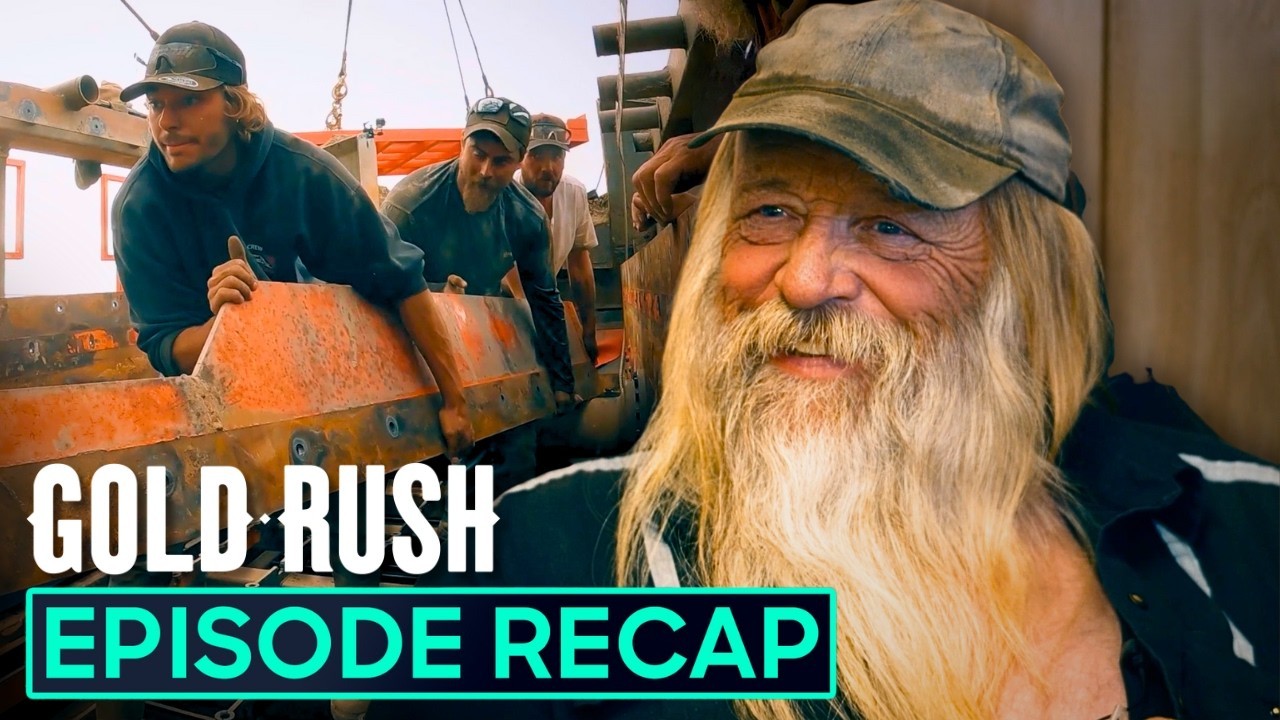
Tensions escalated in the Klondike this week as two of the Yukon’s biggest operators faced mounting pressure from opposite directions — labour instability for Tony Beets and declining returns for Parker Schnabel.
At Indian River, veteran miner Tony Beets was forced back into hands-on duty after seven crew members abruptly left camp overnight, reportedly joining a rival operation. The departures, which included experienced personnel, left Beets short-staffed at a critical stage of the season.
“A bunch of weasels,” Beets remarked bluntly, dismissing the exits as a favour rather than a setback. Despite the loss, he insisted the core team remained intact and production would continue uninterrupted.
The timing, however, was far from ideal. Beets had just recorded his strongest gold weigh of the season — 672 ounces — contributing to a running total now exceeding $17 million in gold. With four wash plants operating simultaneously, the 65-year-old miner has largely taken a supervisory role this year. The crew losses have altered that dynamic.

Compounding the disruption, his Sluicifer wash plant suffered a major mechanical failure when the shaker deck collapsed into the system, smashing critical components and halting production for nearly a week. A replacement deck had to be installed in a complex operation involving cranes and manual winches. The six-day shutdown is estimated to have cost more than $1 million in lost gold output.
When the plant finally resumed operations, the results were mixed. A short 24-hour run delivered just 45.48 ounces, worth approximately $159,000 — a modest return by Beets’ standards. However, a bedrock-heavy cut later in the week produced 237.68 ounces, valued at over $830,000, lifting morale.
The weekly total pushed Beets’ seasonal tally to 4,894 ounces, reinforcing his status as one of the territory’s dominant producers.
Forty miles away, Parker Schnabel is facing a different kind of challenge. Fourteen weeks into the season, the 31-year-old has banked more than $22 million in gold. Yet his weekly totals have slipped for the second consecutive week, raising concerns about momentum.

Last week’s combined output from his operations reached 433.4 ounces, down from 453 ounces the week prior. While still substantial, the decline comes at a time when Schnabel’s operational costs approach $1 million per week.
“Things have definitely slowed down since the beginning of the season,” Schnabel admitted. “We started really good and we’re kind of going downhill.”
At Indian River’s Golden Mile cut, Sluicifer and Big Red combined for 236.4 ounces. Dominion Creek’s Bridge Cut added 120.7 ounces, while other pits delivered smaller but steady returns. Even so, the cumulative performance has not matched early-season highs.
Management dynamics have also come under scrutiny. Some crew members privately expressed frustration that newer hires are being given opportunities to operate key machinery, while long-serving team members remain in static roles. Schnabel acknowledged that in his early years he was difficult to work with, suggesting experience has reshaped his leadership style.

Observers note a clear contrast between Schnabel’s evolving management approach and Beets’ uncompromising style. While Beets dismisses turnover as irrelevant to output, Schnabel appears more focused on maintaining morale as well as production.
With a season total of 6,742.3 ounces, Schnabel remains on pace for a strong year — but not without risk. As the mining window narrows and ground conditions become less predictable, both operators must balance mechanical reliability, crew stability and strategic ground selection.
For now, Beets has weathered internal upheaval and a costly plant failure without losing stride. Schnabel, meanwhile, faces the quieter but equally pressing challenge of regaining upward momentum before slipping further off target.
In the Klondike, as both men know, consistency — not headlines — ultimately decides who finishes on top.