
Western Australian Outback – Tyler Mahoney and her team of gold prospectors have struck a promising find in an unexplored section of the remote goldfields, revealing rich deposits of gold left untouched for decades.
A Land of Hidden Wealth
The Australian Outback is known for its vast, arid landscapes and the promise of gold lying beneath its rugged terrain. For seasoned prospectors like Tyler Mahoney, the challenge is not just about finding gold but navigating the land and interpreting its history.
Recently, Tyler and her team discovered a site filled with old prospecting holes—evidence of past mining attempts—yet an untouched section of the hill remained, hiding a cluster of gold nuggets just beneath the surface.
“The old prospectors must have missed this spot,” Tyler noted. “They only had early VLF (Very Low Frequency) metal detectors back then, and the mineralized ground here might have been too challenging for their equipment.”
Striking Gold in Forgotten Territory
The team began systematically scanning the area, finding gold nuggets clustered in a line along the hillside. In addition to the nuggets, they uncovered what appeared to be the source: a rich quartz reef containing fine gold embedded in ironstone.

“We’re finding pieces in these iron-rich formations,” Tyler said. “It’s a clear indicator of a significant gold source.”
The discovery is especially remarkable given that no prospectors have searched this area in the past 20 years. Despite old workings on nearby hills, this particular slope remained untouched until now.
A Race Against Time
With limited time in the field—just a week to ten days—Tyler and her team devised a strategy. They would spend the daylight hours sweeping for loose gold and return to extract the source material at night. The process of crushing and processing the ironstone to determine the full yield would be undertaken later, but initial estimates suggest the deposit could be yielding ounces or even kilos of gold per ton.
“We won’t know exactly how much gold we have until we process the rock,” Tyler explained. “But from what we can see, this is one of the richest reefs we’ve ever encountered.”
Navigating the Bush: A Test of Experience
Beyond the challenge of finding gold, navigating the vast outback is a skill of its own. Thick mulga trees obscure visibility, and identical-looking hills can easily disorient even experienced prospectors.
Tyler shared her approach: “I use landmarks—a quartz blow, an old prospector’s tin, and a creek—to keep track of my position. I also rely on the biggest hill in the area as a reference point.”
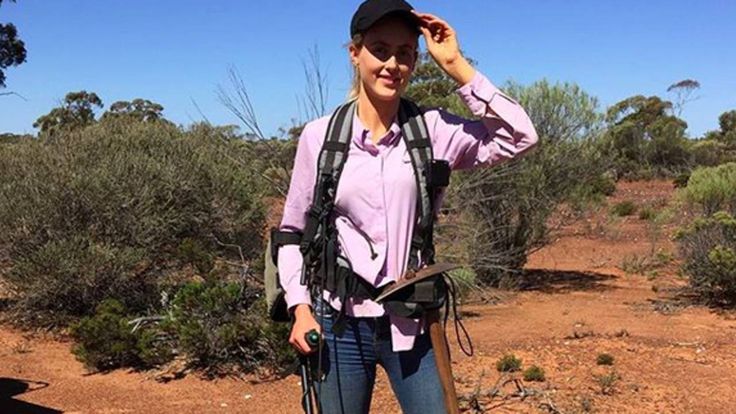
Surprisingly, Tyler and her team do not use GPS devices or compasses, relying instead on traditional bush skills passed down through generations. “My father never needed a GPS, and he could find spots he visited 20 years ago just from memory. Growing up, I learned to navigate the same way.”
However, they acknowledge the risks: “It’s incredibly easy to get lost out here. It only takes a moment of doubt to make a wrong decision. To new prospectors, I’d strongly recommend investing in proper navigation tools.”
The Future of the Find
As the expedition continues, Tyler and her team remain focused on recovering as much gold as possible before their time in the field runs out.
“Gold is the best indicator for more gold,” Tyler noted, hinting at the potential for even bigger finds along the strike line. “Once we finish this area, we’ll move further down the ridge. Who knows what else is waiting to be uncovered?”
For now, the Western Australian Outback once again proves its reputation as a land of hidden fortunes—one where patience, skill, and a bit of luck can lead to the next big gold rush.