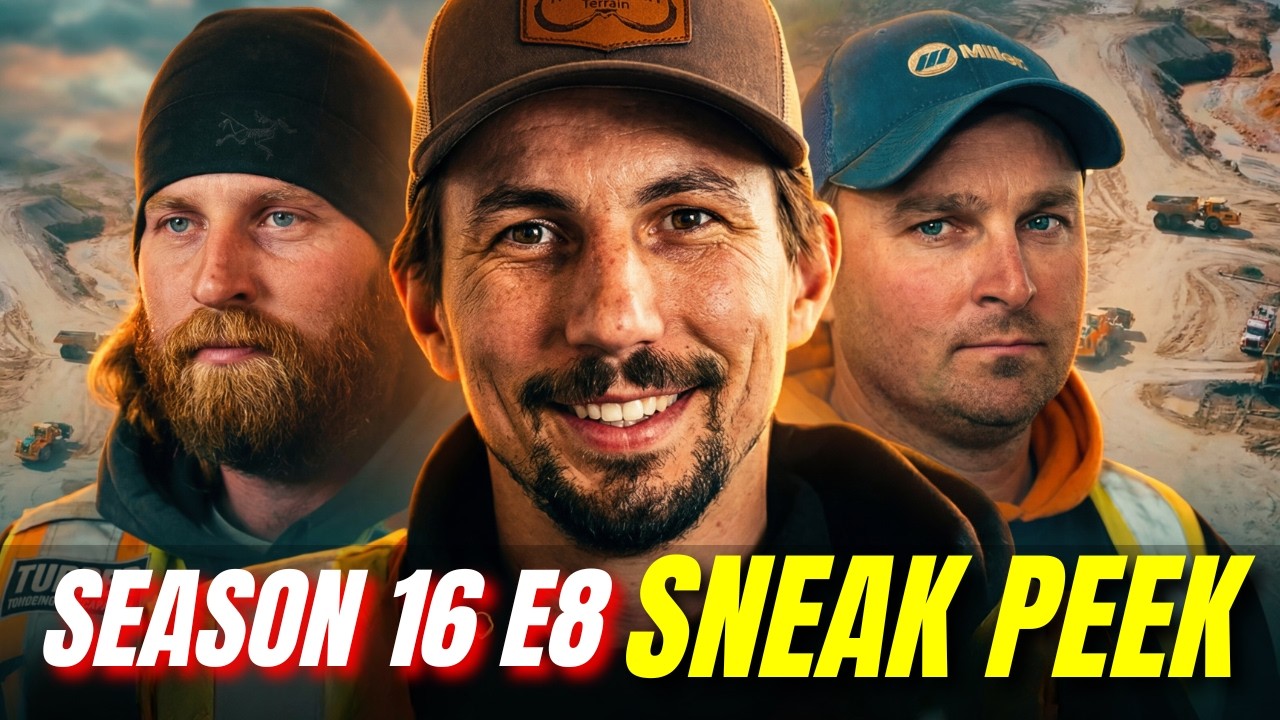
Season 16, Episode 8 of Gold Rush, titled No Off Days, delivers one of the clearest portraits yet of how unforgiving large-scale gold mining can be when time, money and expectations collide. With the season advancing rapidly, the episode places renewed emphasis on decision-making, leadership and endurance as crews confront the reality that there is little room left for miscalculation.
At the centre of the episode is Parker Schnabel, whose operation has expanded into a vast mining footprint covering approximately 10,000 acres. Managing a site of that scale is portrayed as a daily test of coordination and discipline. Schnabel must decide which ground to open next, weighing potential returns against the enormous costs of stripping, fuel, labour and equipment wear. Every new cut represents a significant financial commitment, particularly as the season edges closer to its final stretch.
The episode makes clear that running an operation of this size allows no pause. Mornings begin with urgency, as crews head out knowing that every hour of productivity matters. Despite attempts to focus on oversight and long-term planning, Schnabel remains deeply involved in day-to-day operations, travelling between sites to check progress and resolve issues before they escalate. With multiple wash plants operating simultaneously, even a minor delay can trigger a chain reaction that quickly impacts overall output.

Supporting this complex system is mine manager Nona Loveless, whose role is central throughout the episode. She coordinates logistics, schedules stripping crews and ensures that fresh ground is always prepared for the wash plants. The stripping crew, in particular, becomes a focal point, as their next assignment will determine the quality of material feeding the operation. Choosing incorrectly risks slowing production at a moment when Schnabel can least afford it.
Alongside operational pressure, cash flow emerges as a persistent concern. Keeping dozens of machines running around the clock demands constant expenditure on fuel, maintenance and parts. Even when gold is being produced, much of it must be sold quickly to sustain operations, underscoring the fragile balance between production and profitability.
Elsewhere in the Yukon, the episode broadens its focus to show how other crews are responding to similar pressures. Tony Beets continues to demonstrate consistency, with his operation delivering steady results. This season, however, attention increasingly turns to the next generation. Mike Beets is shown taking on greater responsibility, while Kevin Beets steps into a more prominent role at Pyramid Cut. With his trusted partner temporarily absent, Kevin faces the challenge of proving he can manage production and problem-solving on his own.

For Rick Ness, Episode 8 highlights a season at a crossroads. With production lagging significantly behind his competitors, the recent approval of his water permit presents both opportunity and urgency. Rick must now decide whether to remain at Lightning Creek or return to Duncan Creek, where familiarity may offer greater certainty. Either option involves costs, time and risk, and the episode underlines how delayed decisions earlier in the season have narrowed his margin for recovery.
As the episode progresses, the contrast between crews becomes increasingly pronounced. Schnabel leads the gold count with close to 2,900 ounces, reinforcing his position at the top of the field. Beets follows with roughly 2,300 ounces, reflecting an operation built on experience and structure. Further down, Ness and Kevin Beets face very different challenges, both searching for momentum as the season advances.
No Off Days captures the relentless nature of modern gold mining with clarity. Beyond the machinery and numbers, the episode illustrates the mental strain of leadership, the importance of timing, and the consequences of every call made in the field. As Season 16 continues, the message is unmistakable: in a race defined by pressure and precision, slowing down is not an option, and the next decision could shape everything that follows.
 hs
hs