
In the rugged heart of the Yukon, where fortunes are forged from frozen earth, veteran miner Tony Beets and his crew have uncovered a glittering promise of gold—only to be thwarted by an unexpected layer of permafrost that threatens to derail their ambitious season.
The breakthrough came during initial panning at a new site, where Beets’ team sifted through sediment to reveal a pan brimming with potential. “There’s got to be 15, 20 colors in that pan—and nice colors, too,” Beets remarked, describing the find as “perfect” and expressing high satisfaction with the early results. The discovery prompted a swift mobilization to strip the cut down to pay dirt and prepare a pad for their wash plant, dubbed “Slooot.”
With pay dirt running low at their previous location, the crew faced a critical decision. “We’re out of pay in this area. It sucks that we don’t have any pay to feed the wash plants with,” Beets noted. To maintain momentum on Indian River Gold, the team opted to relocate the massive wash plant approximately a mile to the newly identified corner cut. The move, overseen by Cousin Mike, was a tense operation along a narrow road flanked by a creek on one side and trees on the other.

“Trying to stay on the right side of the road without getting too close to the trees,” Mike explained, highlighting the risks. “I have to stay away from the ends ’cause that’s a deep drop.” Despite the plant shifting perilously toward the creek—sliding “half a dozer width” at one point—the team completed the relocation without incident. “We did it. Yeah, looks good. I’m happy,” Mike said upon arrival.
Eager to capitalize on the new spot, the crew dove into stripping operations. Initial optimism faded quickly, however, as excavators hit solid frost. “That doesn’t feel right. That’s not good. This is not promising at all,” Beets lamented upon discovering the permafrost. Attempts to probe other areas yielded the same result: “It’s all frozen, too.” The frozen ground, which requires thawing before extraction can proceed, poses a major setback. “This is going to slow us down. It’s not good. We really can’t have frost right now ’cause this is going to cost us a lot of time,” Beets added.
With both Slooot and a second plant idled, the operation grinds to a halt. “If we don’t find any thawed ground, we won’t be doing any sluicing,” Beets warned. “Two sluice plants down… now you lose everything that you made early in the spring until we find some thawed dirt.” The delay could erase gains from a strong start to the season, underscoring the unpredictable nature of placer mining in the permafrost-laden Yukon.
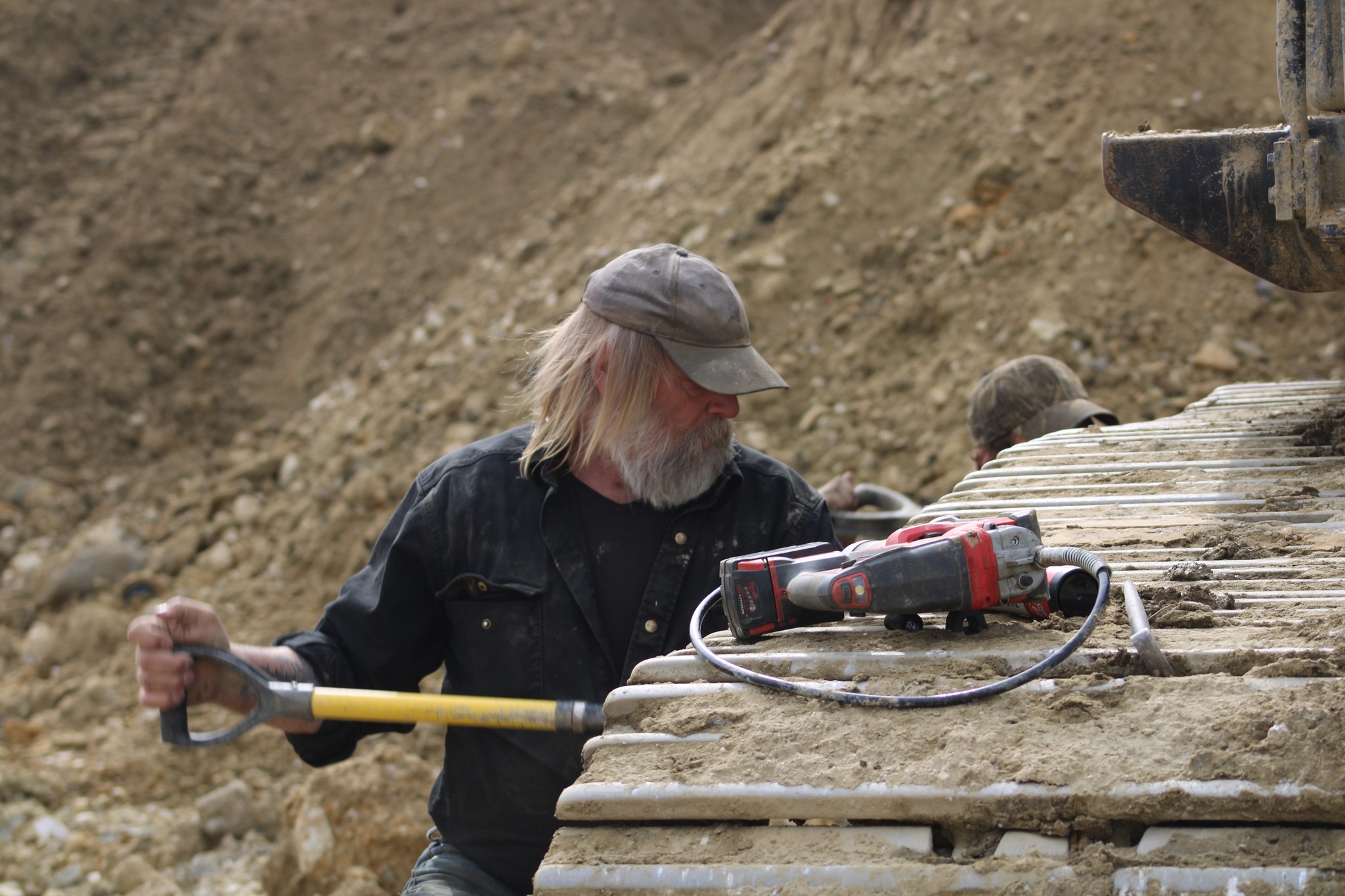
Despite the challenges, the weigh-in provided a silver—or rather, golden—lining. From one cleanup, the team tallied 75.66 ounces of gold, valued at approximately $190,000. A second haul from Mike’s trommel on Paradise Hill was even more impressive: 374.34 ounces worth $936,000. Combined, the yields approach a million dollars, a testament to the site’s potential. “You got a million bucks on the table just about. Yeah, that’s pretty nice,” Beets reflected.
As the crew scrambles for a workaround—potentially scouting alternative thawed patches—Beets remains resolute. “So far, whatever I dreamt up in this little corner seems to work. We can’t sit down and relax because we got to keep stripping and stay ahead.” In the high-stakes world of gold mining, where Mother Nature holds the ultimate claim, adaptability may yet turn this frozen fiasco into another Yukon triumph.
The Beets operation, known for its relentless pace, has weathered similar obstacles in past seasons. Industry watchers will be keeping a close eye on whether this latest hurdle freezes out their goals or melts away under their determination.
