Parker Schnabel quest for international expansion meets harsh realities in remote cooperative mine

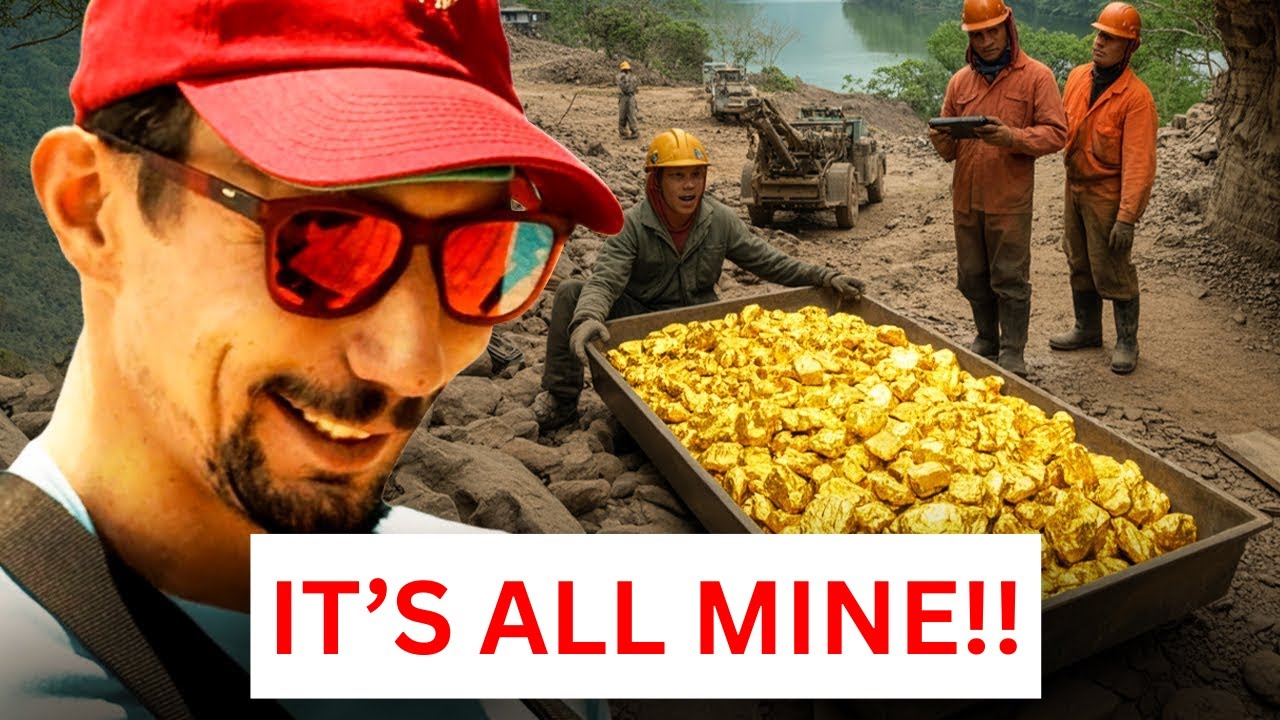
In the rugged Andean heartland of Bolivia, famed American gold miner and television personality Parker Schnabel came face-to-face with a stark reminder of mining’s global challenges: what glitters isn’t always gold.
Schnabel, known for his work in the frozen Yukon as seen on Gold Rush, traveled thousands of miles to investigate one of Bolivia’s most talked-about cooperative mines. Local rumors painted the site as a consistent gold producer — a potential diamond in the rough for Parker’s growing international ambitions. But what he found was a deeply traditional operation operating with outdated methods, conflicting production claims, and a complex cooperative ownership model that ultimately didn’t meet his standards.
“This isn’t the Yukon,” Schnabel said at the site. “This is a completely different beast.”

The Reality on the Ground
Accompanied by cameraman Dan and environmental scientist Tyler, Parker faced steep mountain roads, language barriers, and suspicion from locals who were skeptical of outsiders. Once onsite, it became clear that the cooperative’s self-reported gold yields—claimed to be about 0.5 kilograms (17.6 oz) per month—didn’t align with what Parker’s experienced eye saw.
“When we first turned up, these guys said half a kilo a month,” he said to his team, skeptically. “Which doesn’t make sense based on the number of workers and volume of earth being moved.”
The mining crew’s suspicions were soon confirmed. Calculations based on the day’s work and site throughput suggested the actual production might be closer to 2 kilograms per month, quadruple the reported amount.
Yet even with potential underreporting, the team’s test yielded only 97.9 grams of gold (3.2 ounces) after processing 960 yards of dirt — a disappointing return worth just over $5,400 USD.
A Clash of Cultures and Methods
Despite the site’s limitations, Parker showed genuine interest in the cooperative’s techniques, especially their wooden gravimetric gold table — primitive, yet remarkably similar to setups used in North America. “That’s cool,” Parker noted, examining the aged woodwork. But it was not all admiration.
The miners’ use of mercury in processing disturbed the crew, particularly Tyler. “It always freaks me out when they just touch mercury like that,” Dan remarked, watching a miner handle the toxic metal bare-handed.
Tyler acknowledged the miners’ efforts to minimize harm with a retort system that recycles mercury, but she emphasized, “It’s still not great. Long term, it’s dangerous.”
A Cooperative Conundrum
Perhaps the most striking revelation was the structure of the mine itself. With 32 owners sharing profits, the cooperative model left Parker uneasy.
“32 owners for an ounce per 300-yard ground is not what we’re here for,” he stated flatly, dismissing the site as an unviable investment.
As the sun dipped behind the Andes, Parker reflected with his team: “This was an introduction to Bolivia. But if you’re going to go to the other side of the planet… it has to be a tens-of-thousands-of-ounces kind of project.”
No Gold, But Not a Total Loss
Although the Bolivian venture didn’t yield the mother lode, Parker remained undeterred. “We’ll find something,” he said with trademark resolve, already looking beyond the current setback.
The journey, while not fruitful in gold, offered a window into the cultural complexity and operational challenges of international mining. The cooperative mine may not have been the right fit, but Parker Schnabel’s quest continues — across borders, mountains, and traditions.
As the camera crew packed up and the truck disappeared into the golden dusk, one thing remained certain: Parker isn’t done yet.