
At the start of the season, 30-year-old Parker Schnabel set a jaw-dropping goal: 10,000 ounces of gold. But as winter crept in and the ground began to freeze solid, it looked like the young mining mogul was on track for his most disappointing year yet.
What followed was one of the most dramatic and costly gambles of Parker’s career.
Midway through the season, Schnabel admitted to a critical oversight—he had failed to strip overburden at a promising section of land known as the Elbow Cut. With the ground now frozen, the only path to the gold lay in a grueling and expensive tactic: ripping through permafrost with two massive D11 bulldozers, burning through fuel and parts like never before.
“We normally don’t rip gravel,” Schnabel confessed. “It’s very hard on the 11s.”
Despite the staggering costs, the risk paid off. In one intense week, Parker’s crew pulled in over 382 ounces, including a 282-ounce cleanup from the Elbow Cut, pushing his season total to 5,425 ounces—worth over $14 million.
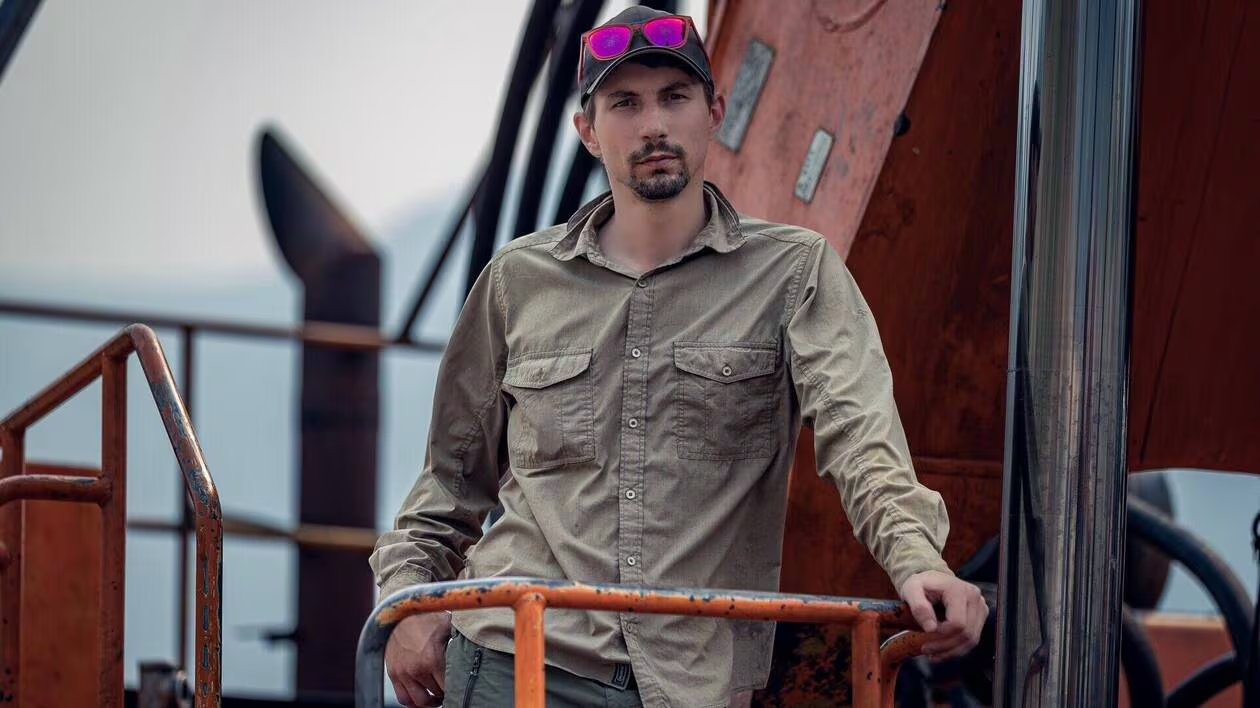
While falling short of his 10,000-ounce dream, Parker’s late-season heroics salvaged what could have been a financial and personal disaster.
TONY BEETS PROVES POWER IN CONSISTENCY
Meanwhile, legendary miner Tony Beets ended the season in his typical style: calm, calculated, and crushing expectations.
The Beets family operation ran like a well-oiled machine, with three separate crews contributing to a staggering 456-ounce haul in the final week. Mike Beets’ trommel brought in 251 ounces, Monica Beets added 146 ounces from the Comeback Cut, and the vintage floating dredge hauled another 58 ounces, highlighting Beets’ strategy of diversification and disciplined planning.
Beets ends the season just shy of his 5,000-ounce goal, with a total over 4,800 ounces valued at $12.6 million.
RICK NESS BETS EVERYTHING—AND STRIKES IT BIG

No comeback story was more emotional than that of Rick Ness. After a year away from mining and intense personal struggles, Ness returned to the Yukon with one shot at redemption: the risky Vegas Valley Cut.
With over $1 million invested and no gold in sight for weeks, pressure mounted. But Ness’ gamble paid off with a massive first cleanup of 256 ounces, putting him and his loyal crew back in the game.
“I’m very thankful for you,” Ness told his team, visibly emotional. “We’re having a hell of a season.”
AFTER THE GOLD: SPECULATION AND SCANDALS LOOM
As the final ounces were weighed and winter descended, fans were left with more than just golden dreams—they were left with burning questions.
Behind the scenes, Gold Rush has sparked waves of speculation. Some fans suspect producers manufacture drama, citing conveniently timed breakdowns and sudden crew conflicts. Others whisper about “salting” gold cleanups—though most agree this would be a credibility killer if ever proven.
Another popular theory is the “Hidden Investors” hypothesis: that unseen financiers bankroll these risky operations in exchange for a cut of the profits—explaining how miners take multi-million dollar gambles each year.

Meanwhile, past scandals still haunt the show’s legacy. From Todd Hoffman’s ill-fated Guyana expedition that ended in a humiliating 2-ounce season, to legal allegations by former cast member Jimmy Dorsey, reality TV and real-life continue to blur.
Even Tony Beets, the industry’s steadiest hand, faced fines after a gasoline fire stunt on his dredge pond violated Canadian environmental laws—proving that in the Klondike, no one is above the rules.
THE VERDICT: WAS IT WORTH IT?
Over $27 million in gold was dragged from frozen Yukon soil this season. Parker clawed back from the brink, Tony ran an empire like a Viking, and Rick Ness proved redemption is still possible.
But at what cost?
Gold Rush fans will debate the drama, dissect the weigh-ins, and revisit every decision made in the unforgiving north. One thing is certain—this season will go down as one of the wildest, richest, and most emotionally charged chapters in modern mining history.