
At the height of a booming gold market, timing is everything in the Klondike. For veteran mine boss Tony Beets, the pressure to keep gold flowing has rarely been greater. But just as his Indian River operation was gaining momentum, an unexpected emergency forced his trusted cousin and foreman Mike to leave camp and fly to Europe — leaving a leadership vacuum at a critical moment in the season.
With gold prices elevated and production targets looming, Beets had little appetite for disruption. After five weeks of steady sluicing, his crew had already banked 775 ounces toward an ambitious 6,500-ounce seasonal goal. The first cut at Indian River was, in his own words, “the only money maker.” Losing his lead man was not part of the plan.
Rather than slow operations, Beets made a swift decision: elevate heavy equipment operator Jacob Moore into an acting foreman role. Moore, who joined the beach crew only last season, suddenly found himself responsible not just for moving pay dirt, but for maintaining discipline, coordinating repairs, and ensuring the wash plant never stopped running.
A Costly Breakdown
The test came quickly.

While processing ground heavy with water, Moore noticed an unusual noise coming from the wash plant. Moments later, operations ground to a halt. A tailings chute — responsible for directing waste rock away from the shaker deck — had come loose. Several bolts had rattled out, destabilising the steel frame. Cracks spread along the deck structure, threatening to shut down production entirely.
In the Klondike, downtime is expensive. Fuel, labour, and equipment costs do not pause when gold stops flowing. A prolonged breakdown could have jeopardised the week’s output — and invited scrutiny from Beets himself.
Moore immediately shut the plant down to prevent further structural damage. Welders were called in. Cracks were reinforced. The damaged chute was removed, re-aligned and re-bolted into place. What could have spiralled into a multi-day stoppage was contained within three to four hours.
“You can only weld so fast,” Beets later observed, acknowledging that even under his supervision the repair would have required time. The key difference was that Moore handled it before catastrophic failure.
Pressure from the Top
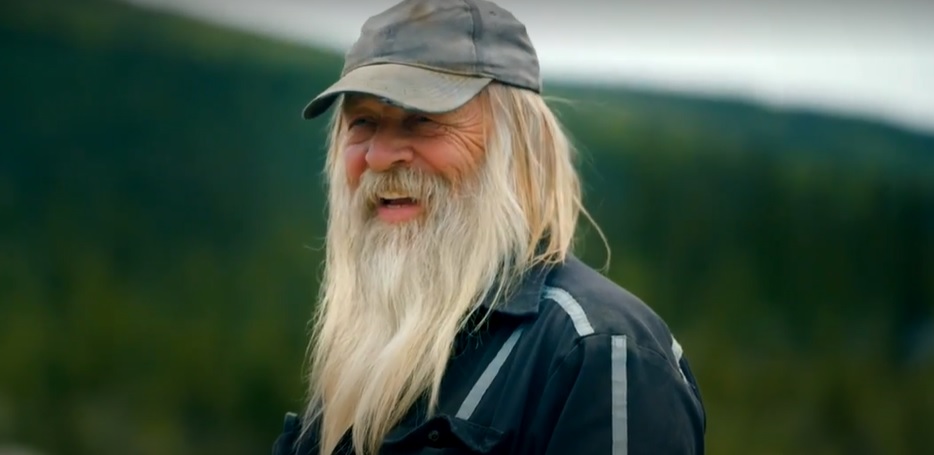
As repairs neared completion, word came through: Beets was on his way to inspect the site.
For Moore, the stakes were clear. It was one thing to solve a mechanical issue; it was another to prove he could manage the operation without oversight. The goal was simple — rocks moving through the plant and gold collecting in the box before the boss arrived.
Within the hour, sluicing resumed.
When Beets pulled up, the conveyor was running smoothly. Waste rock streamed from the tailings. The gold box was active. The crisis had passed.
“Awesome, Jacob. Good job,” Beets said after surveying the fix — a concise endorsement from a leader not known for unnecessary praise.
Numbers That Matter
The ultimate verdict, however, lay in the cleanup.
Despite the temporary shutdown, the Indian River cut produced 250.74 ounces for the week — worth approximately $878,000 at current market prices. The total pushed the operation beyond 1,000 ounces for the season, reaching 1,025 ounces in just over a month of sluicing.
For Beets, the figures validated both the operation’s strength and his decision to test new leadership. “It’s not rocket science,” he remarked, suggesting that in his camp, accountability defines advancement.
With Mike absent, Moore stepped forward — and delivered.

A Deeper Shift?
Beyond the weekly tally, the episode hints at a broader transition within Beets’ camp. Succession planning has long been an undercurrent in the Klondike, particularly among veteran operators balancing legacy with modern efficiency.
Moore’s performance demonstrated not only mechanical competence but operational composure — arguably the more valuable trait in high-pressure environments where equipment failure can escalate rapidly.
At a time when gold prices are historically strong, there is little margin for hesitation. Every hour of sluicing translates directly into revenue. Every repair avoided protects profitability.
For now, Indian River remains Beets’ financial engine. And with 1,025 ounces already secured, momentum is firmly on his side.
But in the unforgiving conditions of the Yukon, consistency — not a single successful week — determines the season.
As Beets’ crew pushes forward toward its 6,500-ounce objective, the question is no longer whether Jacob Moore can step up in an emergency.
It is whether this temporary promotion signals the emergence of the next generation of leadership in one of the Klondike’s most formidable mining operations.
 hs
hs