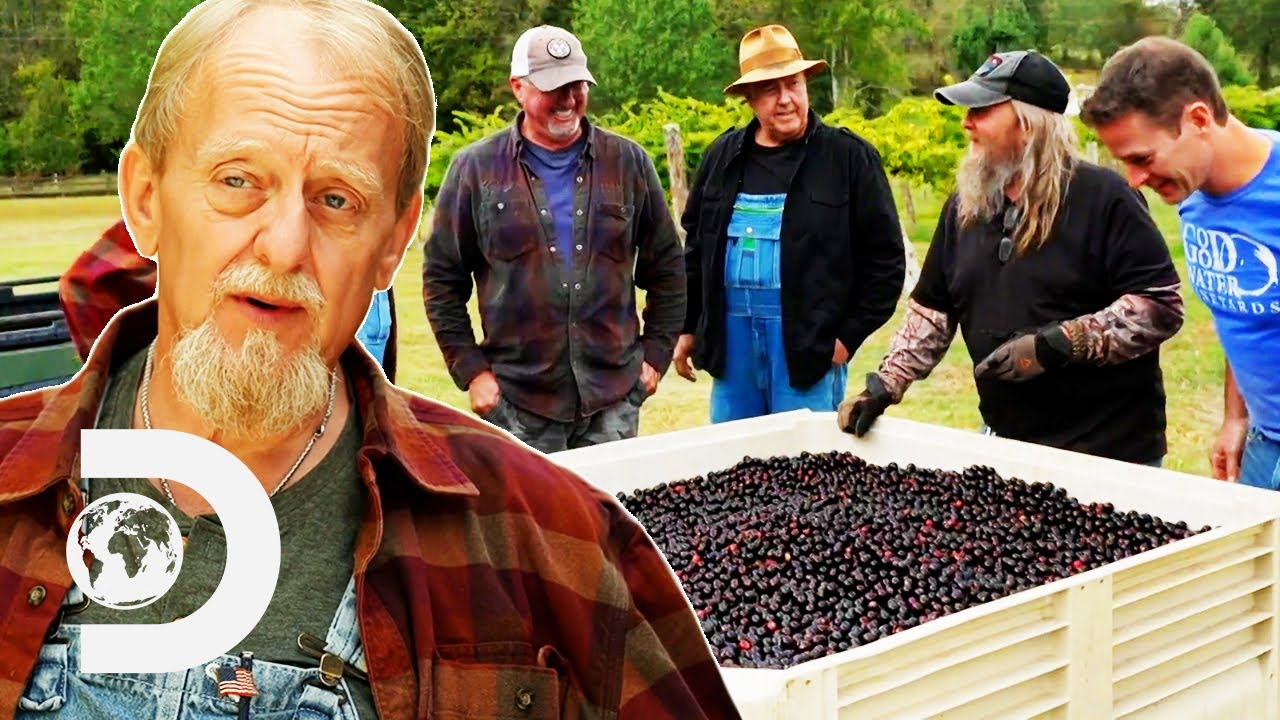
The picturesque rolling hills of Tennessee played host to an exciting agricultural collaboration as local moonshine makers, Kelly and Amanda, teamed up with industry veterans Mark and Digger to harvest and process the abundant crop of muscadine grapes grown in the area. After weeks of hard work, the fruits of their labor are ready to be transformed into a variety of spirits, including brandy and grappa.
Three weeks after the initial harvest, the team found themselves back at the vineyard, reaping the rewards of their efforts. The muscadine grapes, known for their sweetness, were ready to be turned into delicious brandy and grappa. These two spirits are made from different parts of the grape: brandy from the juice and grappa from the pulp and stems. The idea is to utilize every part of the fruit to maximize the yield and minimize waste.
A Bounty of Grapes
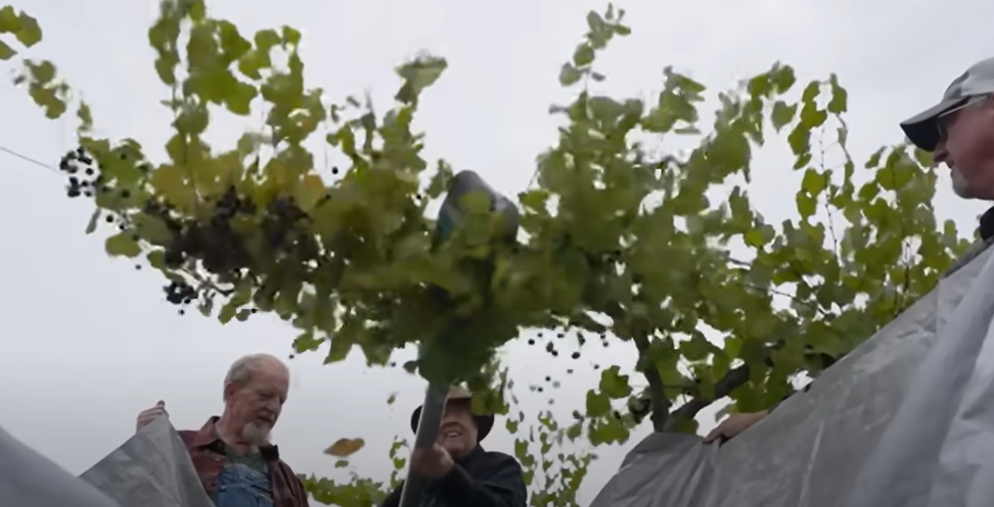
Mark, Digger, and their team were joined by Steve and Jean, who introduced a new method for picking the grapes. Armed with a PVC pipe and a foam rubber attachment, they were able to shake the vines, causing the ripe, sweet grapes to fall into large tarps below. “You can see the fruits of our labor, no pun intended,” said Mark as he observed the overflowing harvest. With over 1,100 pounds of grapes collected, they were prepared to extract the juice that would serve as the base for their brandy.
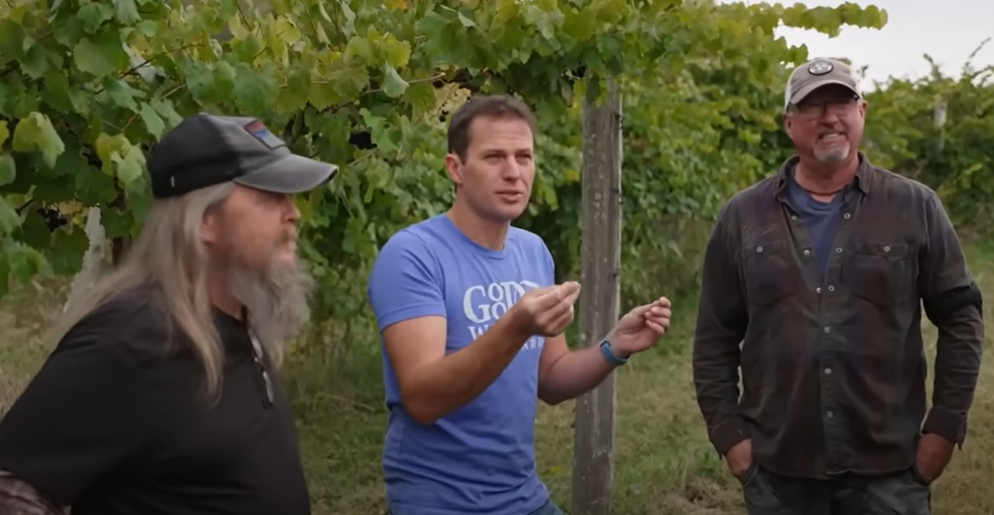
As the workers harvested the grapes, they reminisced about past years when they only made grappa, a potent spirit made from the leftover grape skins and stems after the juice was removed. This year, however, they were set on making both brandy and grappa, and they knew that the muscadines would provide the perfect base for both.
From Vine to Spirit
Once the grapes were gathered, they were moved to the processing area where they would be crushed and juiced. Jean explained the next steps in the process, which involved using a de-stemmer and crusher to break down the grapes. The juice was then separated from the skins, seeds, and stems using a press. The resulting juice would be used to create the brandy, while the leftover pulp would be used for the grappa.
“This is the real beauty of it,” said Digger as he watched the juice flow freely from the press. “We’ve got the juice for the brandy, and all the pulp for the grappa – nothing goes to waste.” With the muscadine juice already tasting incredible, the team was optimistic about the quality of the spirits they would soon produce.
A Sweet Success
The muscadine juice was noted for its exceptional sweetness, with the natural sugars in the fruit making it perfect for distillation. As they all raised their glasses to toast, Kelly commented, “That juice is out of this world. It’s super sweet and packed with flavor – it’s hard to believe it doesn’t already have alcohol in it.”
While the hard work of harvesting and processing was complete, the next step would involve fermentation, distillation, and aging. The team is hopeful that their efforts will result in a memorable batch of muscadine shine – a fitting name for the local moonshine made from the sweet muscadines.
With the bounty of the vineyard in hand, the team is now gearing up for the distilling process that will turn their harvest into a variety of spirits. “Muscadine Shine” is the name on everyone’s lips, and with the promise of both brandy and grappa on the horizon, the small Tennessee vineyard is set to leave a big mark on the local moonshine scene.
