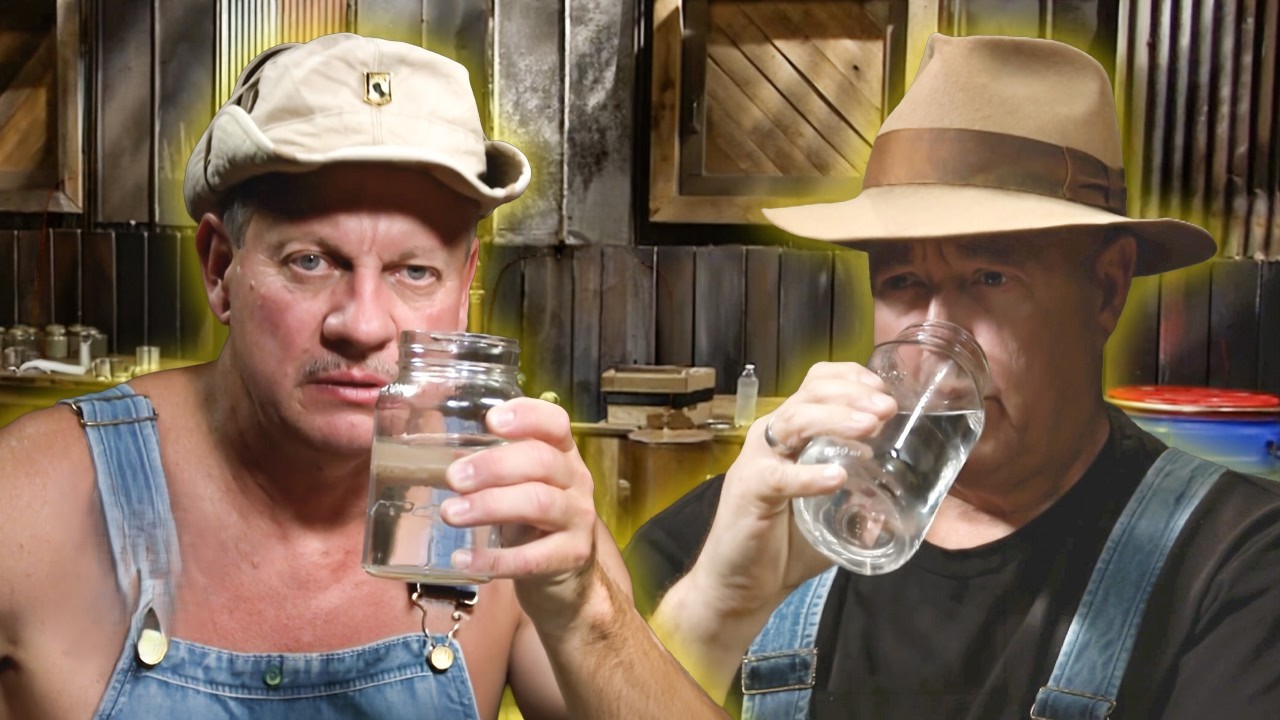
In a pivotal elimination round on Moonshiners, three remaining competitors were given just four hours to produce a clear, flavorful spirit at a minimum of 80 proof — a technical benchmark separating hobbyists from serious distillers. Only two would advance to the next phase, where their base spirit would be transformed into a top-shelf sipping cream. For one contender, a single jar would determine everything.
The episode opened with strategy taking centre stage. Nate, having placed third in the previous challenge, was assigned the column still — a piece of equipment often praised for efficiency but criticised for stripping flavour. Undeterred, he pushed volume aggressively, aiming to extract as much alcohol as possible in the allotted time.
“When it comes to distillation, the distiller is far more important than the still,” he remarked confidently, running what would ultimately become 21 jars of liquor — an ambitious output under tight time constraints.
Meanwhile, Katie opted for a calculated approach, using a doubler to boost her proof. Monitoring her run closely, she targeted 175 proof in early jars, building inventory for a potential second distillation. Her technical execution was precise, though questions lingered about how the elevated proof might affect overall flavour.
Jason focused on balance from the outset. Pulling rye and subtle rum notes from his mash, he aimed to preserve complexity rather than chase sheer alcohol numbers. “My goal is just to get as much flavor,” he explained — a decision that would later prove decisive.
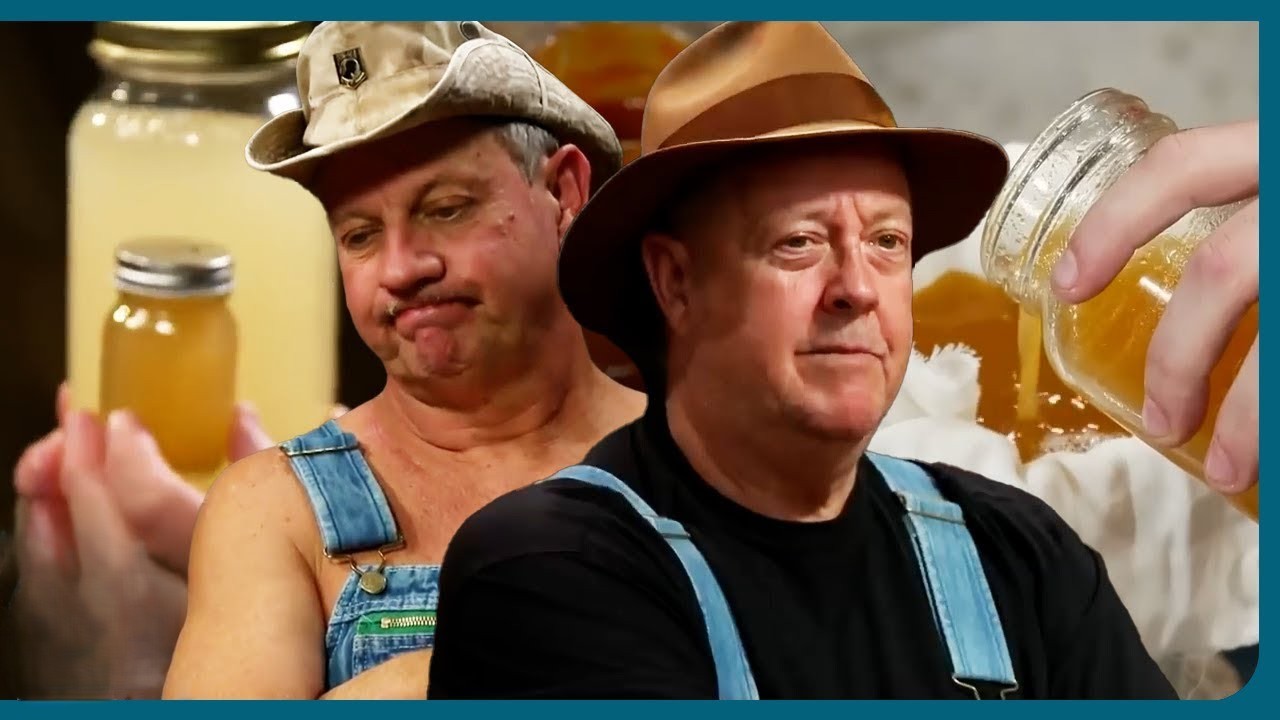
The Technical Divide: Proof vs. Flavor
As the four-hour clock expired, judges examined the jars using traditional bead testing — observing the size and persistence of bubbles to estimate proof. A thicker bead signals higher alcohol content; a thin or flat line suggests weakness.
The tasting revealed stark contrasts.
Nate’s spirit, while praised for its soft nose and layered flavour, fell below the critical 80-proof threshold. Judges noted its “flat” character and lack of backbone. Though aromatic and technically clean, it lacked the structural alcohol presence required to compete at the master level.
Katie’s jar delivered power — estimated around 115 proof — but judges suggested the elevated alcohol may have muted some nuance. Her ingredients were well managed, and the spirit was considered commercially viable, though slightly aggressive upfront.
Jason’s entry drew consistent praise. Judges described caramel and buttery notes on the nose, followed by a balanced palate with earthy undertones. At approximately 85 proof, it struck what one judge called “the money” — proof and flavour in equilibrium.
“All three taste good,” one judge conceded. “But we have to eliminate one.”

The Elimination
Despite running what judges described as a “tanker truckload” of liquor, Nate’s decision to submit a later jar from his run — deep into the tails — proved costly. That selection dropped his proof below the competition minimum.
“Unfortunately, that jar bought you a ticket home,” came the verdict.
Nate accepted the outcome with composure, acknowledging he had chosen the wrong jar. “It was farther down in the proof than I was expecting,” he admitted before leaving the stage, promising this would not be his last appearance.
Moving Forward
The result leaves Katie and Jason advancing to the flavouring round, where their technical foundations will now be tested in a more creative domain. With both demonstrating contrasting philosophies — one prioritising strength, the other balance — the next stage is set to determine not just who can distill, but who can craft a refined, market-ready spirit.
In a competition where margins are measured in proof points and palate impressions, the episode reinforced a central truth of distilling: volume and ambition mean little without precision.
