Ancient Coin Shards, Delft Pottery, and Shipbuilding Traces Transform the Oak Island Mystery on Lot 5

In a major escalation of the centuries-old Oak Island mystery, Rick Lagina and his team have finally stepped onto the long-restricted and endlessly speculated Lot 5—land once guarded fiercely by the late researcher Robert Young. What they uncover there may be among the most significant finds in recent series history. Episode highlights from The Curse of Oak Island follow the crew as they sweep this newly accessible western property, combining high-tech tools, deep expertise, and decades of accumulated theories in a bid to unravel activity that may predate the Money Pit by hundreds of years.
The significance of gaining access to Lot 5 is not lost on Lagina. “This is like getting the keys to the family car at 16,” he said, expressing both gratitude and exhilaration at being able to carry forward Young’s meticulous but private legacy. For decades, the lot was shrouded in mystery—no cameras, no public access, and almost no detailed records. Now, for the first time, the team is peeling back the layers, and the results are nothing short of explosive: ancient metallurgy, deeply buried tools, colonial-era pottery, and maritime signatures that could finally contextualize Oak Island’s most enduring legends.
A Hammered Coin Fragment That Might Reach Back to the 1500s
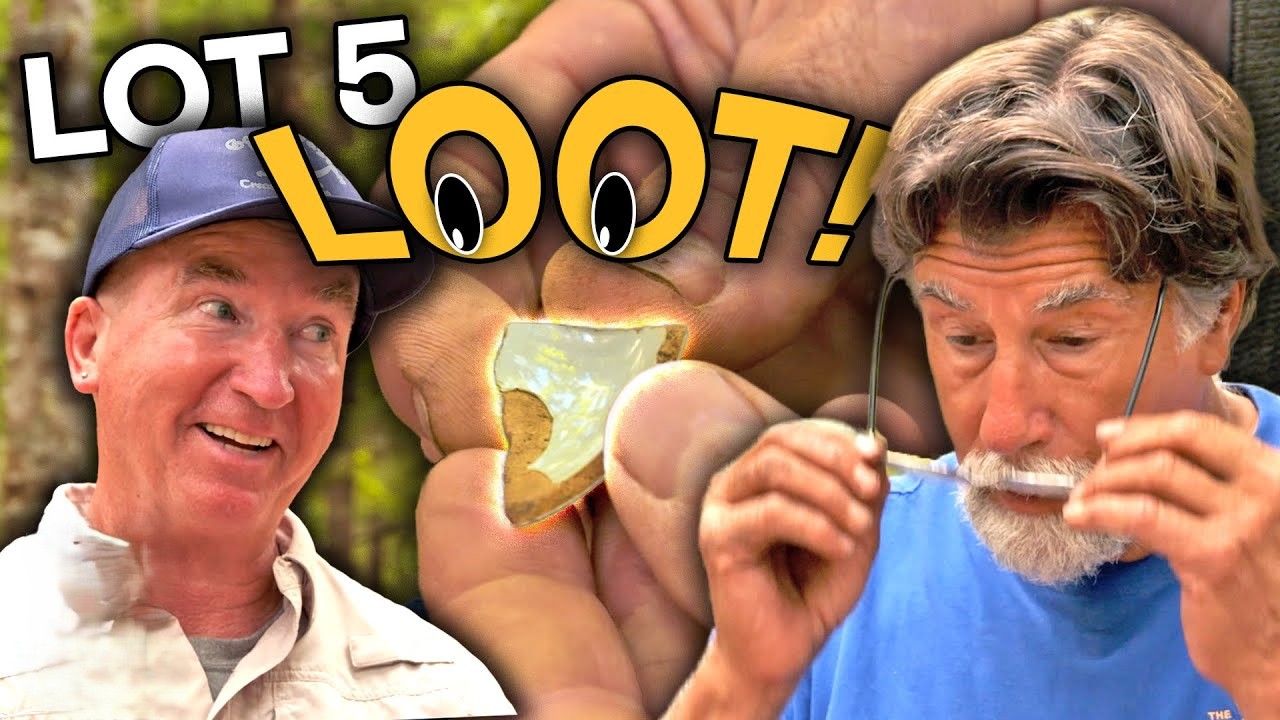
The day’s first electrifying discovery came as Gary Drayton and archaeologist Laird Nunn swept deeper into Lot 5’s rugged interior. Drayton, navigating an area dense with rocks and mineralization, received a high-toned signal and soon unearthed a paper-thin, patina-encrusted fragment. Its irregular, non-milled edges suggested something older—much older—than most coinage ever found on the island.
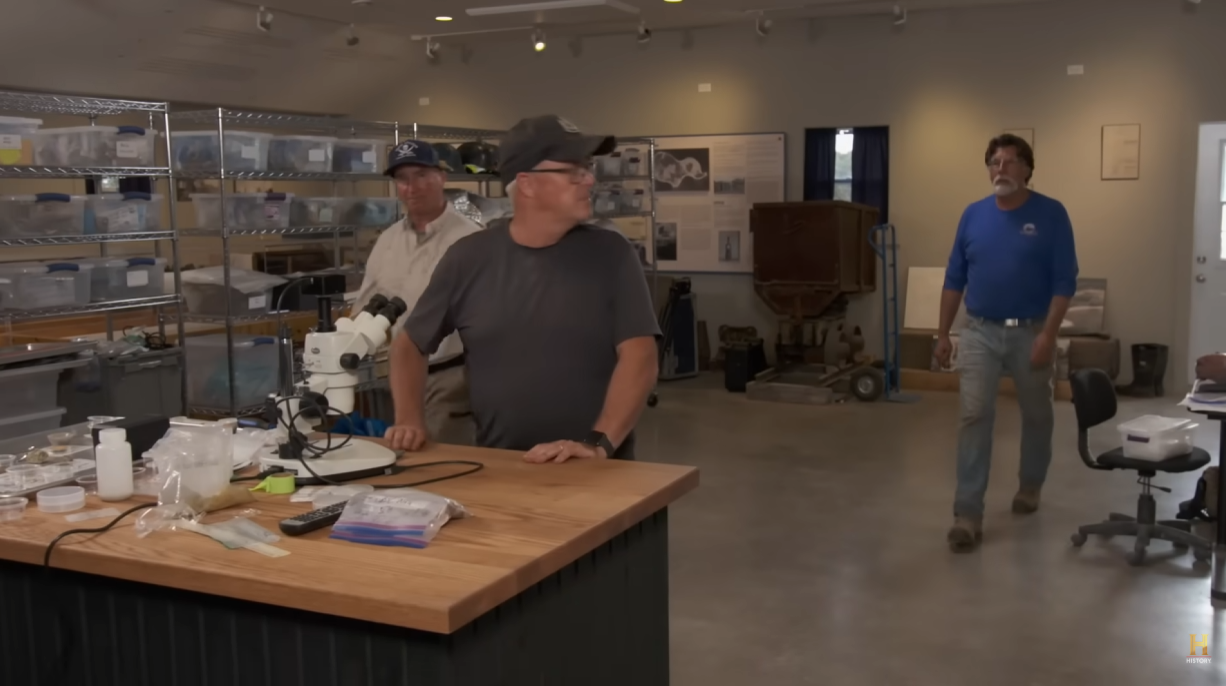
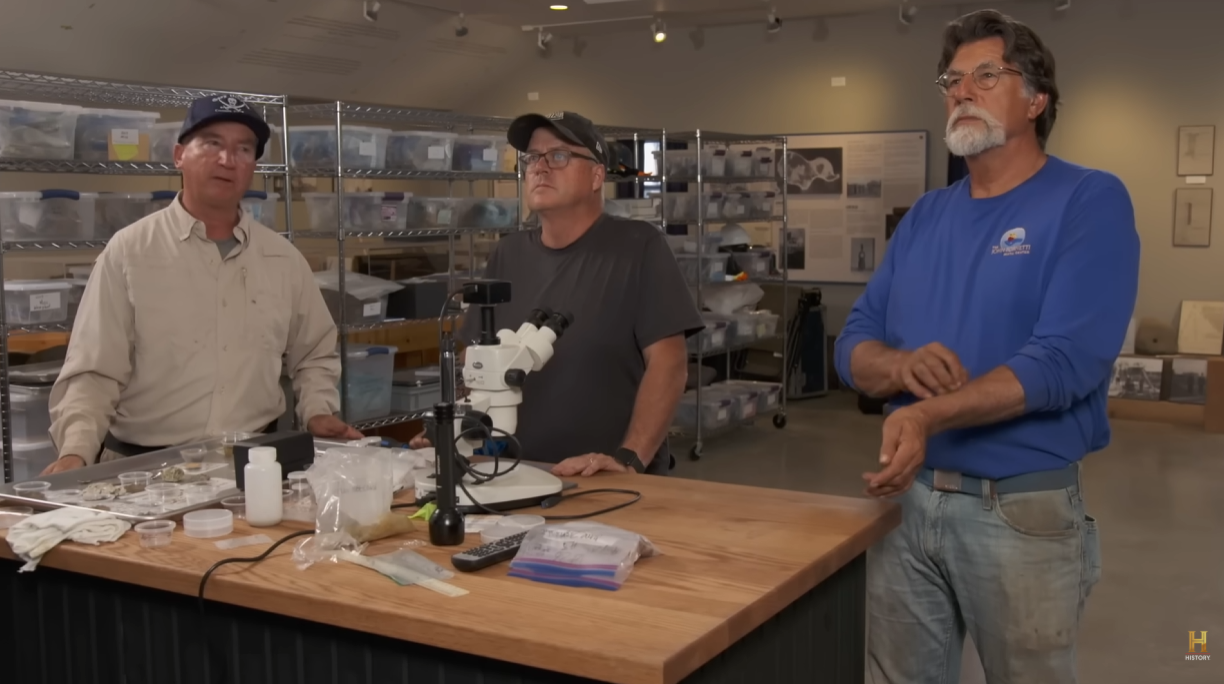
“My hands are shaking, mate,” Drayton said, visibly thrilled as he examined the odd piece. Suspecting a hammered coin fragment, he rushed it to the interpretive center, where Laird Nunn and archaeometallurgist Emma Culligan ran it through an X-ray fluorescence (XRF) device.
The spectrometer revealed a fascinating alloy: primarily copper, blended with tin, iron, and a small but telling spike of arsenic. Culligan identified it immediately. “This is arsenical bronze. This is old—1500s, trickling out by the 1700s.” The metal composition rules out typical English or Spanish origins and mirrors an earlier Lot 7 find: a token of similar alloy dating at least 500 years old.
For Rick Lagina, the implications were profound. “It’s starting to weave a story. Fingerprints from the 1500s—an aha moment.” If confirmed, this could signal early European activity long before the recorded history of Nova Scotia… and possibly tied to pre-Money Pit operations.
Deep-Buried Tools and Exotic Pottery Rewrite the Colonial Timeline
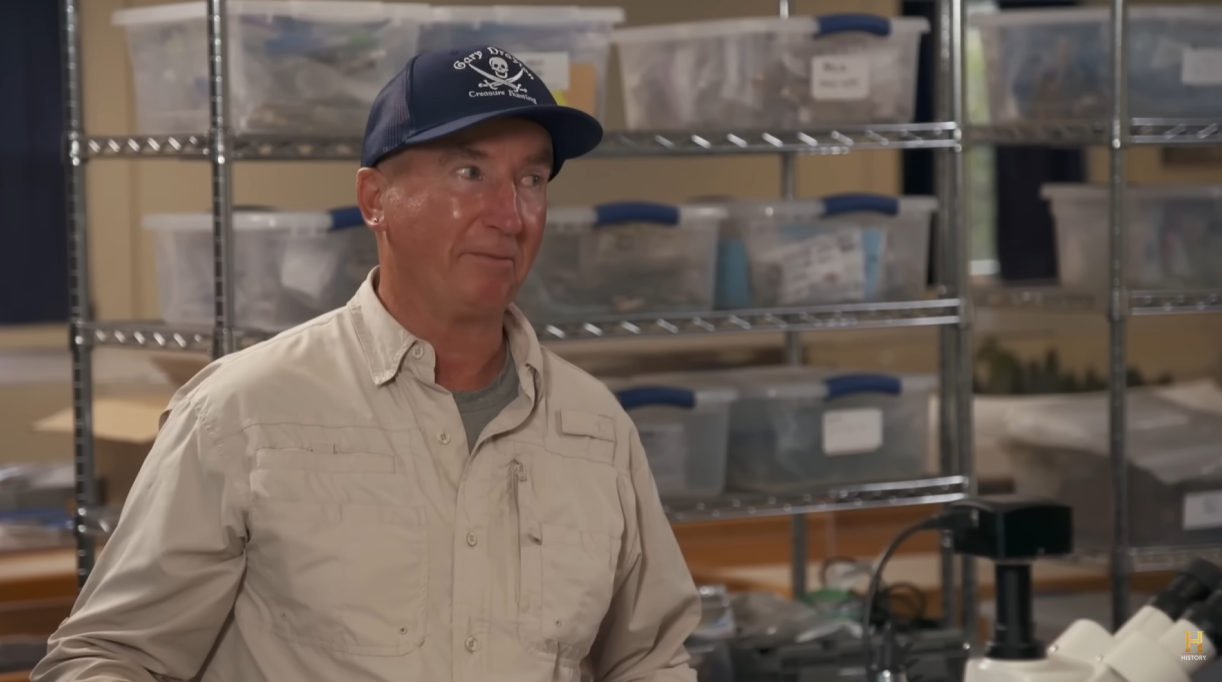
With enthusiasm high, the crew marked 42 more metal targets and continued to dig. One “screamer” hit led to the recovery of a thick, heavy, blade-like tool buried unusually deep. Even Drayton—who has seen centuries’ worth of tools come out of Oak Island’s soil—remarked, “This has all the characteristics of being really old.” Why such an object was so far underground only fuels speculation about prior excavations or early working sites.
But the most surprising twist came when what looked like common rocks turned out to be glazed pottery shards hidden inside the soil. Rick Lagina was stunned: “We’ve never seen this before.”
Archaeologists Nunn and Helen Sheldon identified the first ceramic as press-molded pottery from the 1740s, echoing designs from the English 1720s—material typically associated with British military presence or individuals of notable means. Moments later, the team uncovered fragments of tin-glazed Delft ware, another English variety from the mid-1700s. Sheldon underscored the magnitude: “That’s a first for the island.”
Both ceramics predate the Money Pit discovery of 1795 by more than half a century, suggesting activity—perhaps military or strategic—on Lot 5 well before settlers or treasure hunters arrived. This single area is now revealing a dense archaeological tapestry stretching from the early 1700s back into the 1500s.
“It changes the game completely,” Rick said. “We’re transported back to the middle of the 1700s.”
A Copper Nail with Maritime DNA: Clues to Shipbuilding or Repairs?
As the excavation expanded around a strange rock-filled structure, the team unearthed a hand-forged copper nail with a rose head—its vivid green patina unmistakable. Copper nails were common in shipbuilding because of their resistance to salt water, and archaeologist Laird Nunn quickly made the connection: “This suggests boat building.”
The find echoes numerous swamp discoveries—wood fragments, iron spikes, and artifacts dating between the 18th century and as far back as the 3rd century AD. If Lot 5 shares this maritime association, the island may have hosted repairs, landings, or covert operations centuries before the Money Pit legend emerged.
More intriguing still is the surrounding feature: a large, rock-filled excavation with no modern intrusions, prompting archaeologists Miriam Amir and Laird Nunn to pause all non-professional digging. Whatever this structure once was, its age and purpose now demand careful excavation.
“We’re into something substantial and important,” Nunn concluded.
Could Lot 5 Be the Missing Key to the Oak Island Puzzle?
Lot 5 was acquired only weeks ago, yet it’s already yielding finds that align with discoveries from nearby lots: esoteric metals, deep-buried antiquities, pre-Money Pit ceramics, and potential maritime artifacts. Gary Drayton summed up the intensifying mystery: “Lot 5 and Lot 7 are turning up really esoteric metals—we need to find out why.”
Rick Lagina, ever the optimist, sees the path ahead widening instead of narrowing. “There’s more yet to be revealed.”
As unprecedented discoveries stack up—1500s metalwork, colonial pottery, deep-buried tools, and hints of shipbuilding—the Oak Island story edges closer than ever to an answer that has eluded treasure hunters for over 200 years. With the world watching, the question lingers:
Is Lot 5 the breakthrough that finally exposes who came to Oak Island… and what they left behind?
One thing is certain:
The dig is far from over.