Ancient Markers and Metal Traces Take Centre Stage in Oak Island’s Latest Search

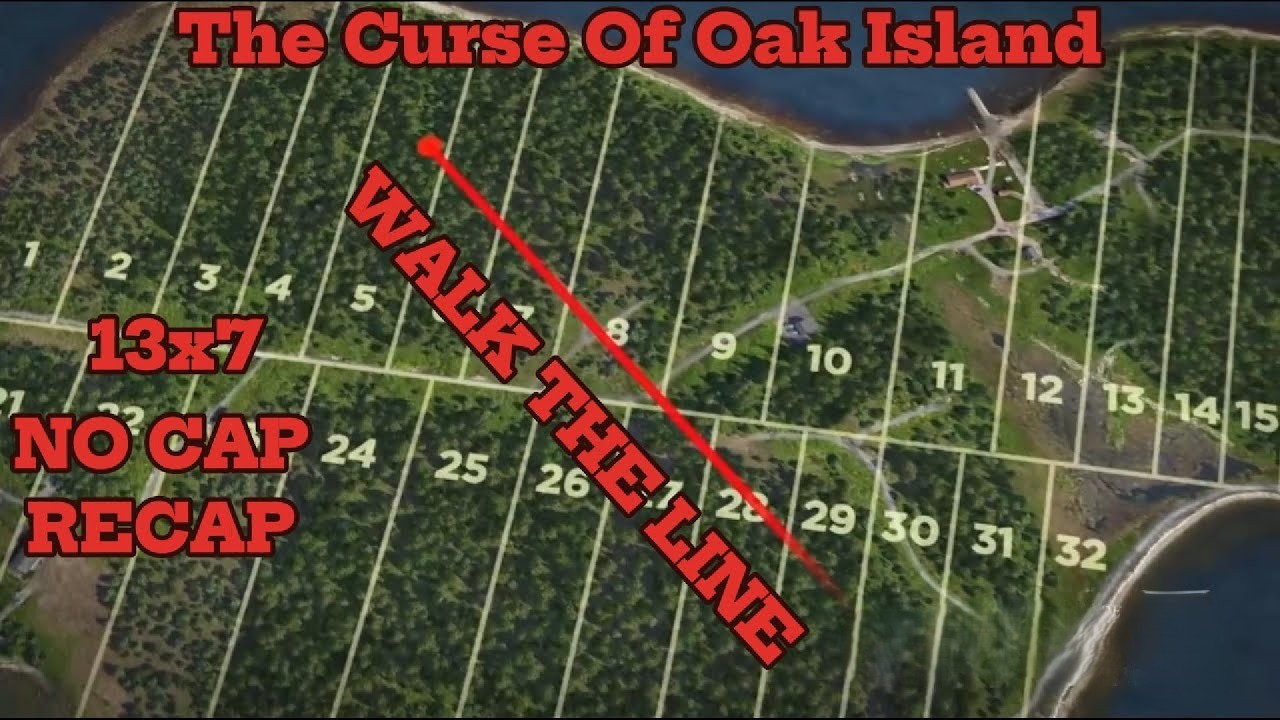
The hunt for long-rumoured secrets on Oak Island intensified in the latest episode of The Curse of Oak Island, as the team followed new alignments, examined unusual artefacts, and returned to the Money Pit area in search of physical proof hidden deep beneath the island.
Episode seven of Season 13, titled Walk the Line, aired on 16 December 2025 and focused heavily on patterns, markers, and geological clues that may link several of Oak Island’s most intriguing sites.
At the centre of the episode was borehole I-9.5, drilled near what researchers believe to be the boundary of the solution channel close to the Money Pit. The borehole was driven to more than 200 feet, targeting a zone already associated with unexplained metal traces found in earlier drilling and water samples.
Rick Lagina and the drilling team monitored the spoils table closely as pinpointer signals repeatedly appeared — and then disappeared — in the muddy material brought up from depth. Metal detection expert Katya Drayton was called in to assist, but even her tools produced inconsistent results.
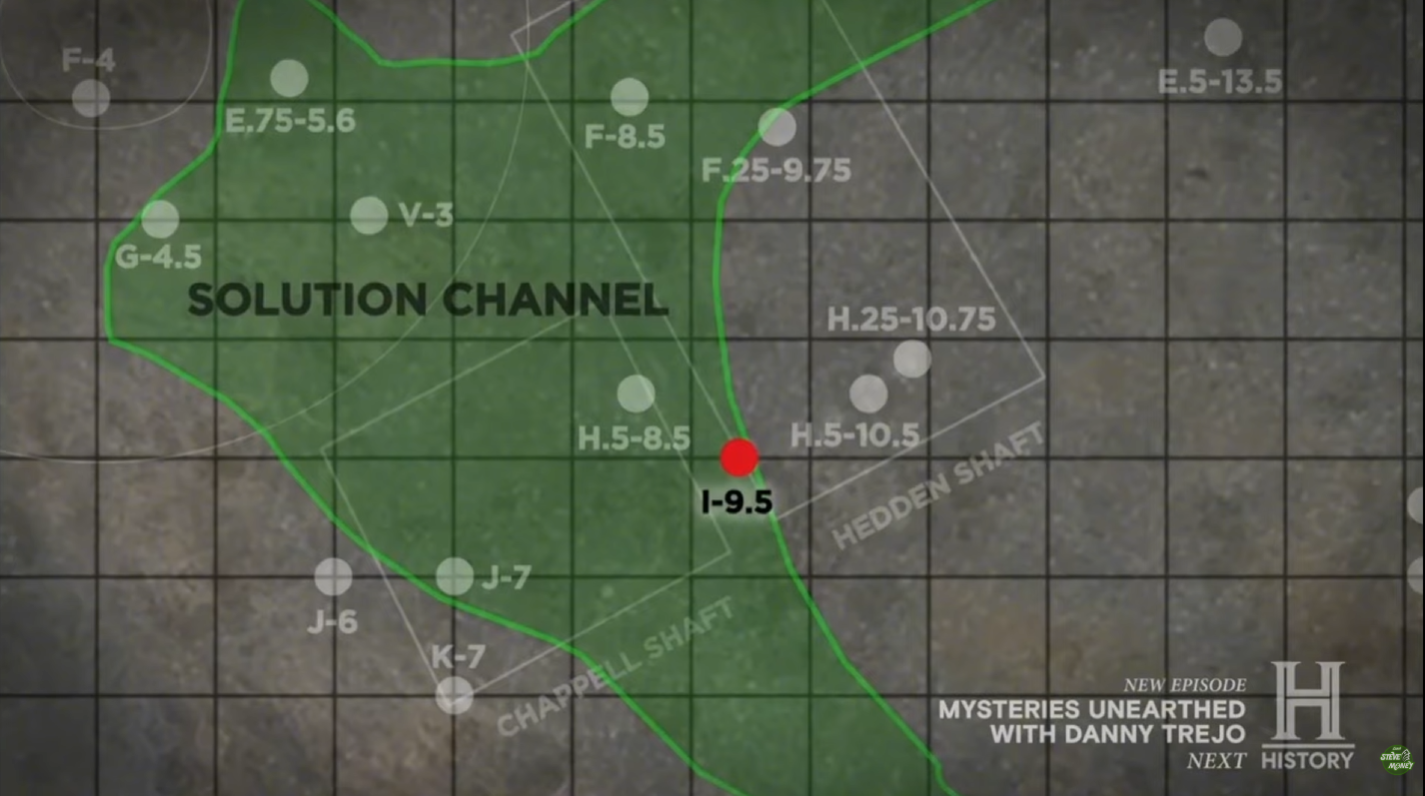
Geologist explanations suggested the signals may have come from dispersed metal particles within the soil, a phenomenon that has previously been observed on the island. Rick noted similarities to earlier seasons, when underwater metal detection near the swamp also produced vanishing signals after soil disturbance. The team agreed to bag and analyse the material in the laboratory to determine its composition and concentration.
Away from the Money Pit, attention shifted to Lot 5, where a growing number of artefacts continue to raise questions about the island’s past. Archaeologist Laird Niven revealed the discovery of pearlware pottery fragments and a Venetian glass bead found within a circular stone feature. Venetian beads have long been associated with early European trade and exploration, and Niven said such finds are relatively uncommon on the island.
In the research centre, surveyor Steve Guptill presented a three-dimensional model of a newly identified stone feature on Lot 5, incorporating a marker stone recently uncovered nearby. Carbon dating is now underway on organic material found between the stones, which could help establish when the structure was built.
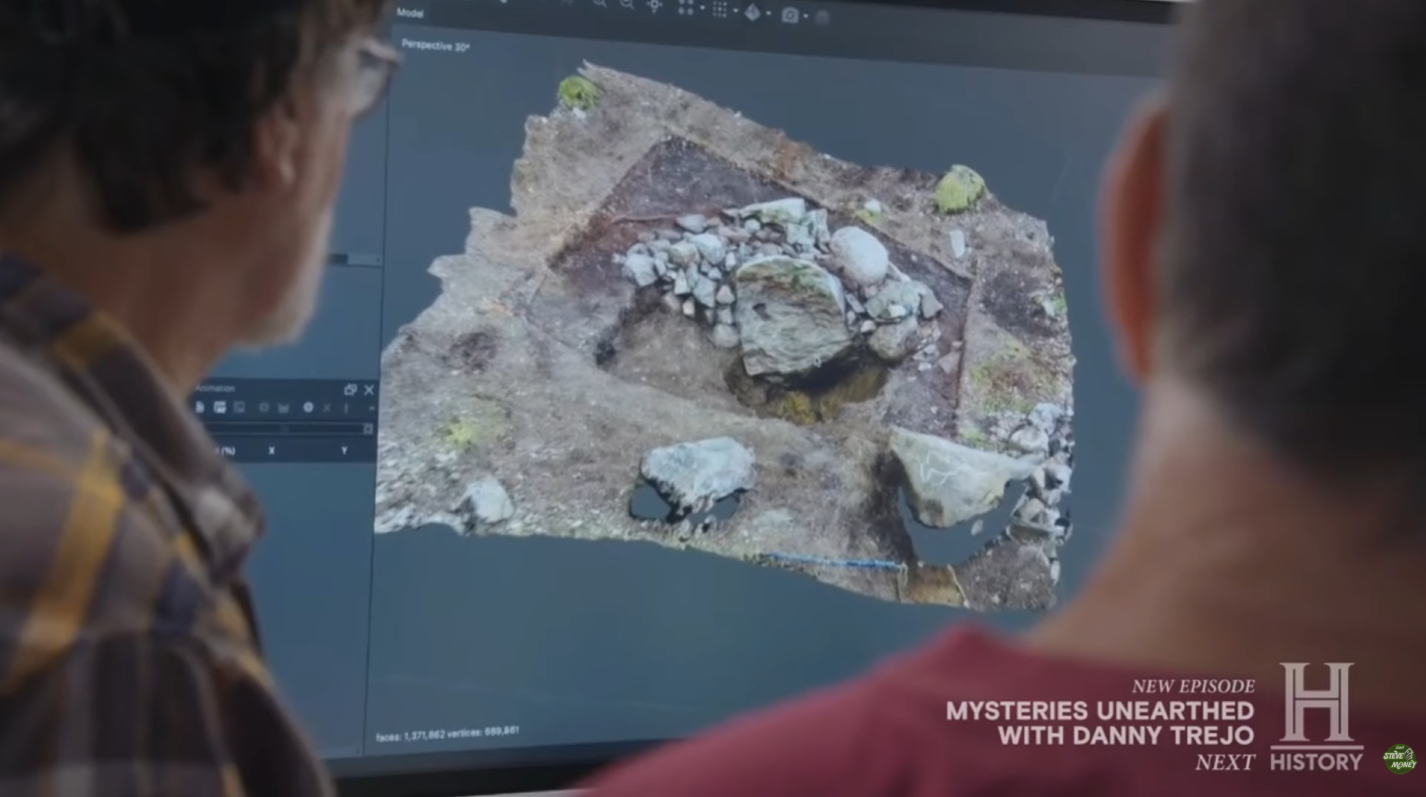
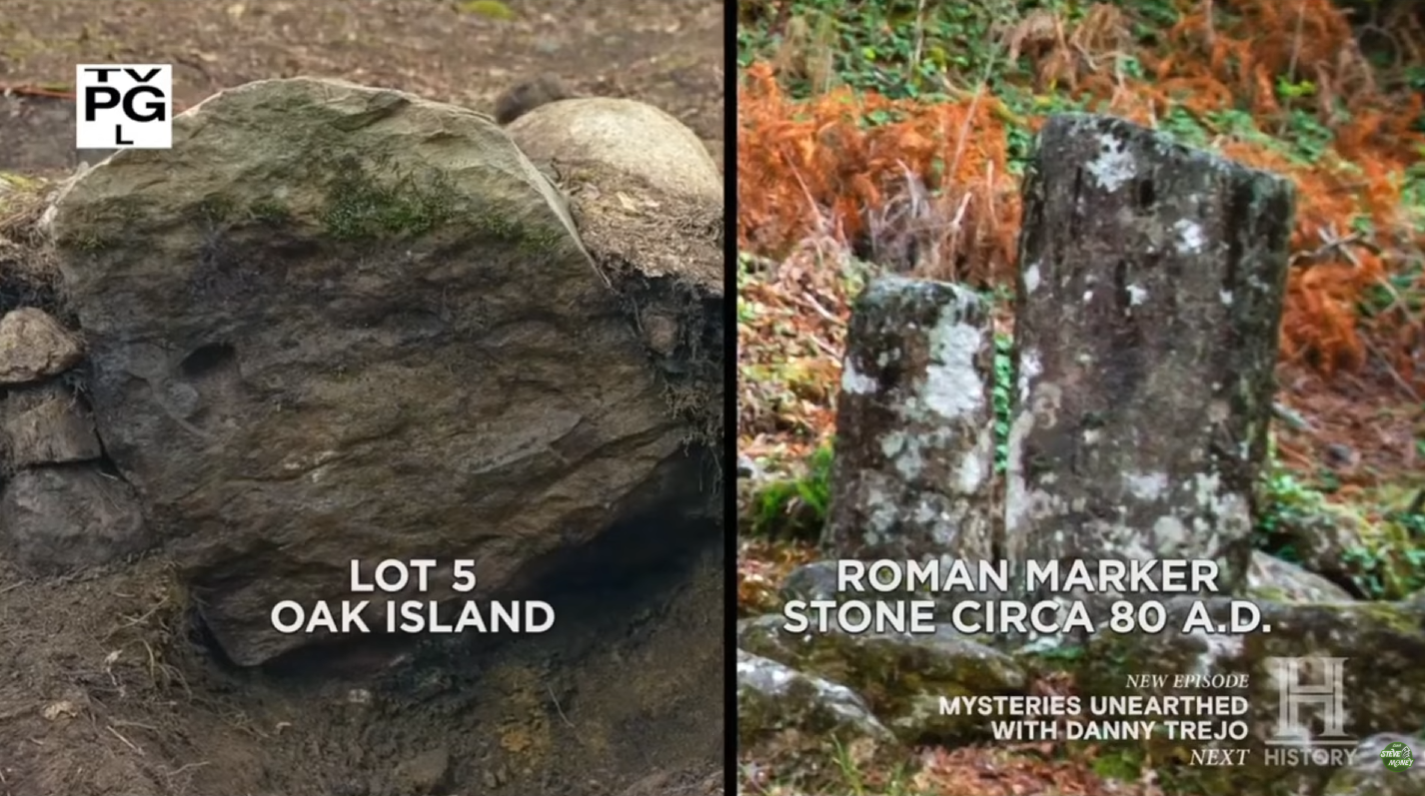
Guptill also introduced a theory that the marker stone may not stand alone. Drawing on Roman and Viking precedents, he suggested that such markers were often positioned within sight of one another, forming deliberate alignments across the landscape.
That idea led to the episode’s central field investigation. Guptill, Gary Drayton, Peter Fornetti and Ethan McArdle physically walked the projected alignment across several lots, scanning for additional markers along the route. On Lot 27, the team encountered a drilled stone — a significant find given its resemblance to drilled rocks discovered in the late 19th and early 20th centuries near the original Money Pit.
Historical records show that searchers Frederick Blair and Gilbert Hedden each found drilled stones decades apart, aligned east to west. The newly examined stone, previously documented but not fully contextualised, may now be connected to that earlier pattern — with Lot 5 acting as the missing reference point.
The alignment continued toward Lot 28 and the elevated area associated with Nolan’s Cross and the so-called “Tree of Life” theory. Guptill noted that the high elevation of the site could make it a central reference point for multiple features across the island. He said he now plans to test alignments between the site and other known structures, including the Money Pit area.
Back in the laboratory, attention turned to an object originally thought to be a compass, recovered earlier from Lot 15. CT scans conducted by Emma Culligan revealed internal moving parts, though the base was missing. Blacksmith and artefact expert Carmen Legge later identified the item as a divider — a precision measuring tool used in engineering and navigation.
Legge and Culligan suggested the artefact could date to the mid-16th or early-17th century, based on comparable examples from European records. They also noted heavy corrosion, indicating long-term submersion. Marty Lagina raised the possibility that later excavations — including Robert Dunfield’s large-scale dig in the 1960s — may have altered the terrain, exposing previously buried items.
The episode concluded with a preview of upcoming discoveries, including what the team believes may be an artefact with religious significance on Lot 5, as well as further drilling in the Money Pit area.
With multiple lines of evidence now converging — from stone alignments to metal traces and dated tools — the Oak Island team appears increasingly focused on whether the island’s features were deliberately planned rather than randomly placed.
New episodes of The Curse of Oak Island will continue through early 2026, as researchers attempt to determine whether these patterns represent coincidence — or a carefully constructed design centuries in the making.