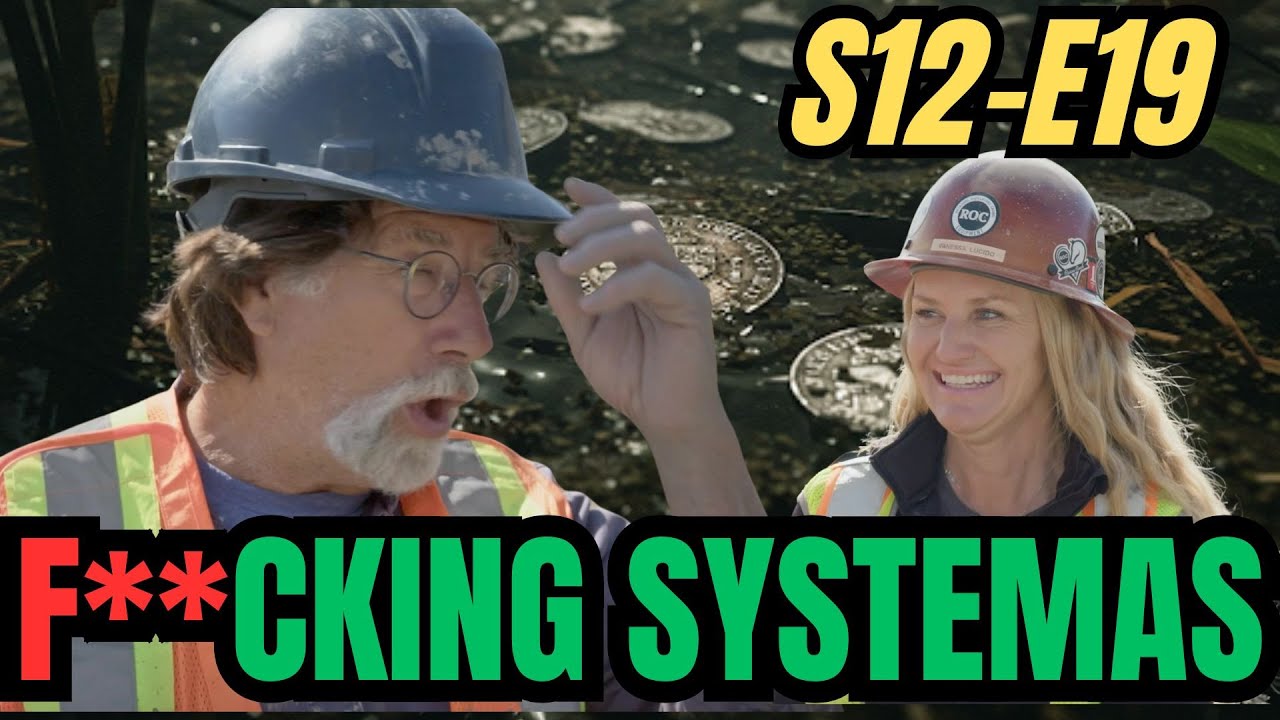
In a stunning turn of events, this week’s episode of The Curse of Oak Island (“Barreling Forward”) delivered one of the most compelling chapters in the 12-season treasure hunt saga. With new artifacts, bold theories, and tantalizing evidence, the Lagina brothers and their team edged closer than ever to proving that something extraordinary lies buried beneath the fabled island.
Barrel Staves & Shaft 6 — The Missing Link?
The episode opened with a discovery that shook the team: a barrel stave — a curved piece of oak — pulled from the mud near the Money Pit. While modest in appearance, this artifact may tie directly to the historic 1861 collapse of Shaft 6, when legend claims treasure-laden barrels plummeted into the depths below.
“There’s no question barrels were used in the Money Pit,” said Rick Lagina. “The real question is what was in them.” Iron straps, possibly used to reinforce treasure chests, were also uncovered nearby, deepening the intrigue.
At 116 feet, drillers hit what initially seemed like metal—but heartbreakingly, it turned out to be bedrock. A near miss? Or a sign they’re closer than ever?
Precision in the Swamp — Engineering or Coincidence?
Meanwhile, the swamp storyline took a fascinating turn. The team discovered survey stakes spaced precisely 14 feet apart — far too uniform to be natural. A carved log, possibly used as a roller for transporting heavy goods, was also unearthed. Archaeologist Dr. Aaron Taylor confirmed its man-made purpose, sparking fresh theories.
“The swamp is screaming, ‘I’m hiding something,’” said one team member. And few would disagree.
Pottery Points to the French Navy
Perhaps the episode’s most explosive revelation came with the unearthing of pottery fragments dated between 1740–1760. One piece may even bear a fleur-de-lis — the symbol of French royalty. This adds weight to the “Duke d’Anville Theory,” suggesting the French Navy, after a failed campaign in 1746, may have hidden treasure on Oak Island.
Supporting this theory: a dowel recovered from Shaft RP2 was carbon dated to between 1725–1764, predating the first Money Pit discovery in 1795. According to Dr. Spooner, “The most probable time period is right before the discovery of the Money Pit.”

All Eyes on RP3 — The Final Push
With RP2 revealing key clues, the team now turns to Shaft RP3 — the most strategic and promising dig site of the season. Positioned to intersect the supposed collapse zone of Shaft 6, RP3 could finally reveal what’s long been hidden: gold, relics, or even undeniable proof of a 1700s treasure operation.
“This isn’t just an adventure show anymore,” said Marty Lagina. “It’s real archaeology, meeting real mystery — and maybe real treasure.”
Legacy & Farewells
The episode also saw a heartfelt farewell to Kadia Drayton, who concluded her season’s work after helping uncover key swamp markers. Her contributions were recognized with an emotional thanks from Rick, who emphasized that the Oak Island quest is as much about legacy as it is about gold.
Looking Ahead
With only a few episodes left in Season 12, all signs — and artifacts — are pointing to something monumental. The convergence of French artifacts, precision engineering, dated wood, and barrel remains could mean that the legendary treasure is not just myth, but measurable truth.
Will RP3 finally be the breakthrough? Or will Oak Island keep its secrets buried for yet another season?
One thing is certain: the story isn’t over — and history may be just inches away.
